What customers look for on a pest control website
Nobody browses pest control websites for fun. People arrive because they have just seen something: wings on a window sill, droppings in a kitchen drawer, a line of bites after a night in a new flat. They are slightly anxious and usually on a phone. The first thing they want to know is what they are dealing with, and the second is whether you can come soon and roughly what it will cost.
Most pest control sites answer neither question well. They open with a stock photo of a technician in a mask and a list of every pest known to science, and the only next step is a phone number. A visitor who is not sure whether those tiny brown insects are cockroaches or beetles leaves to look it up elsewhere, and often books whoever that other page recommends.
The second kind of visitor is planning ahead: a family building a house who needs termite treatment at the foundation stage, a restaurant manager whose food-safety audit is next month, or an apartment association comparing yearly contracts. These people read carefully. They want to see the method, the number of visits, what is included and what paperwork they will receive.
How the demo handles it
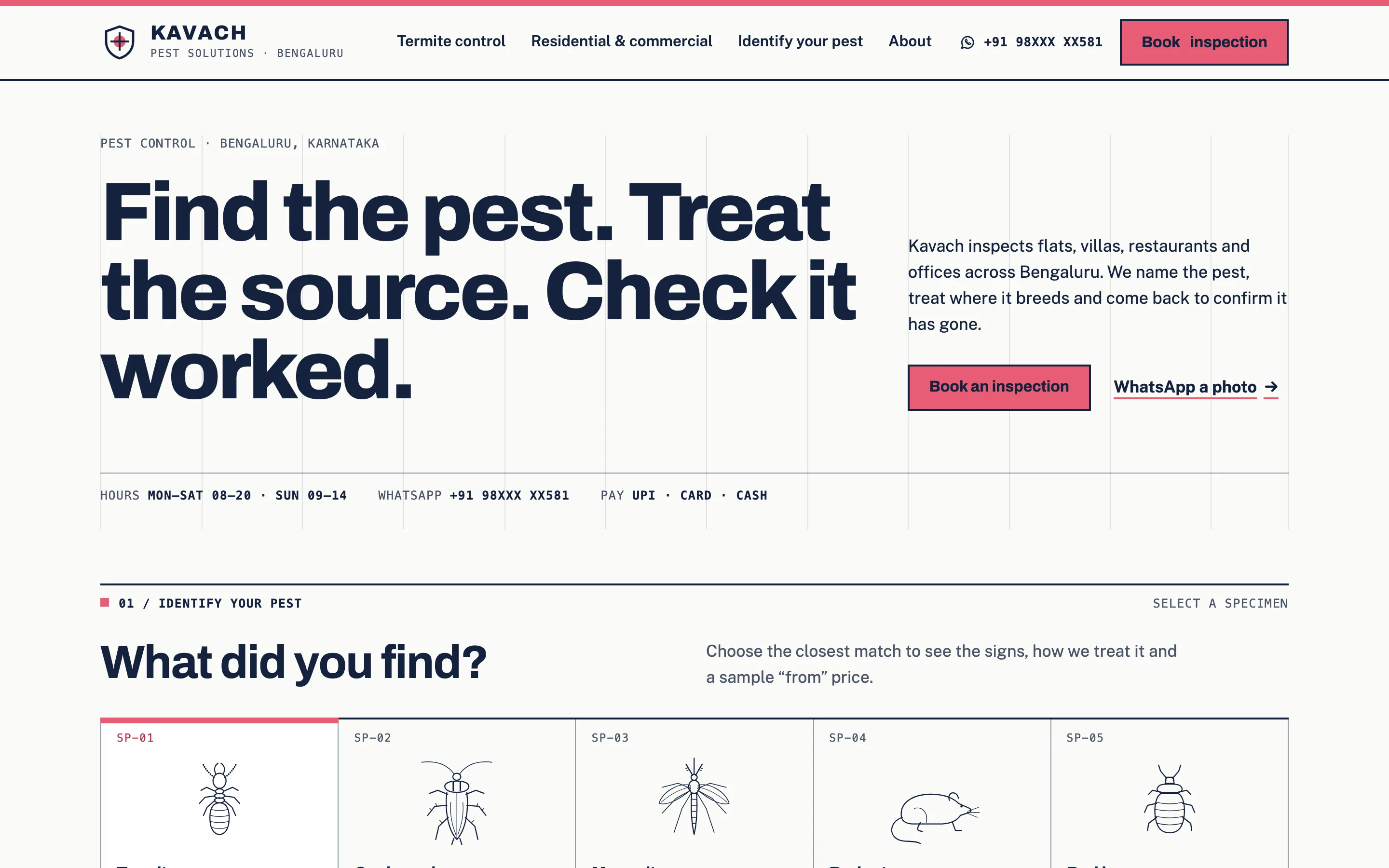
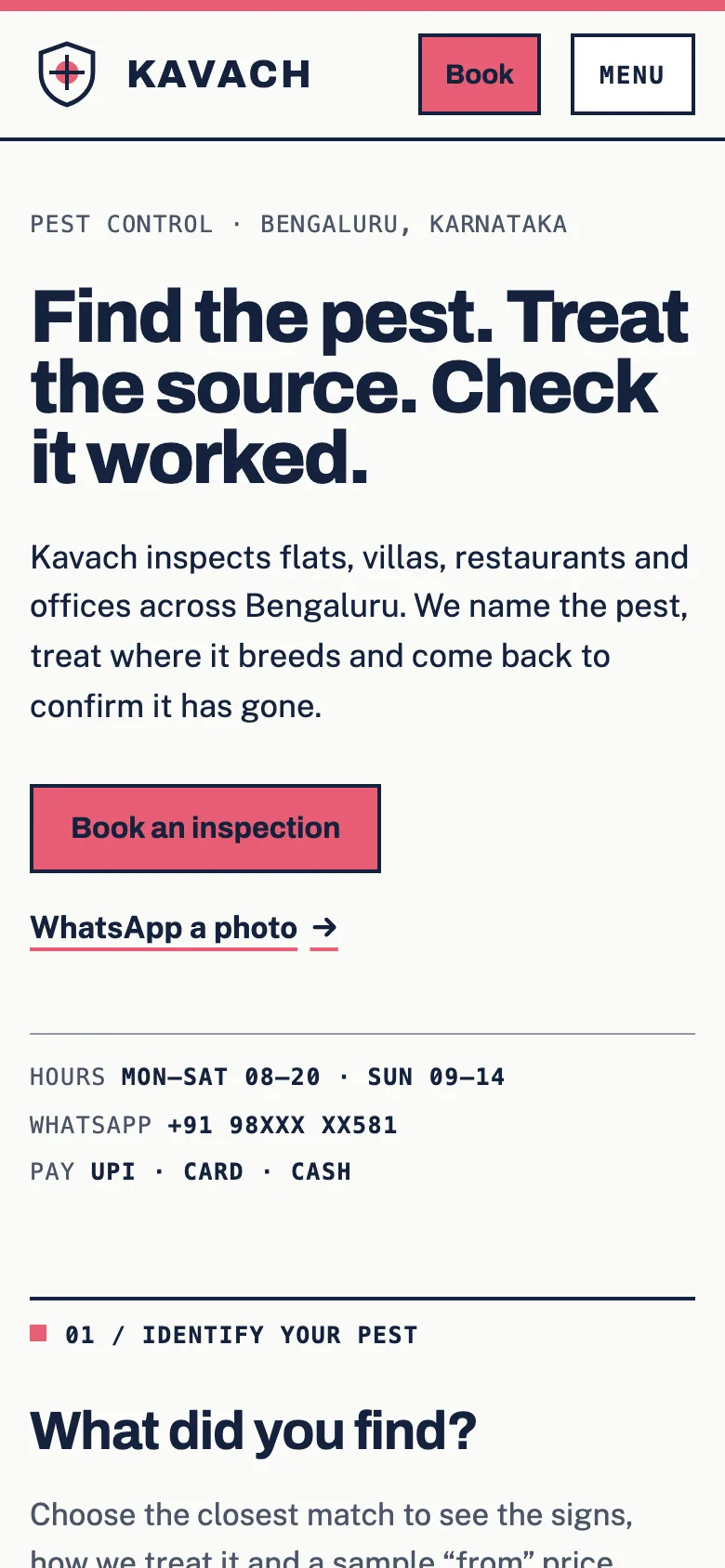
The demo is for Kavach Pest Solutions, a fictional company in Bengaluru, and it is built like a field guide. Under the headline, the home page asks one question: what did you find? Five specimen cards show line drawings of termites, cockroaches, mosquitoes, rodents and bed bugs. Choosing one opens a plate with the drawing, the features to recognise it by, its actual size, the signs people notice at home, how the company treats it, how many visits it takes and a sample from price. Every plate ends with two links: one to the matching service and one to the booking form with that pest already selected. Without JavaScript, all five plates are simply shown one after another, so nothing is hidden.
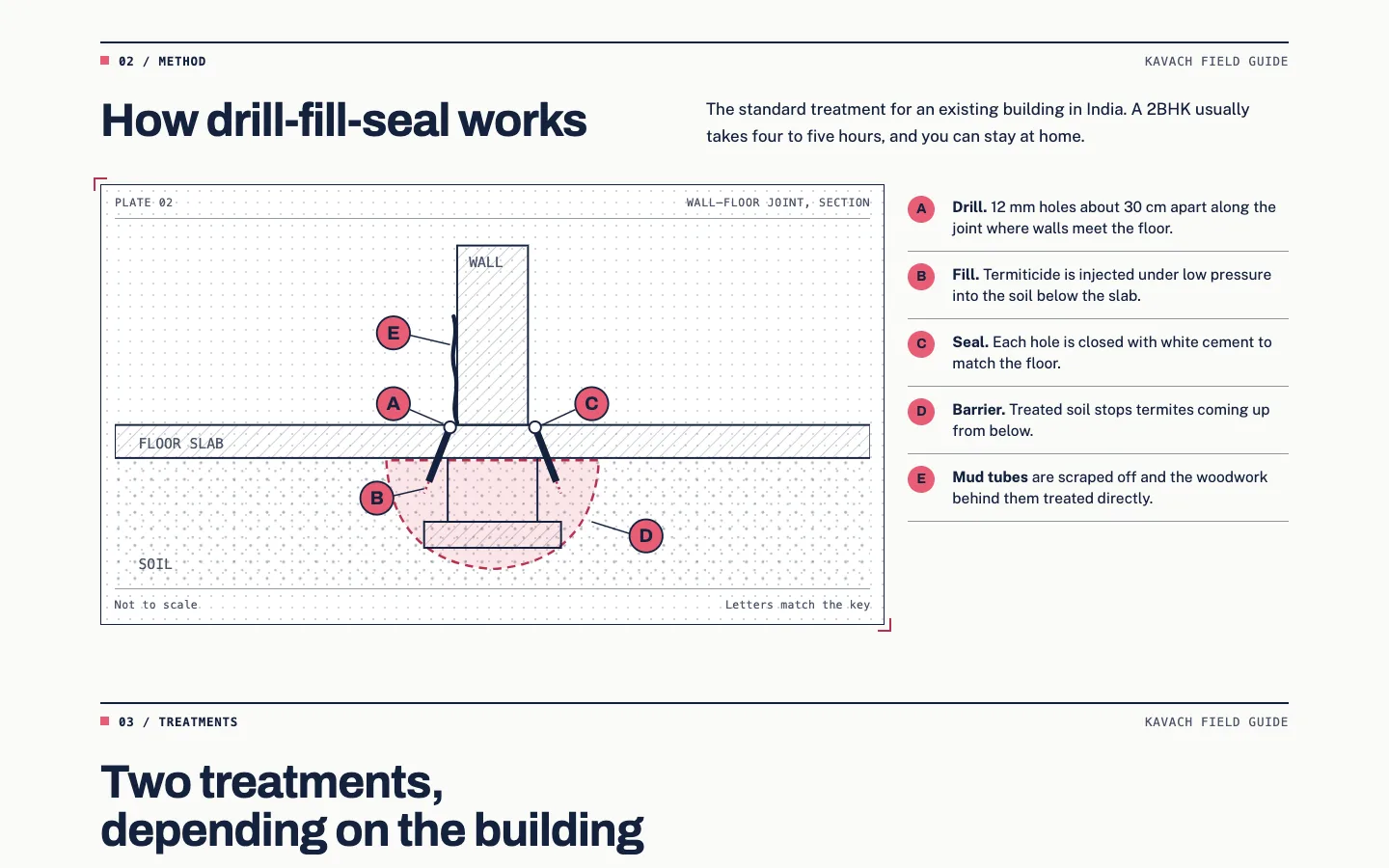
The termite page explains the treatment that worries customers most. A labelled cross-section shows a wall, the floor slab and the soil, with the drilled holes, the treated barrier and a mud tube, and a lettered key explains each step in one sentence. Post-construction and pre-construction treatments sit side by side, with what happens after the visit.
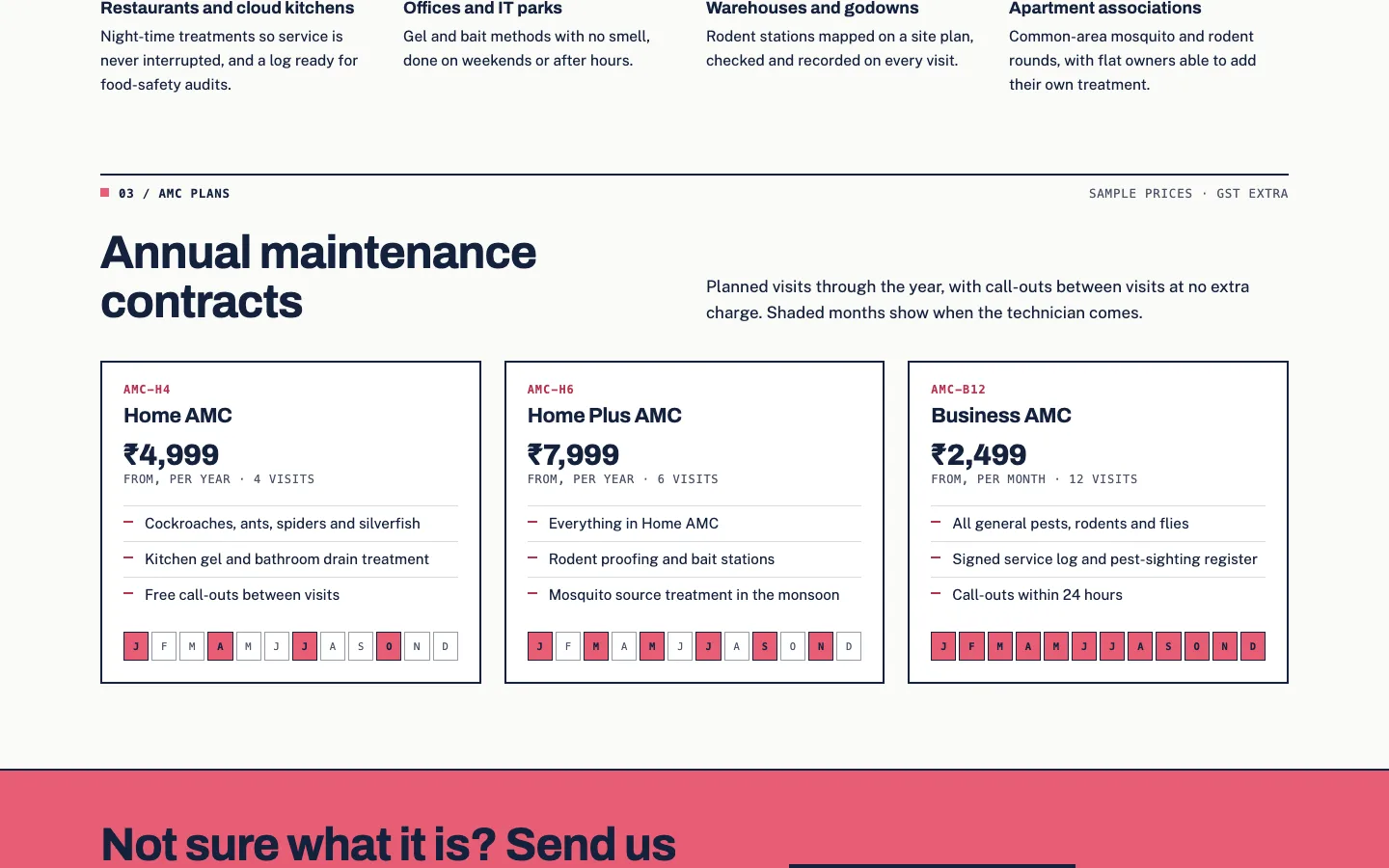
The residential and commercial page lists home treatments pest by pest, then the business sectors, then three maintenance plans. Each plan has a twelve-month strip that shows exactly when the technician visits, which answers the most common contract question before anyone has to ask it.
Booking is WhatsApp-first, because that is how most customers in India prefer to start. A prominent button opens a chat with a message already begun, asking for a photo. The form beside it covers the pest, the property type, the area of the city, a date and a time slot. It checks every field, points to the first mistake and then prepares a WhatsApp summary of the request.
Pages included
Home with the pest picker, the four-step working method, services, sample reviews and the areas covered; Termite Control; Residential and Commercial with maintenance plans; About, with safety notes and placeholders for licence, tax and insurance details; and Book Inspection. A not-found page in the same style completes the set.
Local SEO set-up
Every page carries one structured data graph describing the company as a ProfessionalService with its city, the areas it serves, opening hours, logo and share image. Service pages add Service and OfferCatalog data, and inner pages add breadcrumbs. Titles pair the service with the city, and each page targets its own search: the home page for general pest control, the termite page for termite treatment, and the services page for maintenance contracts. For a real company, the next steps are a Google Business Profile with the same hours and service areas, real photos from jobs, and short pages for the neighbourhoods that bring in the most calls.
Pest control websites by country
India
Indian English, prices in rupees with GST shown separately, and WhatsApp as the main contact button. Customers expect yearly maintenance contracts to be called AMCs, UPI to be accepted, and areas to be named by locality. Licence numbers and the GSTIN should be visible in the footer.
USA
US English, dollars and square feet. Service areas work best by city and ZIP code. Termite inspections for home sales are a large share of the work in many states, so they deserve their own page. Show the state licence number, and build to WCAG 2.2 AA, which also lowers the risk of accessibility claims.
Canada
Canadian English, Canadian dollars, and square feet for homes. Bed bugs in apartment buildings are a common reason to call, so landlord and tenant information helps. A company serving Québec needs a full French version under the Charter of the French Language.
Australia
Australian English and Australian dollars. Termites, often called white ants, dominate the market, and customers recognise the Australian Standard for termite management, so naming it on the treatment page builds trust. Timber pest inspections before a purchase are a common service, and the state licence number and ABN belong on every page.