What customers need from a cleaning company's website
Someone looking for a cleaner usually has one of three jobs in mind. A busy household wants a regular clean, weekly or fortnightly, at a price they can budget for and with the same person each time. A tenant moving out wants an end-of-lease or move-out clean that gets the bond or deposit back, and wants it on a specific day. A small business wants its office, studio or waiting room cleaned after hours by people it can trust with a key. All three ask the same first question: roughly how much will this cost?
Most cleaning websites answer with a contact form and a promise to call back. That is where they lose people, because a customer comparing three companies at nine at night will book with the one that shows a figure. The second question is trust. Cleaners work inside people's homes and offices, often while nobody is there, so customers look for the business number, police checks, insurance, a clear list of what is included and what happens if something is missed. A good cleaning website puts all of that in plain view, makes the price visible in seconds and turns a curious visitor into a booking request without a phone call.
How the demo handles it
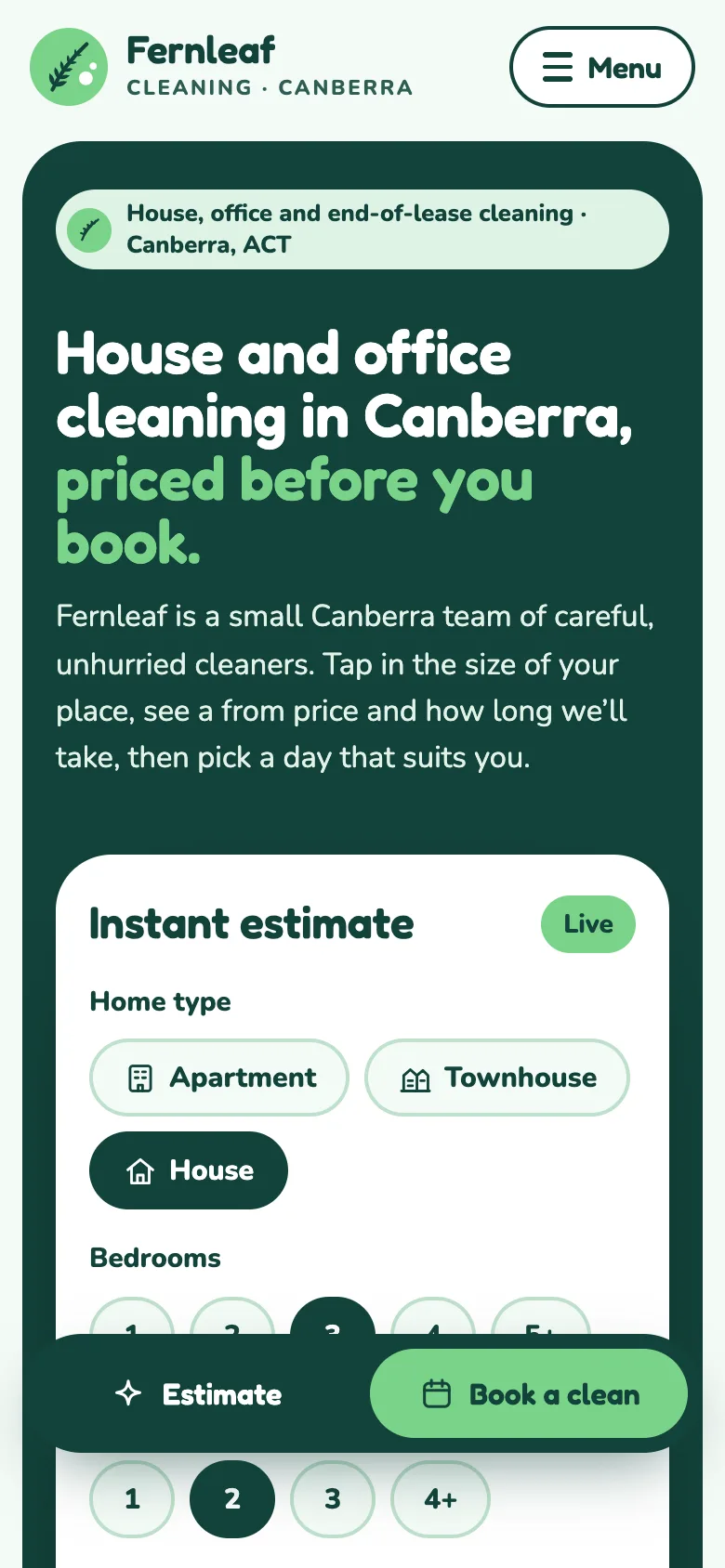
The demo is Fernleaf Cleaning, a fictional house, office and end-of-lease cleaning company in Canberra, Australia. The design is soft and fresh: a light mint background, deep green type and panels, round bubbles and four-point sparkles, pill-shaped buttons and chips, and line drawings of a spray bottle, fern fronds, a tidy office desk and a clipboard of ticks. Headings are set in Fredoka, a rounded typeface that feels friendly without being childish, and body text in Nunito. Section edges are drawn as a row of foam bubbles, and tick circles appear wherever the site lists what a clean includes, so the checklist idea runs through every page.
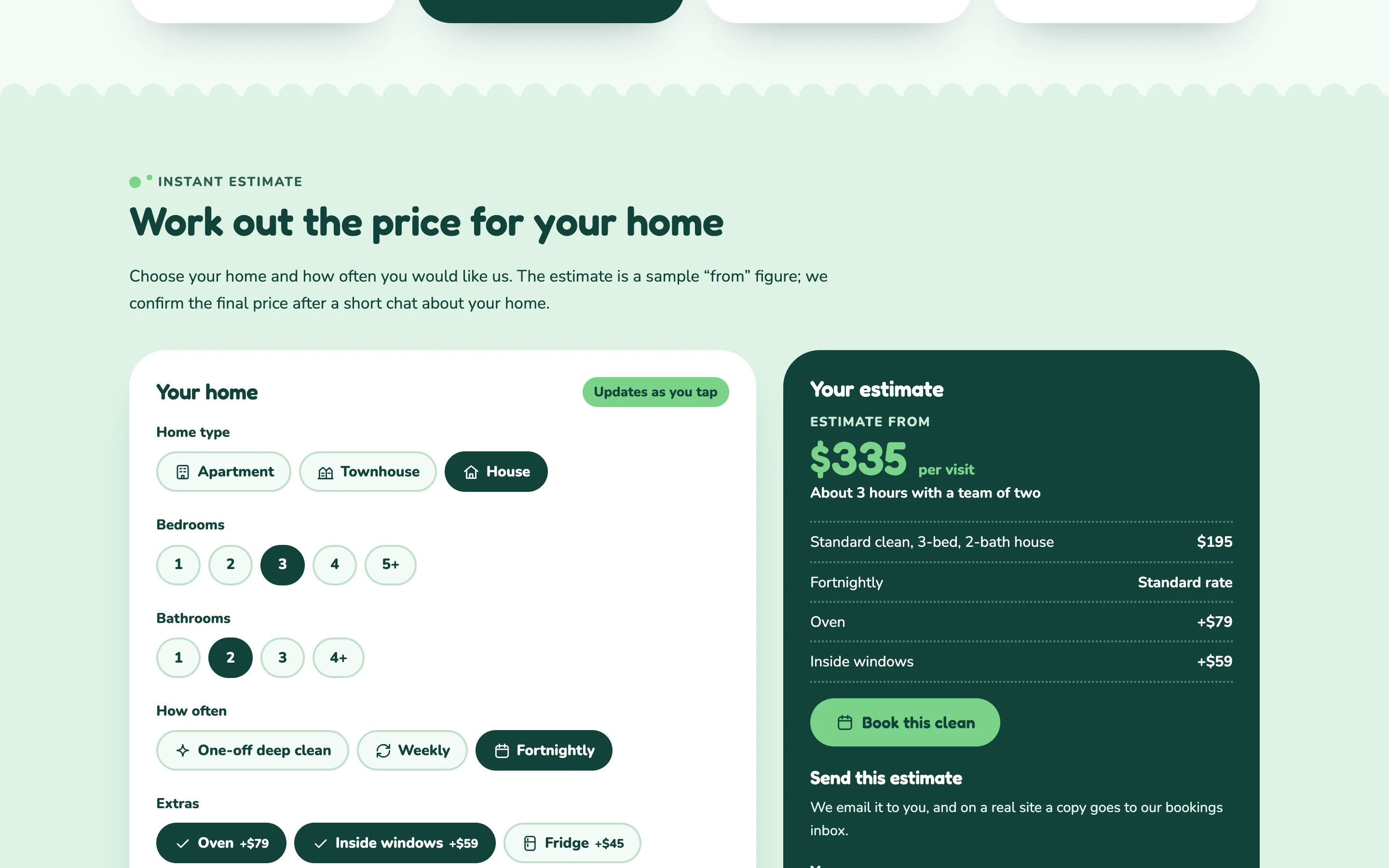
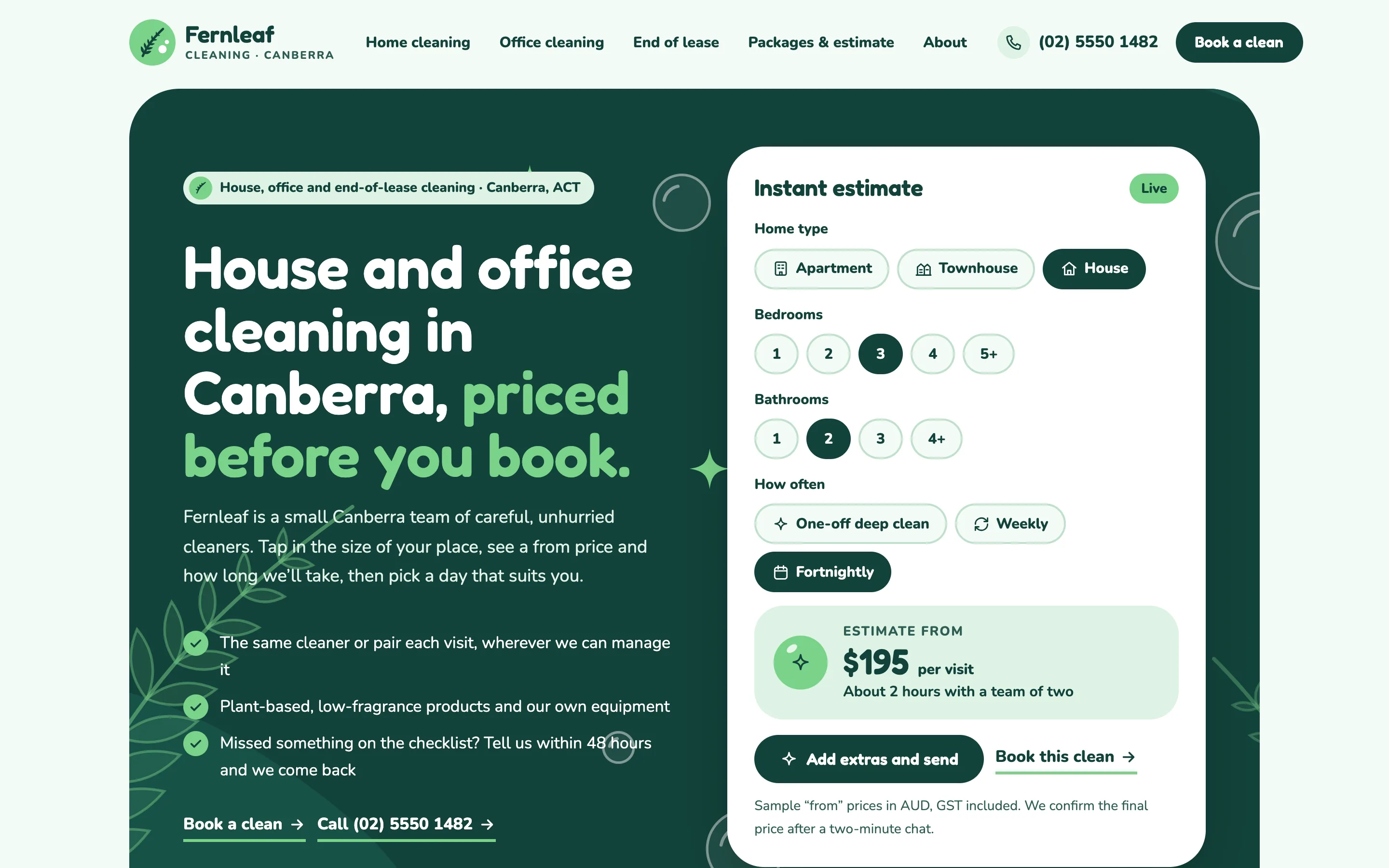
The signature feature is the instant estimate. It sits in the home page hero, inside the deep green panel, so a visitor sees a price before they scroll. They tap their home type, bedrooms, bathrooms and how often they want a clean, and the card updates with a from price, the time on site and whether one cleaner or a team of two will come. One tap carries that choice to the full estimator, which adds extras such as the oven, inside windows, the fridge and the balcony, and shows a line-by-line breakdown. From there the visitor can book the clean or send the estimate to their inbox, and on a real site a copy lands with the office.
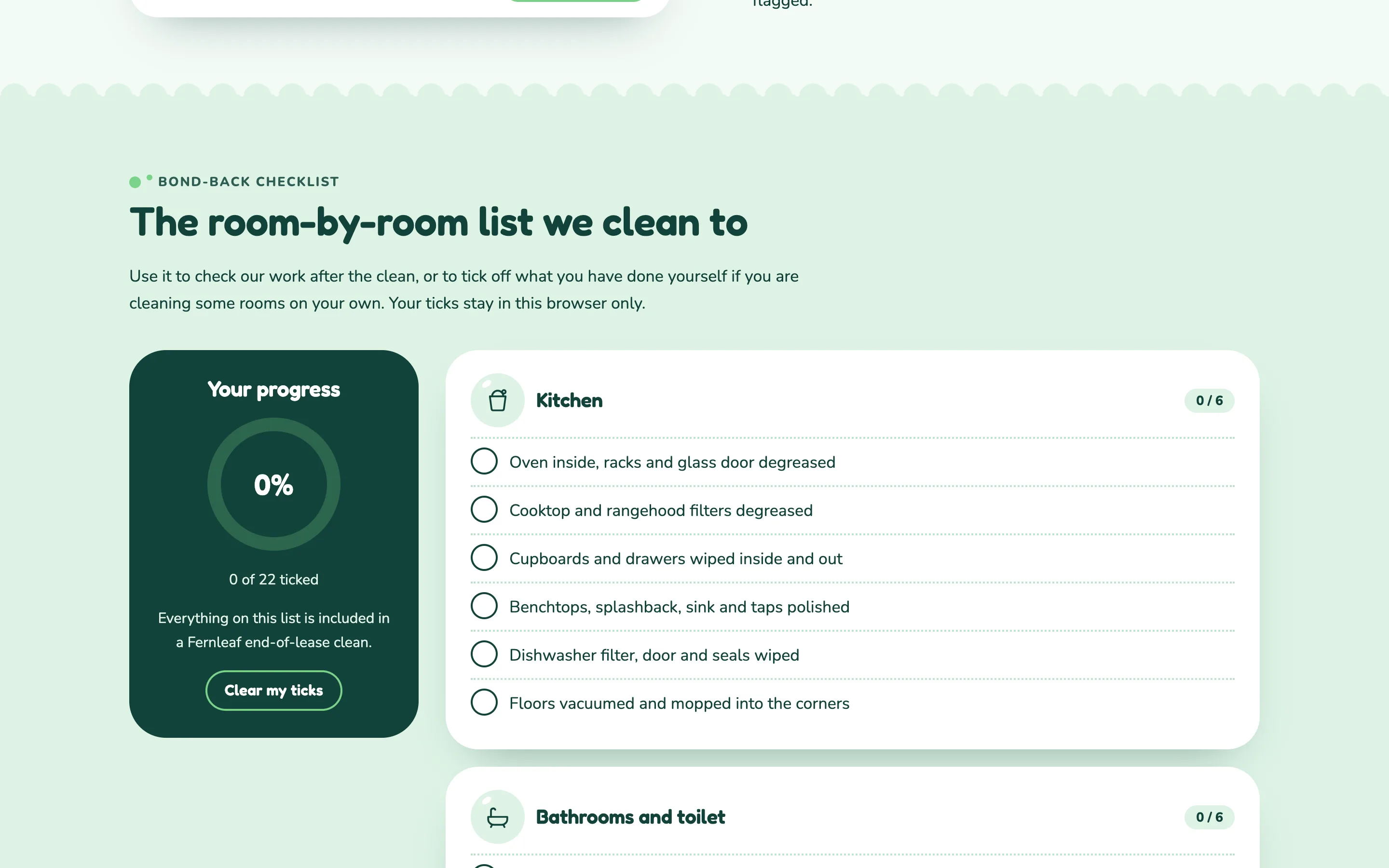
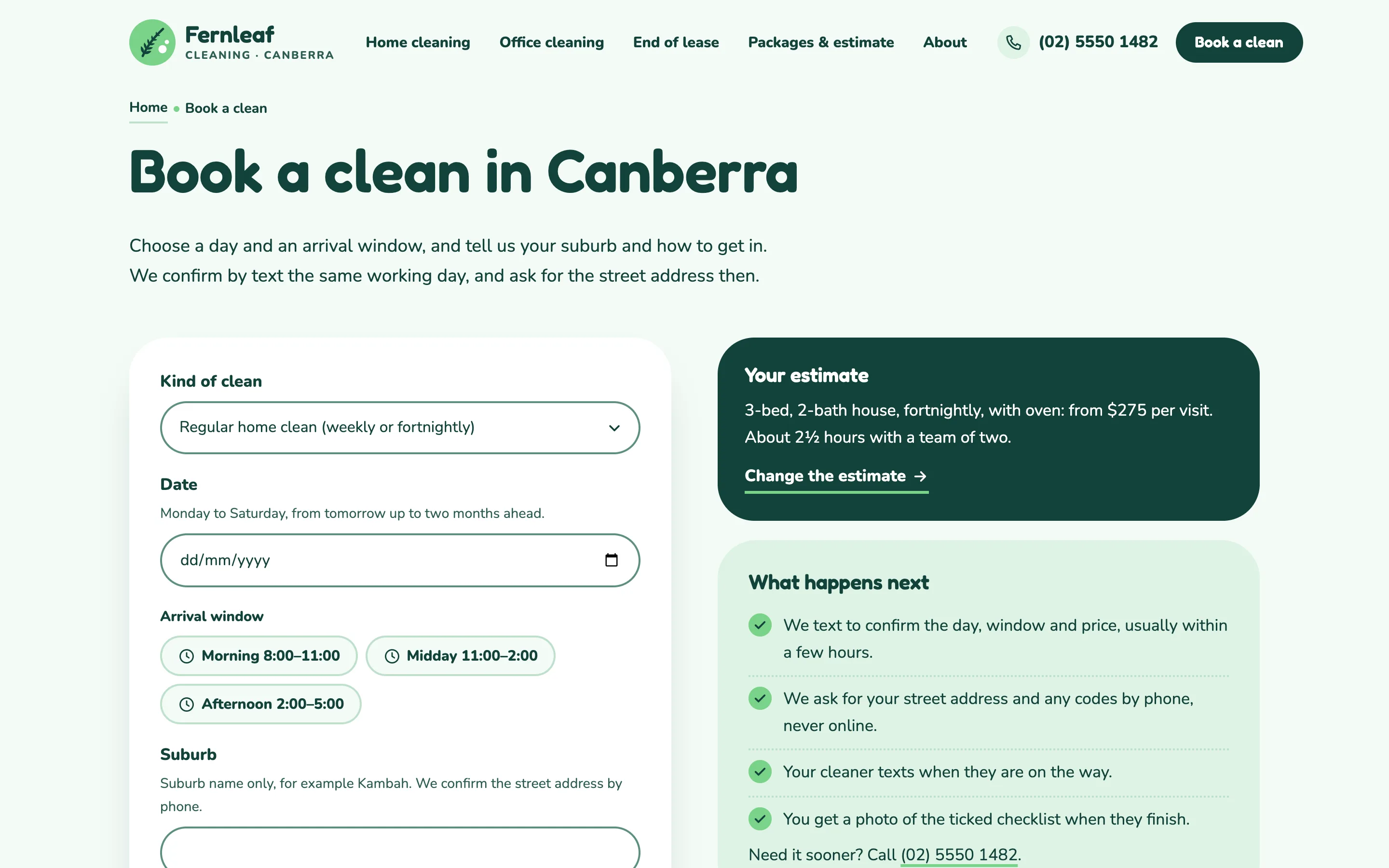
The booking page asks for a date, a three-hour arrival window, the suburb only, how the cleaner gets in (at home, key safe, key with a neighbour or office reception) and access notes, with a reminder not to type key safe or alarm codes into a form. When someone arrives from the estimator, their home size, frequency and extras appear beside the form. The end-of-lease page adds an interactive bond-back checklist, grouped by room, that tenants can tick off themselves; a progress ring shows how far they are, and their ticks are remembered in the browser.
The pages
- Home: the hero with the live estimate, three service cards, the standard checklist, how booking works, products and people, the districts served, sample reviews and questions.
- Home Cleaning: regular cleans compared with one-off deep cleans, a room-by-room checklist, sample prices and extras, notes on cleaning through Canberra's seasons, and questions.
- Office Cleaning: who it suits, the office checklist, how pricing works after a walk-through, how keys and alarm codes are handled, and questions.
- End-of-Lease Cleaning: prices by home size, tips for the exit inspection, the interactive bond-back checklist and questions.
- Packages & Estimate: four package cards, the full estimator with extras, the breakdown and the Send this estimate form.
- About: the story, values, the team shown as initials, placeholders for the business number, police checks and insurance, and the policies on changes, missed items and payment.
- Book: the booking form with the estimate carried over, and what happens next.
Local SEO set-up for a cleaning company
Every page carries HomeAndConstructionBusiness structured data with the company's name, logo, phone, email, opening hours and the districts it serves, without a street address, which suits a business that goes to its customers. Service pages add Service nodes with sample from offers, the home and packages pages add an OfferCatalog, pages with questions add FAQPage, and inner pages add breadcrumbs. There is no review or rating markup, because ratings belong on your Google Business Profile.
Page titles pair the job with the city, such as "End-of-Lease & Bond Cleaning in Canberra", because that is how people search. On Google Business Profile, set up a service-area business, list the same districts and suburbs as the website, choose house cleaning or the closest category as primary, add office cleaning as a secondary category, and link the booking button to the booking page rather than the home page. Posting before the busy weeks, such as the end of the month for moving out or the weeks before the holidays for deep cleans, keeps the profile active when demand peaks.
Country notes
India
Indian English, prices in rupees, and homes described as 1BHK, 2BHK or 3BHK, so the estimator would ask for that instead of bedrooms and bathrooms. Deep cleaning packages, sofa and mattress shampooing and kitchen degreasing are popular add-ons, and many customers book on WhatsApp, so it would be the main button with UPI mentioned for payment. The booking form would note society gate passes and timing rules, and the footer would carry a GSTIN placeholder.
USA
US English, dollars, and estimates by bedrooms, bathrooms and often square footage. Move-in and move-out cleaning replaces end-of-lease, and customers look for the words licensed, bonded and insured, so the footer would hold the real details for each. Recurring cleans are usually priced weekly, every other week and monthly, service areas are listed by ZIP code, and home services websites attract accessibility claims, which is why the demo is built to WCAG 2.2 AA.
Canada
Canadian English, Canadian dollars and metric, with prices shown before or including GST, HST or PST depending on the province. Move-out cleaning is common around the July moving season, winter brings salt and slush to entryways, and many customers ask whether cleaners are covered by the provincial workers' compensation board. A cleaning company in Quebec needs a French version of the site under the Charter of the French Language.
Australia
Australian English, dollars including GST and metric, as in the demo. End-of-lease or bond cleaning is a large share of the work, because each state and territory refunds rental bonds after an exit condition report, so a clear checklist and a re-clean promise sell well. Customers expect to see an ABN, police checks and public liability insurance; the demo shows each as a placeholder and uses the phone numbers the ACMA reserves for fiction. If you clean for NDIS participants, a separate page can explain how you work with plan managers.
Finland
Finnish and English, with euros in the Finnish format. Household cleaning qualifies for the household tax credit, kotitalousvähennys, so Finnish cleaning sites usually show the price before and after the credit, and the estimator would do the same. Move-out cleaning, muuttosiivous, follows the landlord's checklist much like end-of-lease cleaning in Australia. The footer would hold the Y-tunnus and the company's prepayment register status, and EU accessibility rules make WCAG 2.2 AA the expected standard.