What homeowners need from an HVAC contractor's website
People visit a heating and cooling website in one of two moods. The first is urgent: the house is getting hotter by the hour, or colder, and they need to know who can come, when, and roughly what it will cost. Some of them are in real danger, with a gas smell near the furnace or an elderly parent in a house with no cooling on a 112°F afternoon, and they should be told what to do before they are asked to fill in a form. The second mood is calm: a new homeowner wants a spring tune-up, a landlord wants a plan for three rentals, a family wants an honest view on whether a fourteen-year-old system is worth another repair.
A good HVAC website serves both without making either wait. The phone number is visible on every screen, the emergency path is short and clear, and the calm visitor finds proper information: what a repair visit includes, how replacement systems are sized, what each maintenance plan actually covers, and whether the company comes to their ZIP code at all. It also has to be trustworthy, because heating and cooling has a reputation for upselling. Written prices, plain explanations and license details do more for conversions than any badge.
How the demo handles it
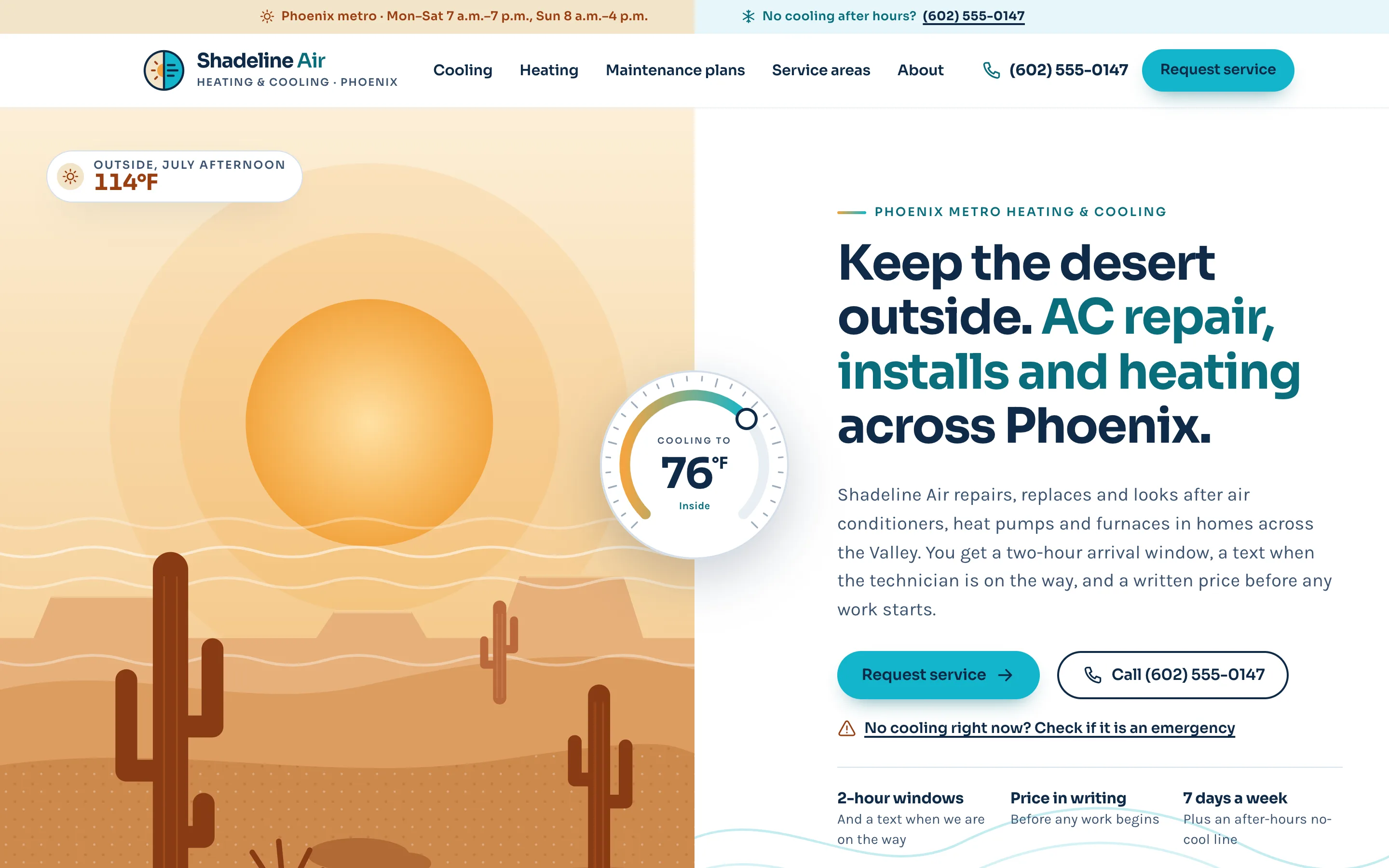
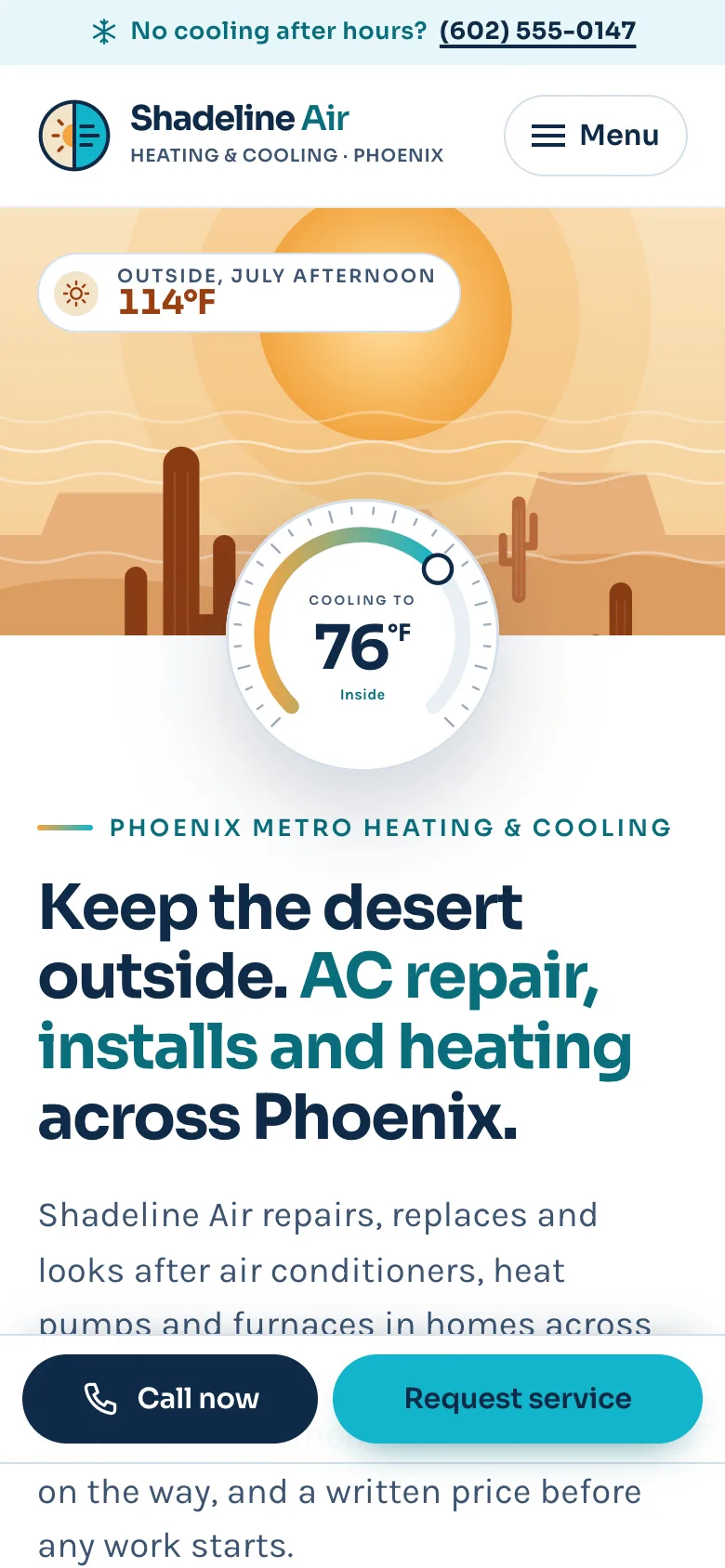
The demo is Shadeline Air, a fictional heating and cooling company in Phoenix, Arizona. The design is a split screen between hot and cool. The home page opens with a sun-baked desert half, with buttes, saguaros and heat shimmer, beside a clean white half with the headline, and a thermostat dial sits on the seam, reading 114°F outside and 76°F inside. Temperature readouts and dials return throughout the site, the service-visit steps run along a thermometer from 104° down to 76°, and the heating page swaps the halves: a frosty dawn outside, warm sand inside. The type is Sora for headings and Karla for text, in deep navy with a cyan accent for anything cool and warm sand and ember tones for anything hot. Every illustration is drawn for the site, so there are no stock photos of smiling technicians.
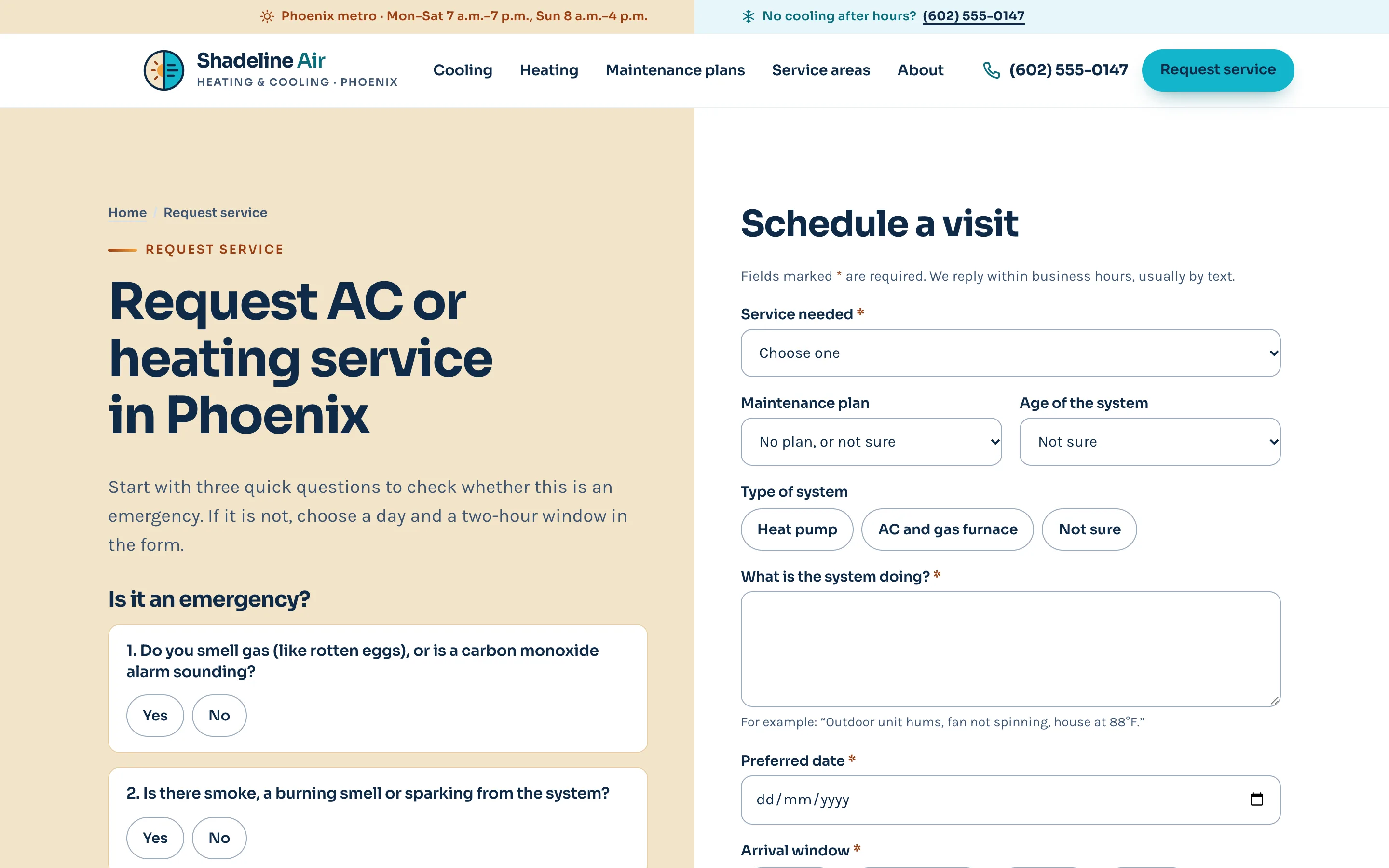
The signature feature is the emergency triage on the request page. It asks whether there is a gas smell or a carbon monoxide alarm, whether there is smoke or a burning smell, and whether the AC has stopped cooling on a day over 100°F, with a follow-up about babies, older adults or people who are unwell. Each combination leads somewhere specific: leave-the-house steps for gas, switch-it-off steps for burning, a call-now prompt with heat-safety advice and the signs that mean calling 911, or a short note that the request can be scheduled. The scheduling form then asks for the service, system type, a preferred date and a two-hour arrival window, and it is prefilled when the visitor arrives from a plan card or the ZIP checker.
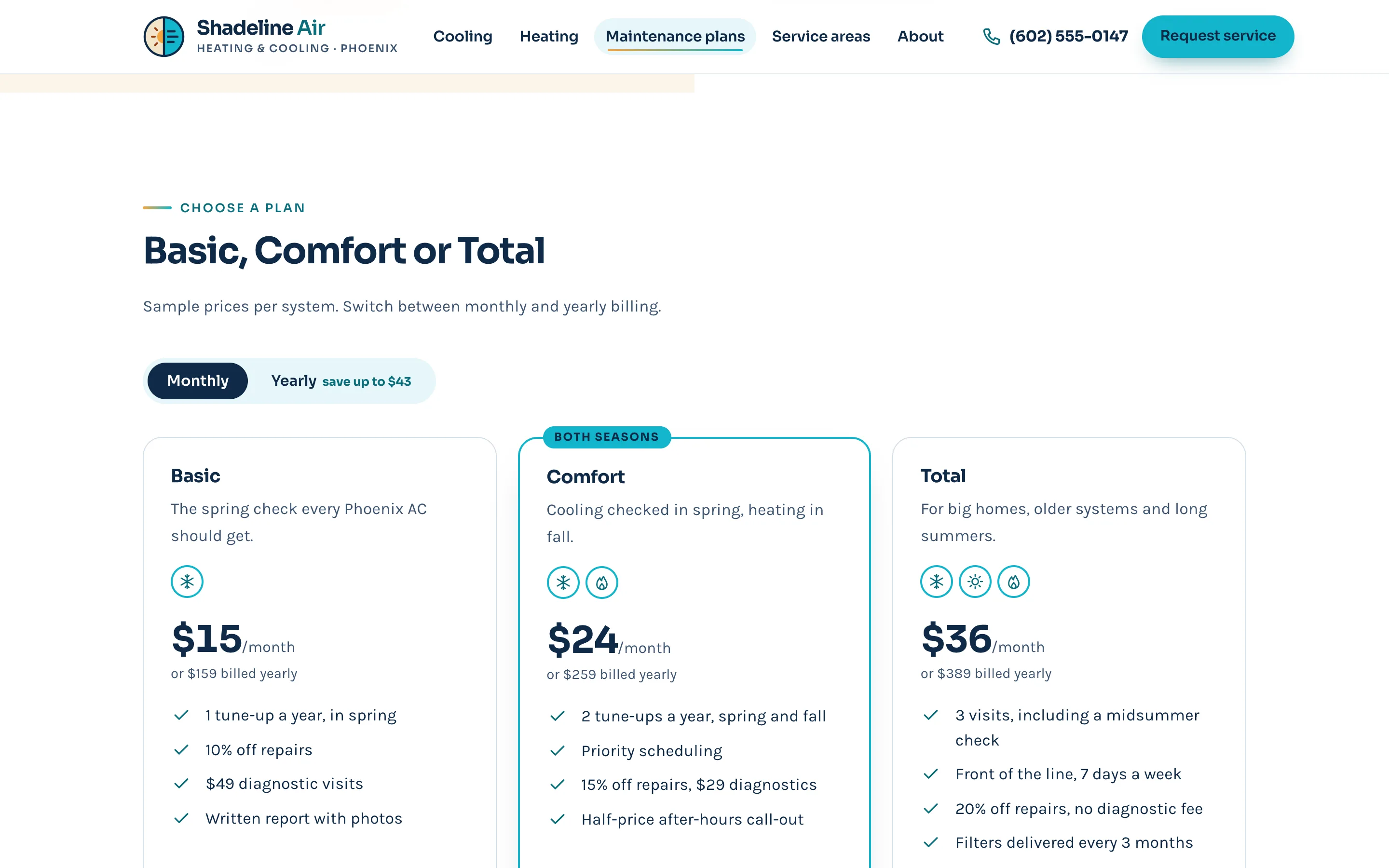
The maintenance plan page compares three plans by visits per year, scheduling priority, repair discount, diagnostic fee, after-hours fee and filters, with a monthly and yearly toggle that shows the saving. The cooling page adds a repair-or-replace helper that multiplies the age of the system by the repair price, a rule of thumb many technicians already use at the kitchen table.
The pages
- Home: the hot-and-cool hero, cooling and heating services, how a visit works, the emergency checklist, plan summaries, the ZIP checker and sample reviews.
- Cooling: warning signs, what a repair visit includes with sample starting prices, the repair-or-replace helper, how a replacement is sized and installed, and FAQs.
- Heating: heat pumps and gas furnaces explained, a gas-smell safety note, sample prices, checks to try before calling, and FAQs.
- Maintenance Plans: plan cards, the billing toggle, the comparison table and the spring and fall tune-up checklists.
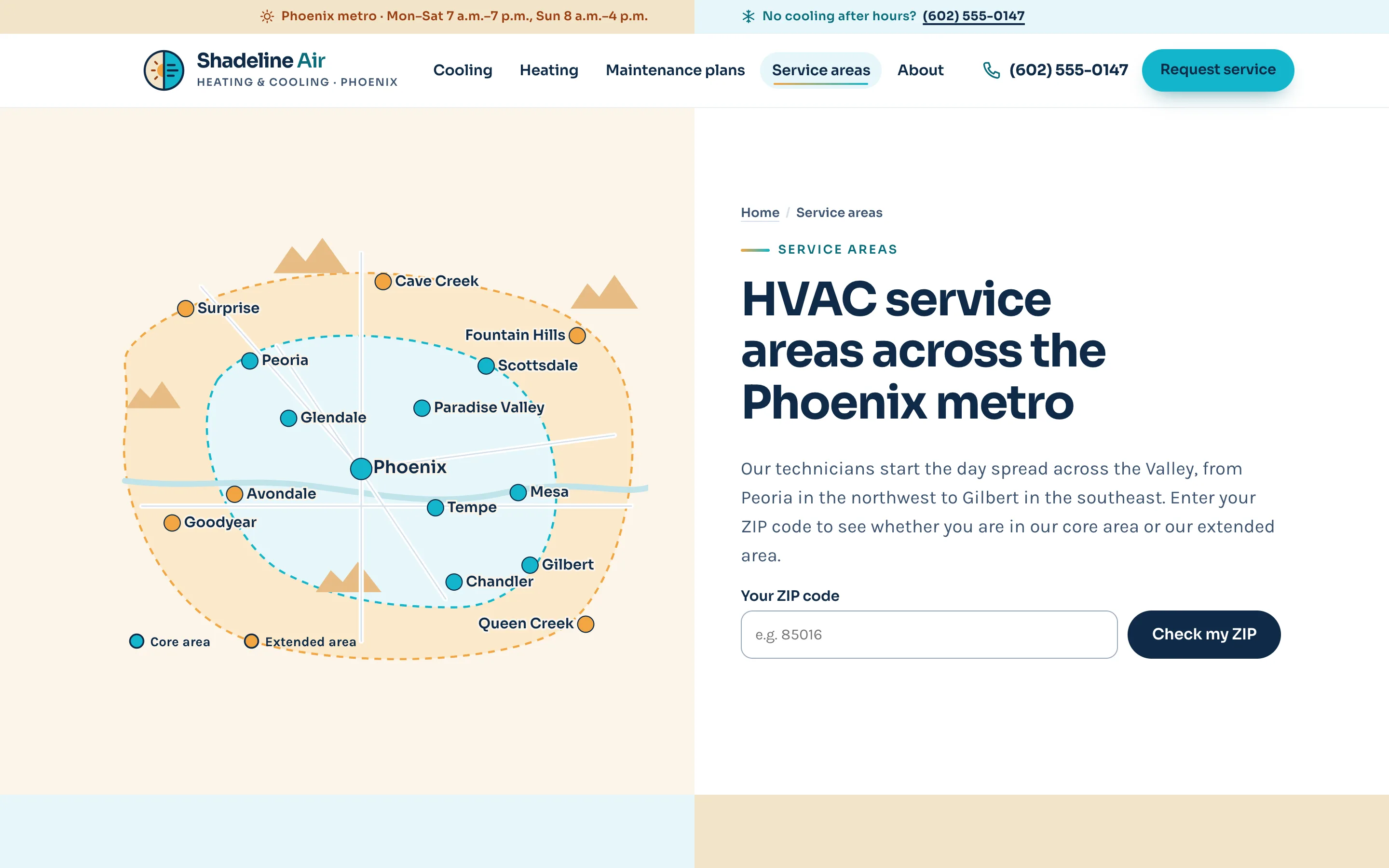
- Service Areas: an illustrated map, the ZIP checker, core and extended cities with their ZIP codes, and local notes.
- About: how the crew works inside a home, how jobs are priced, license and insurance placeholders, and the team.
- Request Service: the emergency triage and the scheduling form.
Local SEO set-up for an HVAC contractor
Every page carries HVACBusiness structured data with the company's name, logo, phone, email, opening hours and the cities it serves, without a street address, which suits a service-area business that does not take walk-ins. The cooling and heating pages add Service nodes with sample offers, the plan page adds an OfferCatalog for the three plans, pages with questions add FAQPage, and inner pages add breadcrumbs. There is no review or rating markup.
Titles combine the service, the city and the brand, such as "AC Repair & Replacement in Phoenix, AZ", because homeowners search for the job and the place. On Google Business Profile, set the business as a service-area business, list the same cities and ZIP codes as the website, choose the primary category that matches your main work, and point the appointment link at the request page rather than the home page. Seasonal posts about tune-ups, monsoon storms or the first cold snap give the profile fresh activity at the times people are searching.
Country notes
USA
US English, dollars, degrees Fahrenheit and ZIP codes for service areas. Most states license HVAC or mechanical contractors, and several, Arizona and California among them, expect the license number on advertising, so the demo's footer has a marked place for it next to bond and insurance details. Anyone who handles refrigerant needs EPA Section 608 certification. Efficiency standards and refrigerants are changing, with SEER2 ratings and the move to lower-impact refrigerants in new equipment, and rebates differ by utility and state, so they belong on one page that is easy to update. Websites for home services also attract ADA accessibility claims, which is why the demo is built to WCAG 2.2 AA.
Canada
Canadian English with Celsius, although many contractors still quote equipment in BTUs and tons. Here the emergency that matters most is no heat during a cold snap, so the triage would lead with furnaces, boilers and carbon monoxide alarms rather than heat. Gas work is regulated provincially, for example by the TSSA in Ontario, and contractors in Quebec must show their RBQ licence number in advertising and publish the site in French as well as English under the Charter of the French Language. Rebate programs for heat pumps change often and vary by province and utility, so the site should link to the current program rather than promise amounts.
Australia
Australian English, Celsius, and the local vocabulary of split systems, ducted reverse-cycle and evaporative cooling. Anyone handling refrigerant needs a licence from the Australian Refrigeration Council (often called ARCtick), the electrical side needs a state electrical licence, and each state has its own building or trade licensing, so the footer has places for licence numbers and the ABN. Heatwaves make no cooling an urgent call for older residents, much as in Phoenix, while in Victoria and other cooler states the safety message shifts to servicing gas heaters regularly. Phone numbers on a demo use the ACMA's fictional ranges, and on a live site the number should be a local landline or a 13 or 1300 number, whichever customers already know.