What aurora travellers need from your website
People booking a northern lights tour are rarely in your town for long. They have three or four nights, a phone in their hand and one big question: is tonight worth going out? Most tour websites answer with a gallery of perfect green skies and a booking button, which looks great but says nothing about tonight. Guests then send the same message to every operator in town, and the operator with the clearest answer usually gets the booking.
A good website for northern lights tours does three jobs. It explains the conditions honestly, so travellers understand that cloud cover matters more than the Kp index and that nobody can promise the lights. It shows which nights still have seats, because groups are small and the best nights fill quickly. And it makes booking quick on a phone, including the details you need anyway: where to pick people up, how many children are coming and which boot sizes to pack.
How the demo handles it
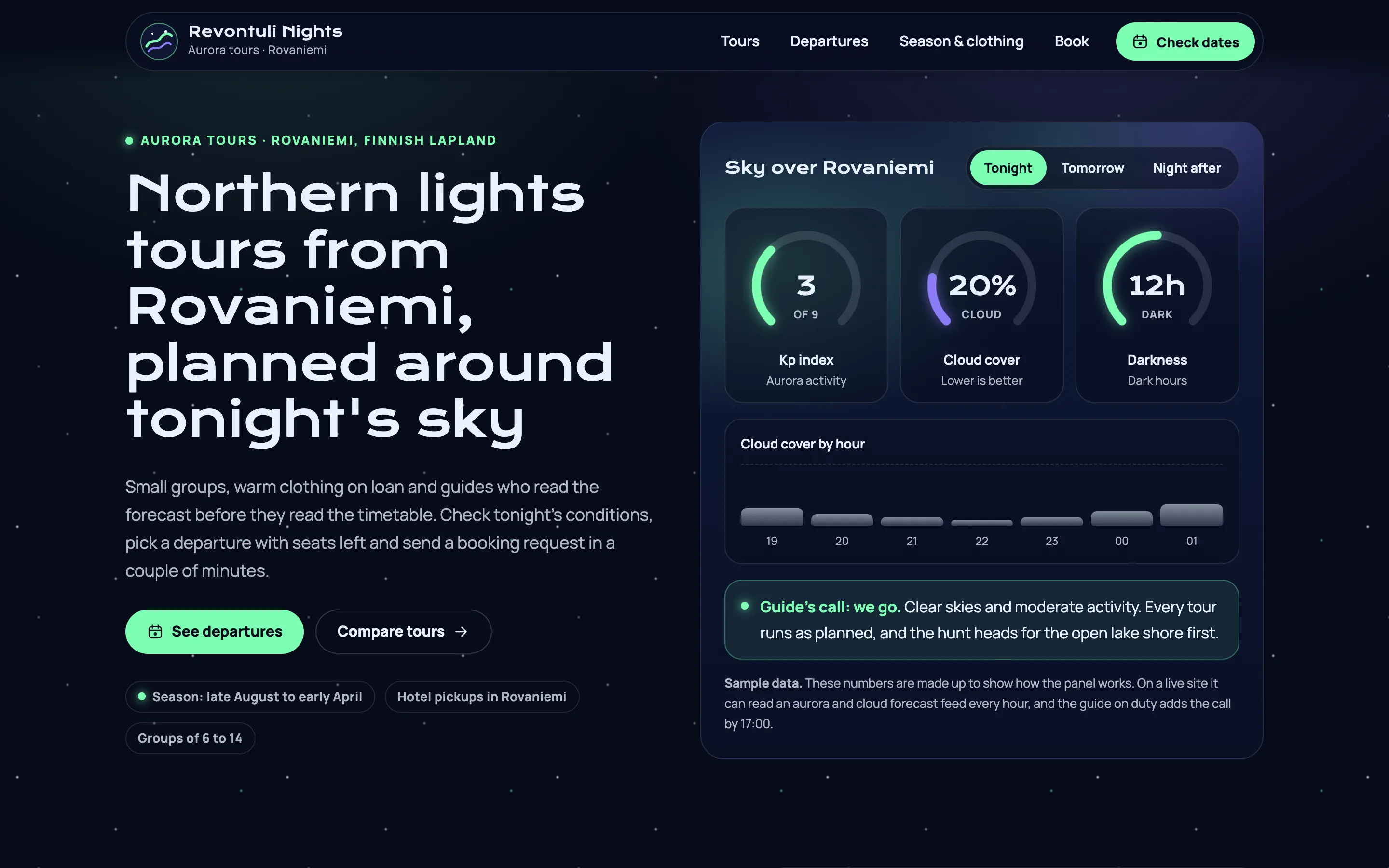
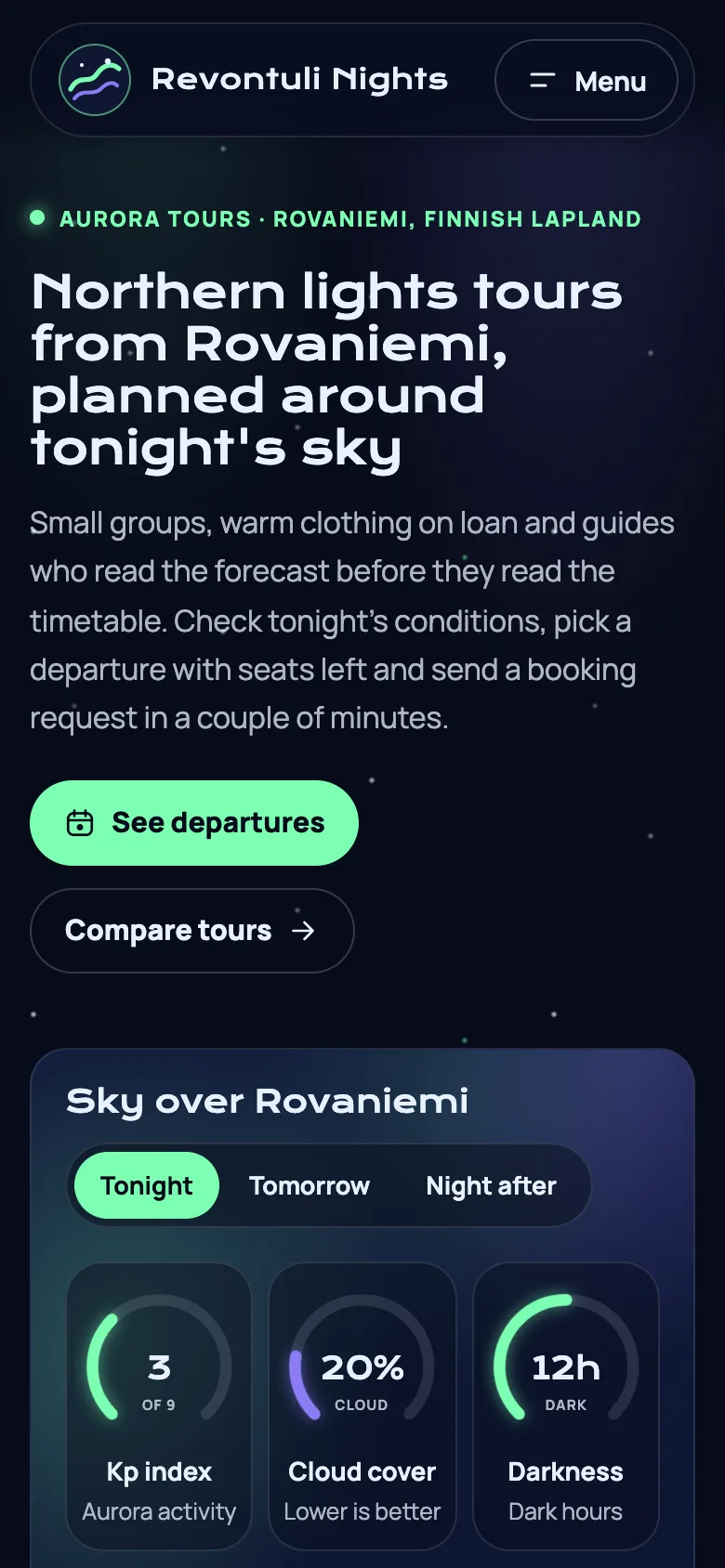
The demo is built for Revontuli Nights, a fictional small-group operator in Rovaniemi, Finland. The home page opens with a night-sky dashboard instead of a stock photo. Round gauges show the Kp index, cloud cover and hours of darkness, with an hour-by-hour cloud chart and a written guide's call for tonight, tomorrow and the night after. Everything in the panel is labelled as sample data, and a short guide below it explains how to read each number, so the page teaches as well as sells.
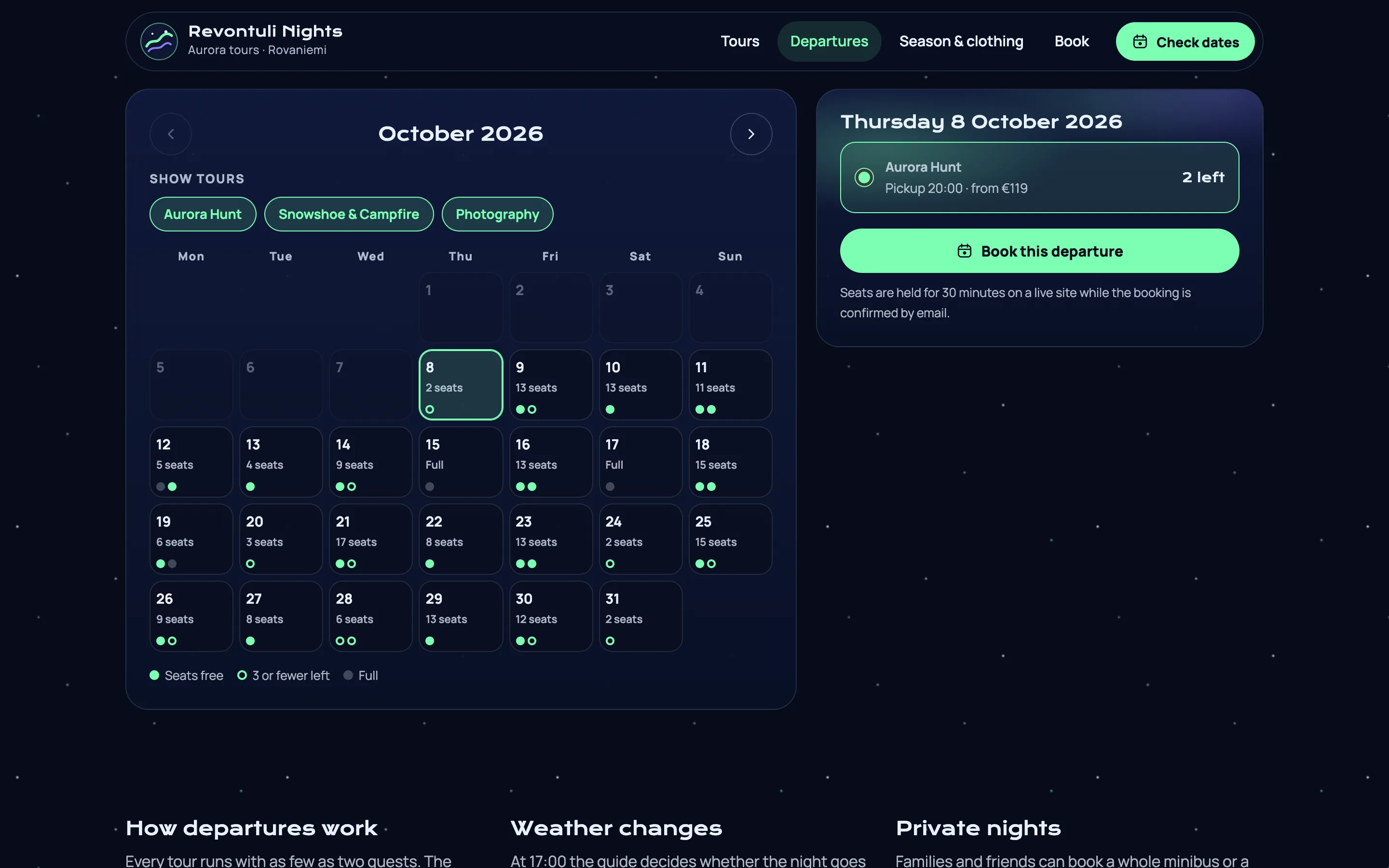
The signature feature is the departure calendar. Each month shows every night of the season with the seats left across all tours, using small markers for nights that are nearly full or sold out. Guests can filter by tour, tap a night to see its departures, pickup times and seats, then choose one. The Book button carries the tour and date into the booking form, so nothing has to be typed twice. Without JavaScript the page still shows the weekly departure pattern in a plain table.
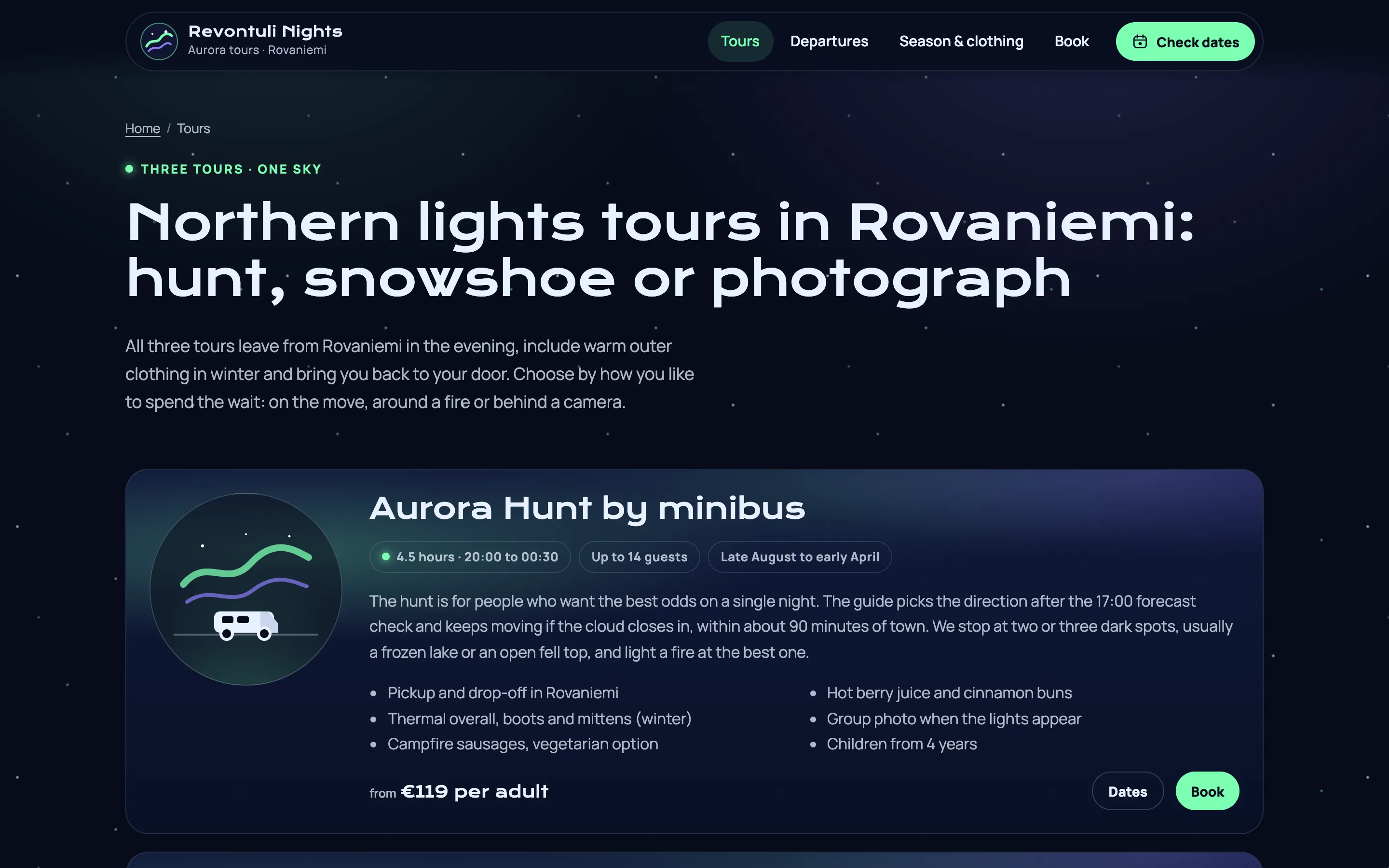
The Tours page compares an aurora hunt by minibus, a snowshoe walk to a campfire and a small-group photography tour, each with duration, group size, season, inclusions and a sample "from" price. The Season and Clothing FAQ covers the questions guides answer every evening: when to come, how cold it gets, what is lent and what to bring. The booking form asks for the pickup point and clothing sizes, shows a live sample total and confirms with a clear demo message instead of sending anything.
Pages in the demo
- Home: the sky panel, how to read it, three tours and how a tour night works.
- Tours: three tour cards with inclusions, children's ages and links to dates and booking.
- Departure Calendar: month view with seats left, tour filters and a selected-departure panel.
- Season & Clothing FAQ: a season strip, a three-layer clothing guide and seven answers.
- Book: a validated booking request with a summary panel.
Local SEO set-up
Each page targets one search intent, such as northern lights tours in your town, aurora photography tour or what to wear for the northern lights. Titles, descriptions and headings name the town and the activity naturally. The structured data describes the business as a travel agency, each tour as a tourist trip with an offer, the FAQ as an FAQ page, and every inner page with breadcrumbs, which helps search engines and AI assistants understand exactly what you run and where. The site loads no outside scripts or fonts, so it stays fast on hotel Wi-Fi and roaming data.
Finland
Most guests in Finnish Lapland are international, so English comes first, with a Finnish version added for local and domestic bookings and for the EU accessibility rules that now apply to many online services. Prices are shown in euros, temperatures in Celsius and distances in kilometres. The footer has a placeholder for the Y-tunnus business ID. Because the polar night and the snow season are central to the trip, the season page explains darkness, cold and clothing in plain words for visitors who have never been north of the Arctic Circle.
Canada
In Yukon, the Northwest Territories, northern Manitoba and northern Alberta, aurora tours often run from a single town with long drives to dark sites. The same calendar and sky panel work there, with Canadian English spelling, Canadian dollars, metric temperatures and phone numbers in the local format. Many guests come from Asia and Europe on multi-night packages, so the departure calendar can show package start dates as well as single nights, and the FAQ can cover wind chill and cold-weather clothing rental. Operators in Québec can add a French version.