What travellers look for on a tour operator's website
A traveller looking at a tour is trying to picture a day they have never had. They want to know what actually happens, in what order and for how long: where they meet, how long the boat ride or drive takes, how much time is spent at the main sight, whether lunch is included and when they will be back. A paragraph of adjectives does not answer that. A clear itinerary does.
The next questions are practical. Is this tour running in the month I am visiting? How hard is it, and can my children or my parents do it? What do I need to bring? What happens if the weather turns? And what does it cost, roughly, for my group? Travellers often plan from a phone, weeks ahead and in another time zone, so if those answers are missing they simply book with the operator whose website makes the day easy to imagine.
Finally, they need to trust you. Tours are paid for in advance by people who have never met you. Clear cancellation terms, honest season information ("sightings are never guaranteed"), safety notes and a real way to reach a person matter more than another gallery of drone shots.
How the demo handles it
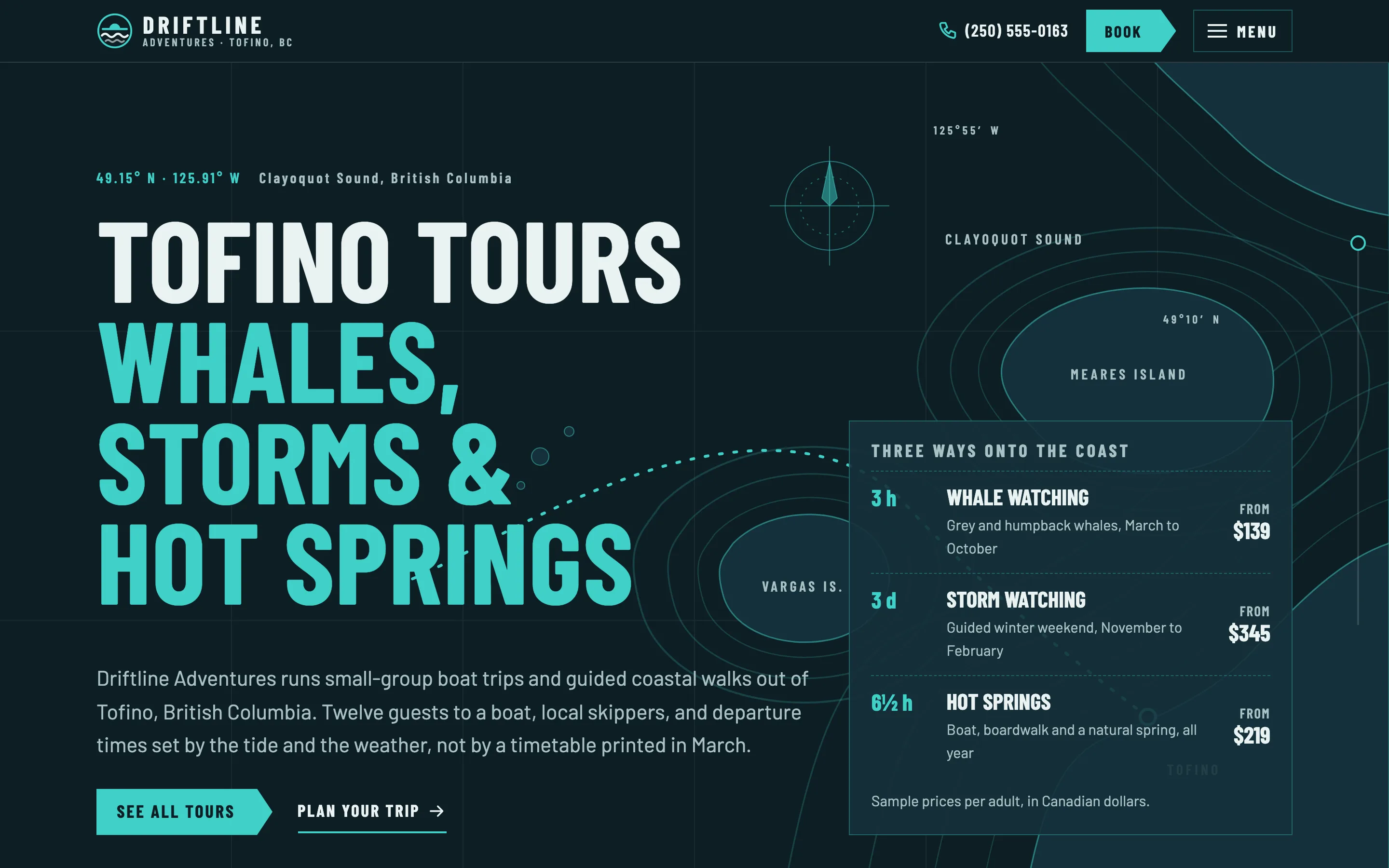
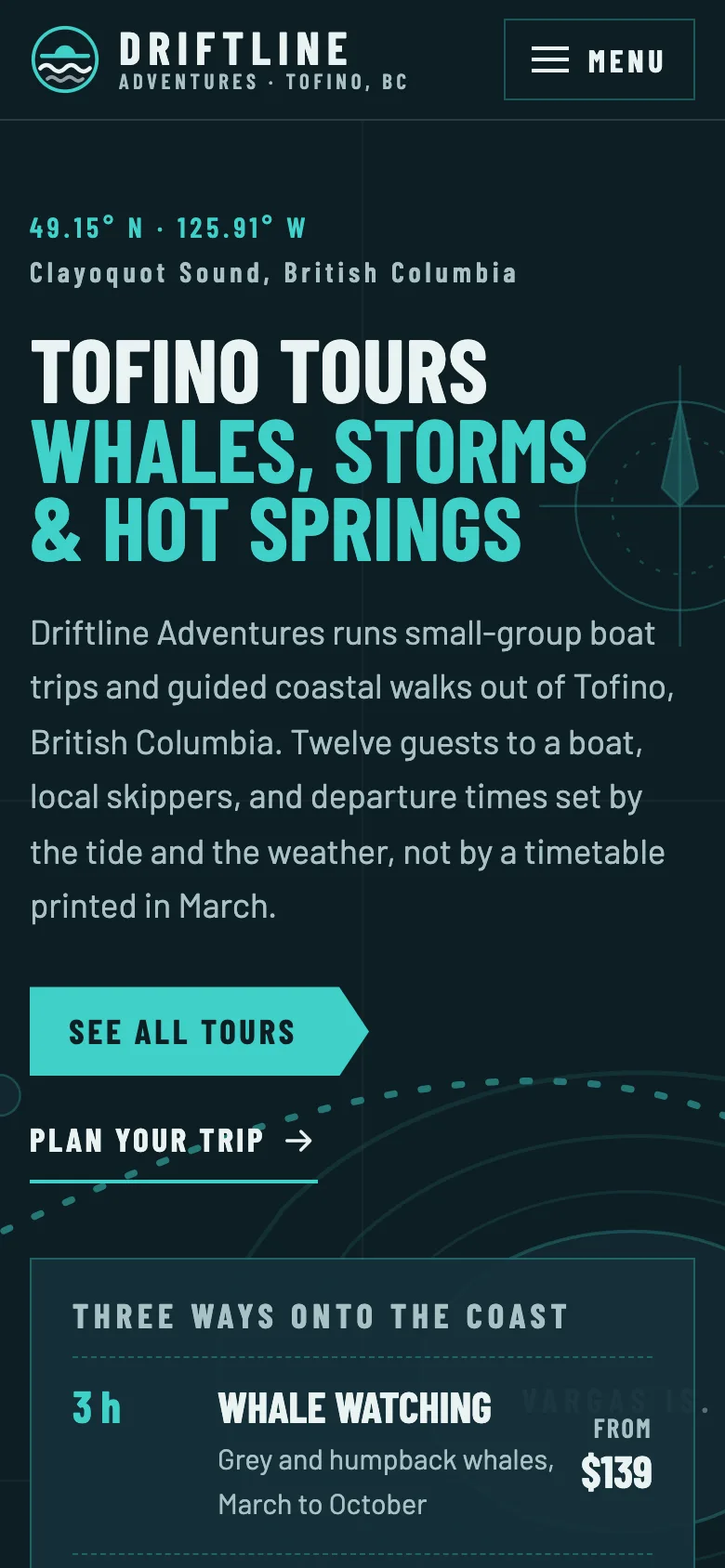
The demo, Driftline Adventures, is a fictional small-group operator in Tofino, British Columbia, running whale watching, winter storm watching and hot springs day trips. It is built as a scrollytelling site: the story of a tour is told as you scroll.
On the home page, a sticky chart of the coast sits beside five moments of a morning on the water. As the visitor scrolls, the chart highlights the leg of the route that matches the step, from the dock check-in to the whale feeding grounds and back by the inside passage. Every step is readable without scrolling effects, so nothing is ever hidden from someone using a keyboard, a screen reader or reduced motion.
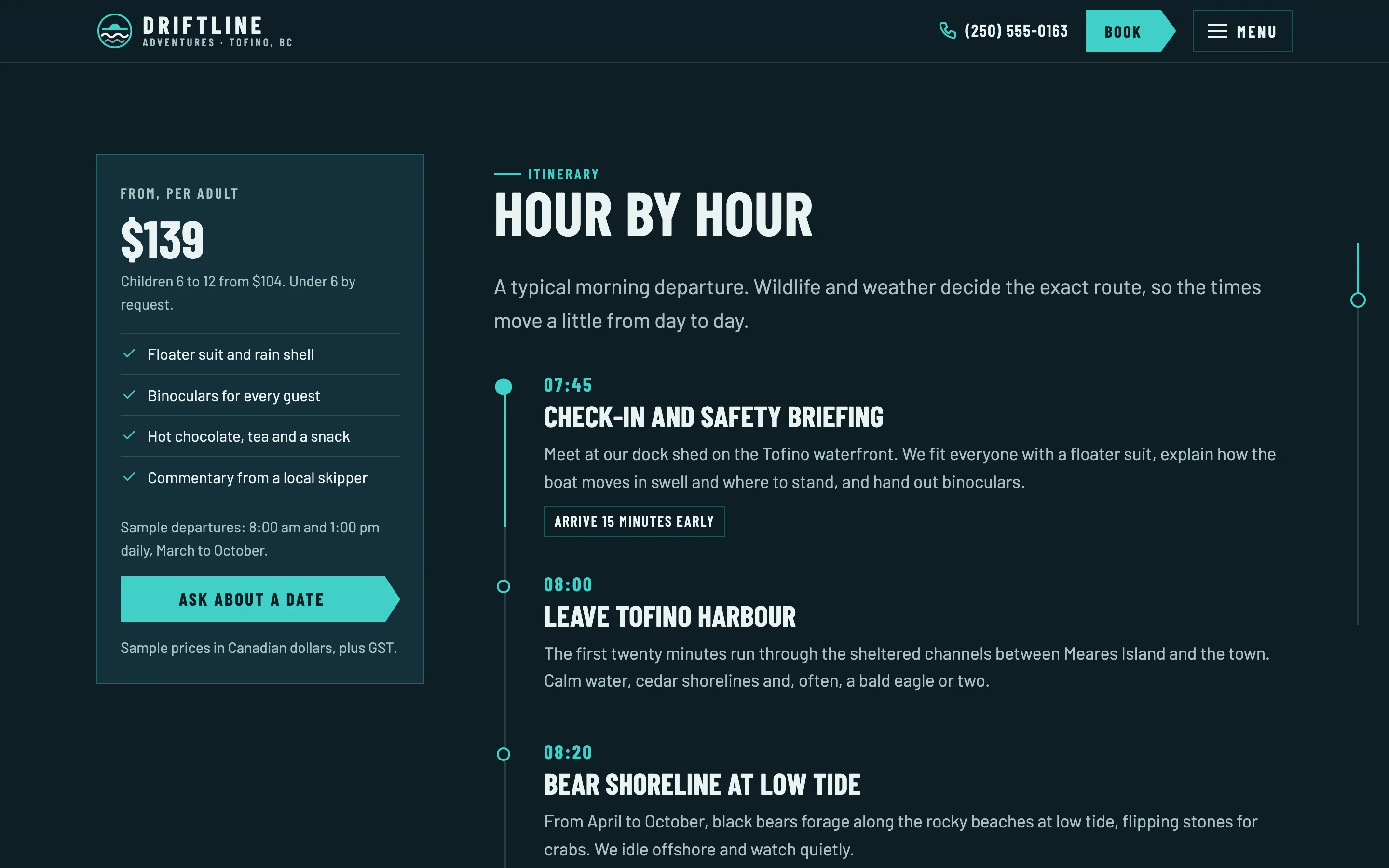
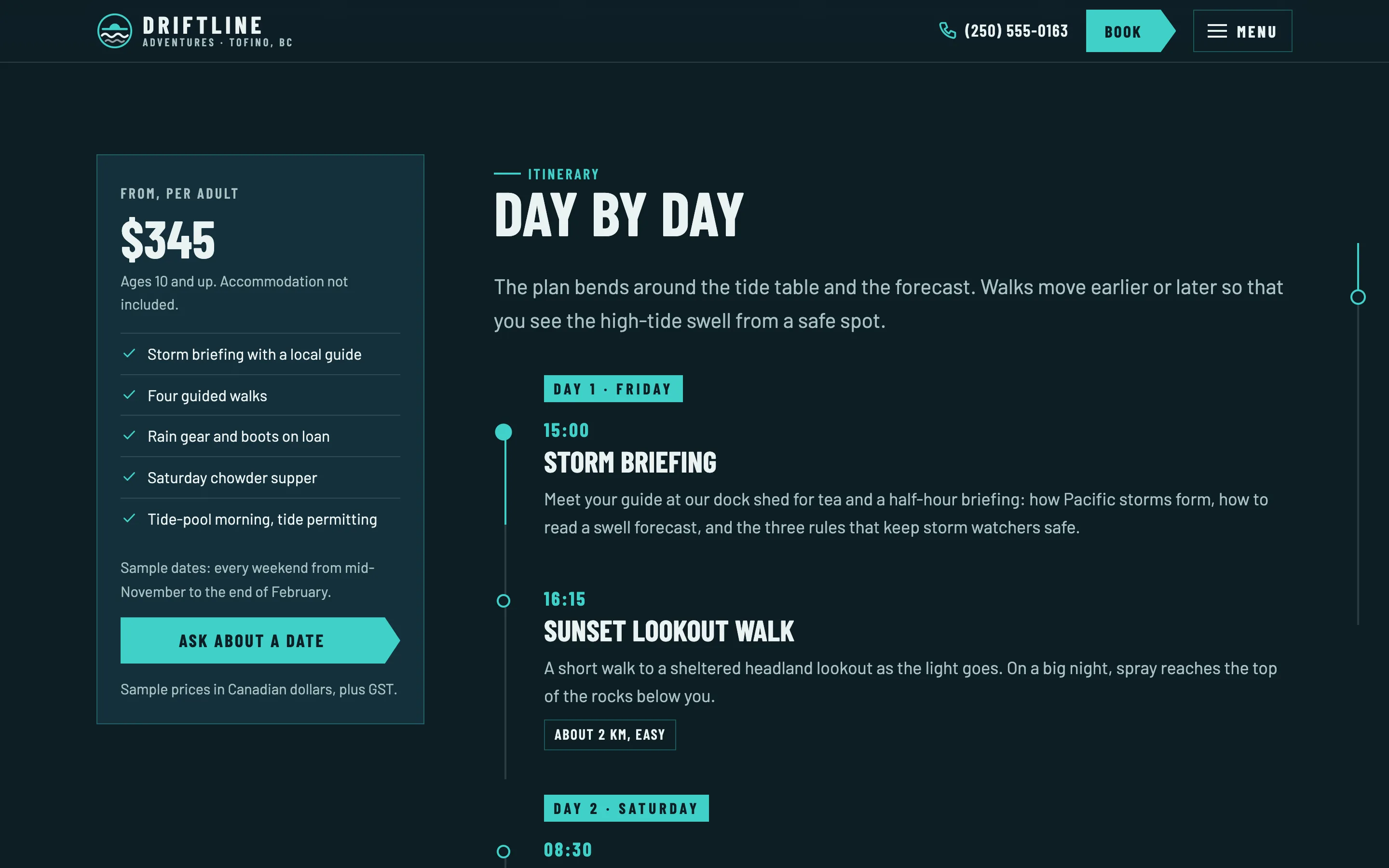
Each tour page then answers the planning questions in order. A fact bar gives duration, season, difficulty, group size and the "from" price. A sticky trip card keeps the price, inclusions and the booking button in view, while an itinerary timeline fills in as you read: hour by hour for day trips, day by day for the three-day storm weekend. Below that come the packing list, a season chart, policy notes such as the sightings promise and weather calls, FAQs and links to related tours.
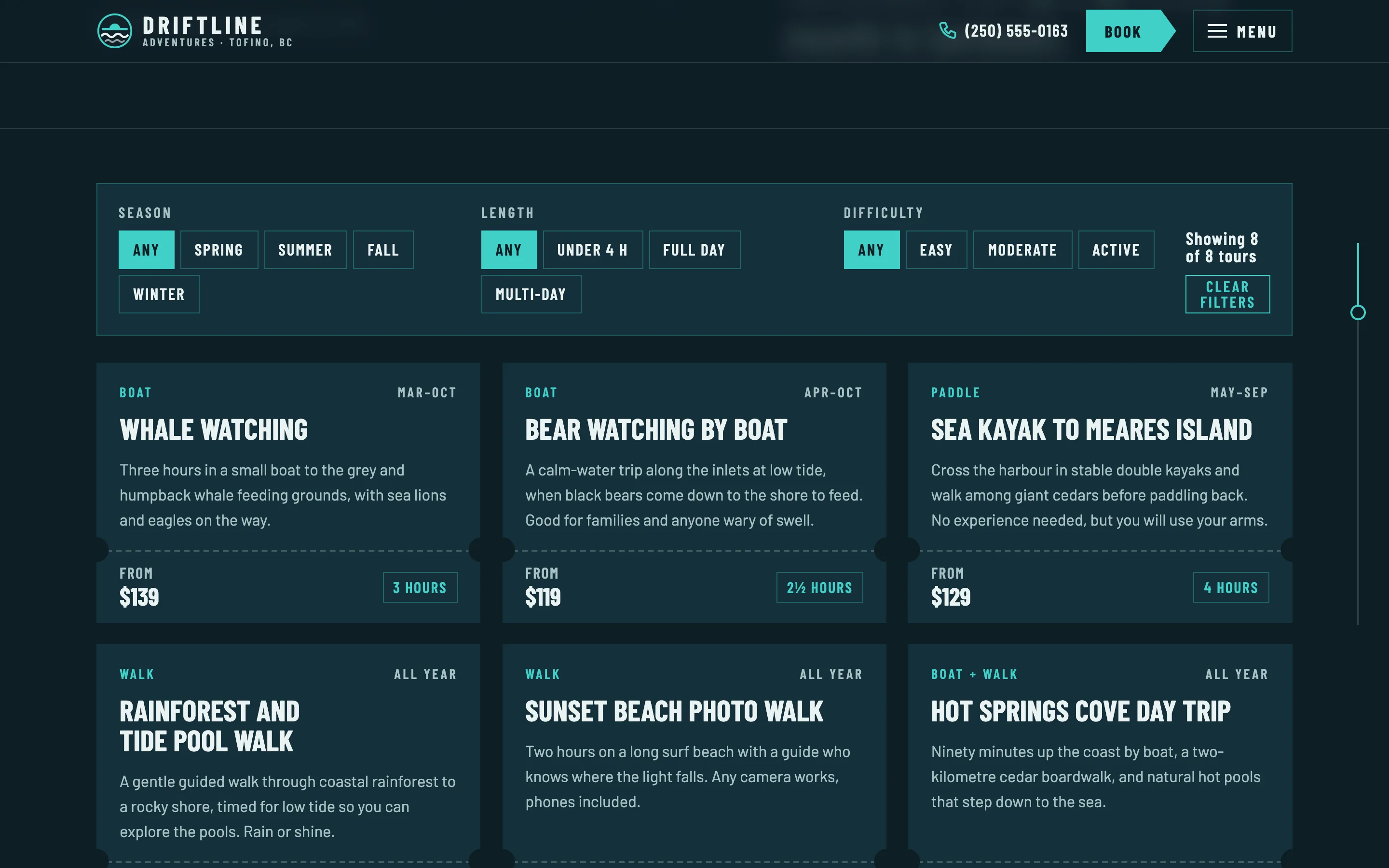
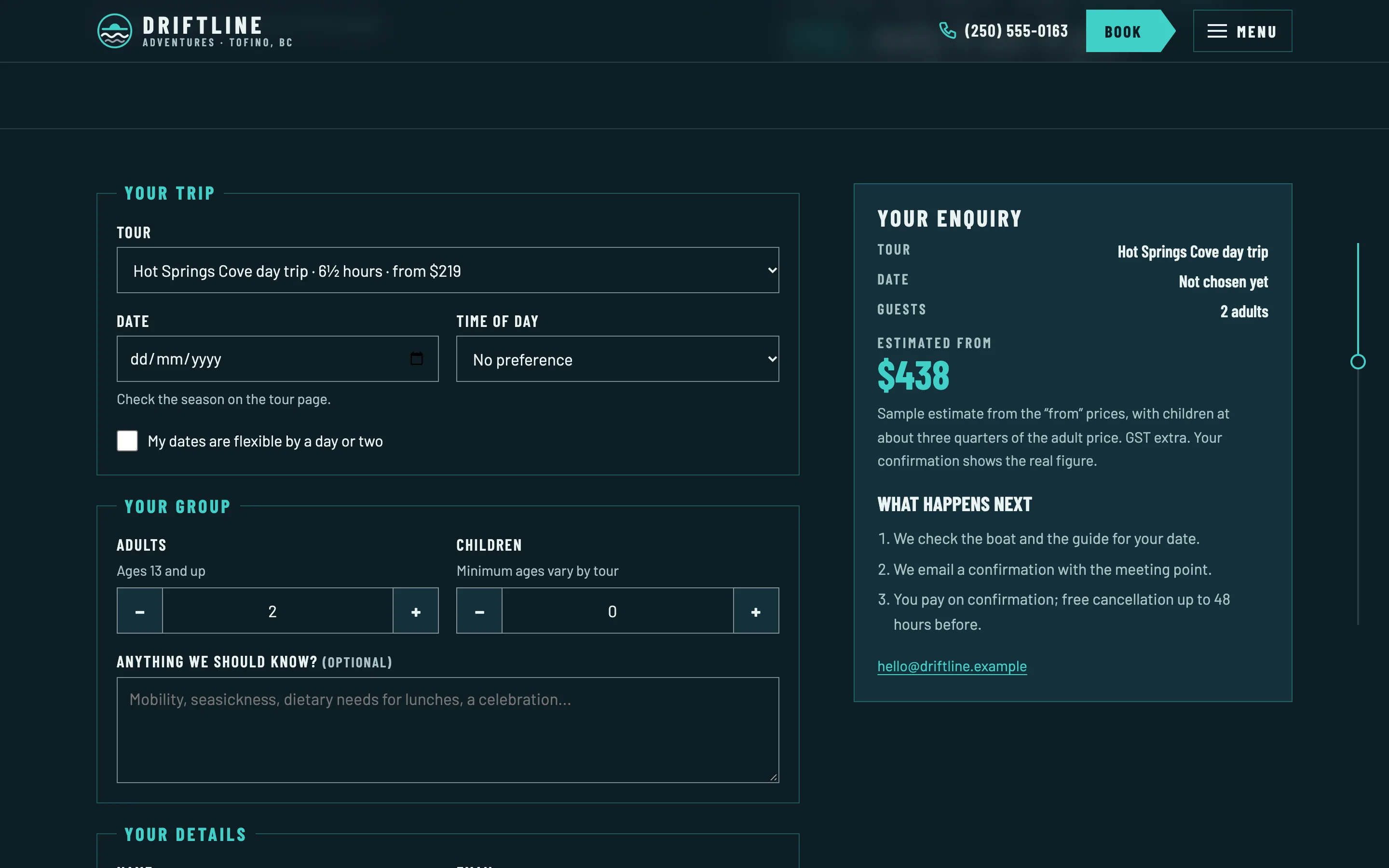
The tours index shows all eight tours as ticket-style cards and filters them by season, length and difficulty, so a visitor arriving in February sees the hot springs and storm weekends straight away. The booking page asks for the tour, date, group size and contact details, shows a live sample estimate for the group, validates the form and explains exactly what happens next.
Pages included
- Home: the coastal chart hero, why the operator is different, the scrollytelling morning on the water, three tour chapters, the season chart, how booking works, sample reviews and a booking call to action.
- Tours: every tour as a ticket card with season, duration and "from" price, filtered by season, length and difficulty.
- Whale Watching: hour-by-hour itinerary, what to bring, the season, the sightings promise, wildlife distances and FAQs.
- Storm Watching: a day-by-day weekend itinerary, storm safety rules, packing for winter and FAQs.
- Hot Springs: the full-day itinerary, the boardwalk, respectful use of the springs, access notes and FAQs.
- Plan Your Trip: getting there by car, ferry and air, seasons and temperatures, what to wear, how a tour day runs, weather calls and refunds, and travelling respectfully.
- Book: the booking enquiry with a live summary and sample estimate.
Local SEO set-up
Every page carries one JSON-LD graph. The business is a TravelAgency with its name, phone, email, opening hours, logo, image and the places it serves. Each tour page adds a TouristTrip node with its itinerary stops, tourist types and an Offer with the sample starting price, and the tours index lists every trip in an ItemList. Inner pages have a BreadcrumbList, and pages with real questions add FAQPage markup. Review and rating markup is never added for sample content.
Titles follow the pattern tour plus place plus brand ("Whale Watching Tours in Tofino, BC"), because that is how travellers search. Each tour gets its own page rather than a section on one long page, so "storm watching Tofino" and "hot springs day trip from Tofino" each have a page that answers the search. For a live client, the Google Business Profile uses the same name, phone and categories, and the booking page link becomes the profile's booking link.
Tour operator websites by country
India
Indian travellers usually message before they book, so the site leads with a WhatsApp button beside the call button, and enquiries can arrive in WhatsApp with the tour, date and group size already filled in. Copy is in Indian English, with prices in rupees and distances in kilometres. Multi-day itineraries are common, from backwater cruises to Himalayan treks, so the day-by-day timeline does most of the work. Pages give space to permits needed for protected areas, a GST number placeholder, and UPI for deposits.
USA
American visitors compare tours on clarity and trust, so cancellation terms, inclusions and age limits sit right next to the price. Copy uses US English, US dollars, miles and degrees Fahrenheit. Some states, including California, Florida, Washington and Hawaii, require sellers of travel to register, and the footer has a fixed place for that number where it applies. Accessibility to WCAG 2.2 AA matters because of ADA claims, and every tour page states plainly how accessible it is.
Canada
Canadian sites use Canadian English (colour, centre, kilometres), Canadian dollars and a clear note on GST or HST. Ontario, Québec and British Columbia regulate travel sellers, so the footer has a placeholder for a provincial registration where it applies, and an operator in Québec needs a French version of the site. Many Canadian operators acknowledge the First Nations whose territories they work in, as the demo does, and seasons matter: whales, bears and storms each have their months.
Australia
Australian copy uses Australian English, Australian dollars and metric units. Prices are shown with GST included, and the cancellation and refund terms are written plainly, because Australian Consumer Law protects travellers. Tours inside national parks often need a commercial operator's permit, so the site has a placeholder for it beside the ABN. Sun, heat and water safety, and what to bring for them, are worth a section of their own.
Finland
Most of a Finnish operator's customers come from abroad, so the site is in English and Finnish with matching pages and hreflang links, and other languages can follow. Prices use the euro with Finnish number formatting, and the Y-tunnus has a fixed place in the footer. Tours that bundle transport, accommodation or meals can count as package travel under EU rules, so the booking page shows the right pre-contract information. Winter clothing hire, daylight hours and what happens if the aurora does not appear deserve clear answers.