An accounting website should reduce uncertainty
A small business owner rarely arrives at an accounting website with a complete brief. They may know that receipts are accumulating, that reconciliation takes too long or that a previous year needs attention. The website needs to help them name the work without asking for sensitive records at the first click. Clear service boundaries are more useful than a broad promise to handle everything. The owner should understand what can be discussed now and what belongs in a later, secure handover.
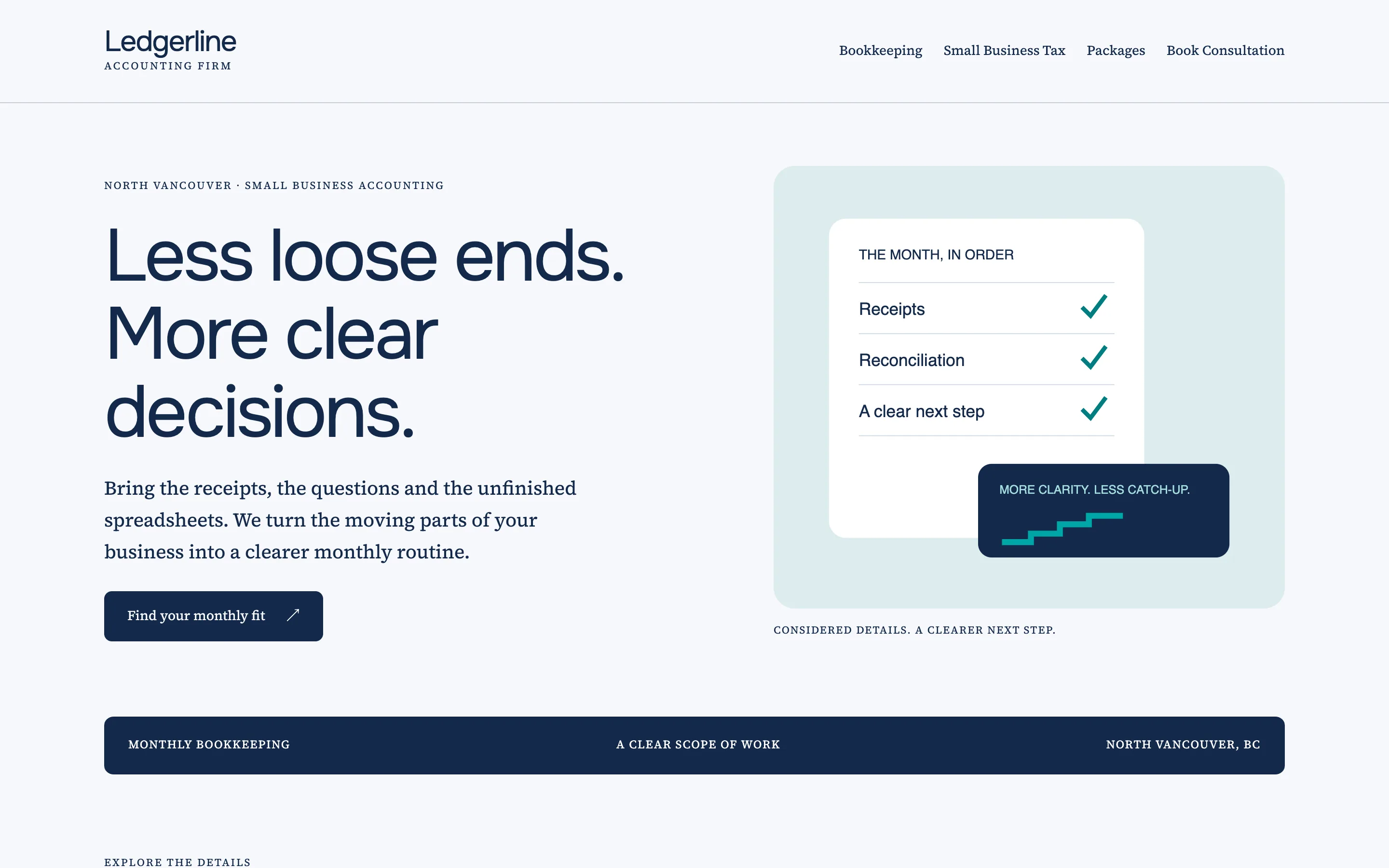
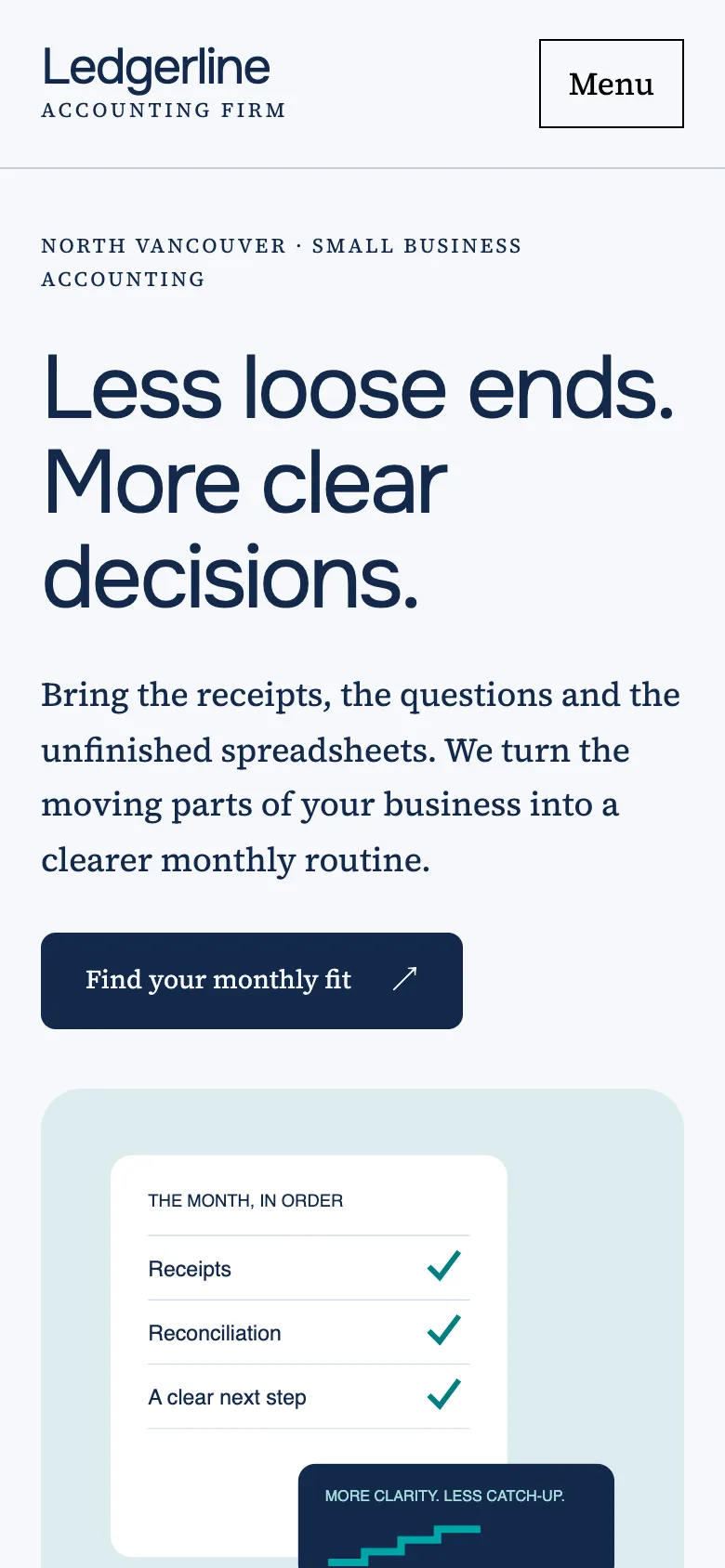
Ledgerline Accounting is a fictional North Vancouver practice built around that need. A modular grid separates bookkeeping, business tax preparation and the package comparison. The illustration shows an organised monthly checklist rather than an invented financial performance chart. Onest headings and Source Serif 4 body copy combine a practical interface with a more conversational reading style. The navy and teal palette gives the example its own identity among the existing samples, and there are no claimed professional qualifications or fabricated client outcomes.
A package selector that explains its limits
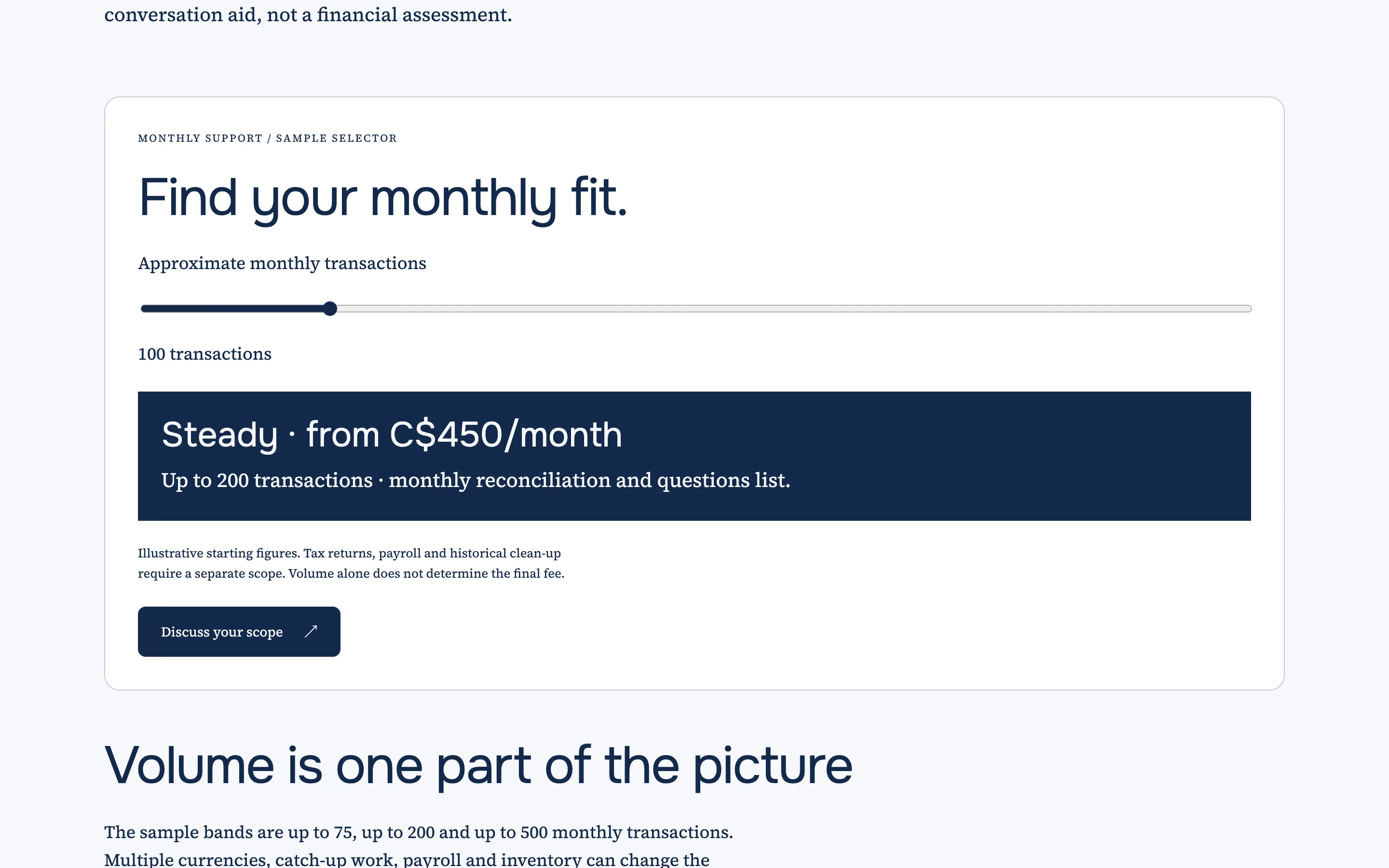
The signature interaction uses monthly transaction volume as a starting point. A range control moves between three illustrative support bands, with the selected transaction count, package name and starting monthly amount visible together. The visitor does not need to create an account to compare the options. Native controls support keyboard input, and the result updates in an accessible live region. The page also explains that volume alone cannot determine a final engagement.
That qualification is part of the feature, not small print added after the fact. Payroll, inventory, multiple currencies and historical clean-up can change the work. The selector names exclusions and leads to a consultation rather than a checkout. For a real firm, the bands and wording would come from its actual service model. If the firm prefers not to publish figures, the same interface could show suitable discussion topics while leaving the fee for a scoped proposal.
A small page set with useful distinctions
The home page gives an overview and directs the owner to the relevant service. Bookkeeping describes a repeatable monthly handover and the importance of identifying missing information. Small Business Tax explains preparation and responsibilities without calculating a tax liability. Packages makes the sample comparison available in one place. Book Consultation provides the initial contact form, with clear guidance not to include account numbers, identifiers or confidential financial records.
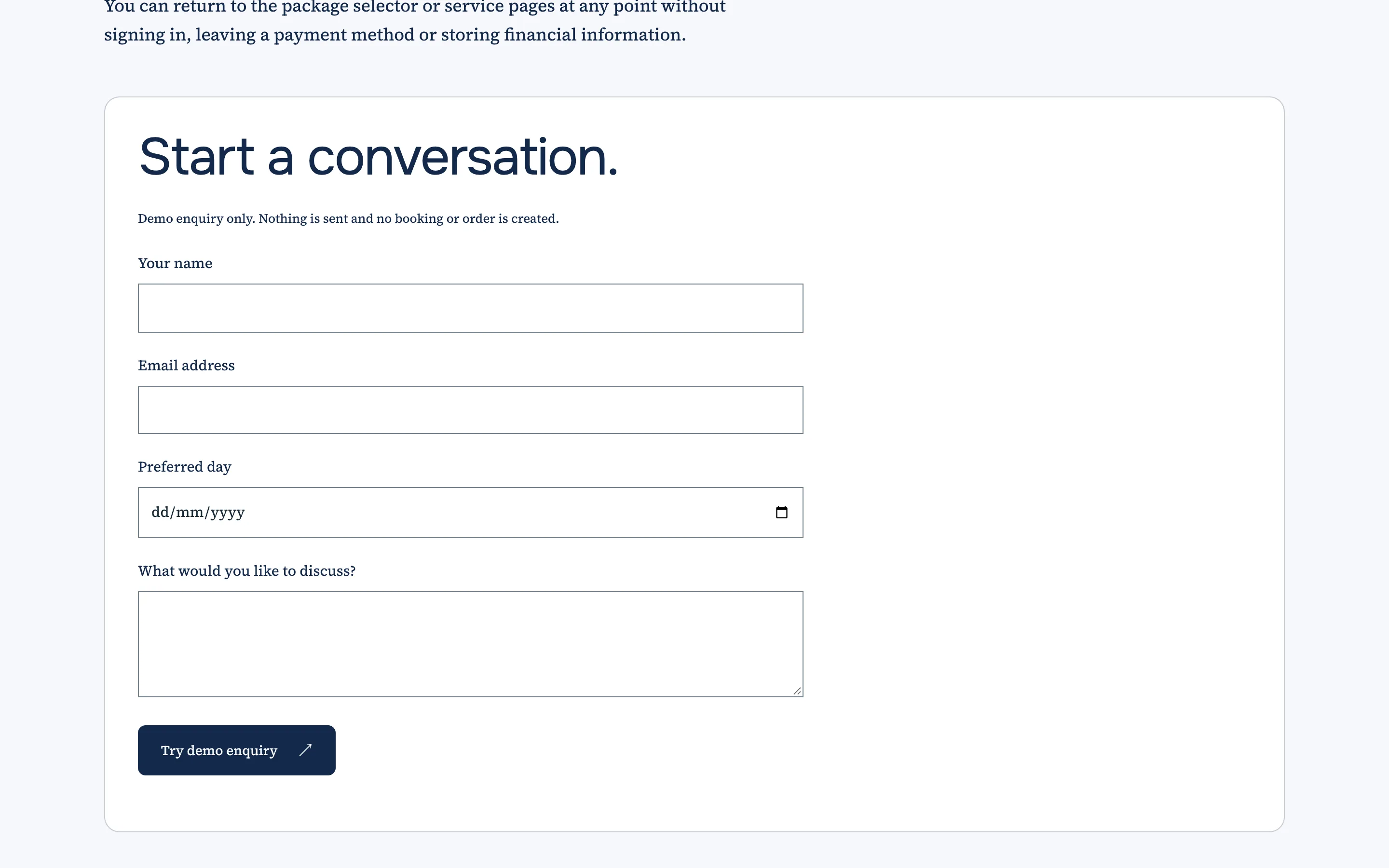
The enquiry validates a name, email, preferred day and message locally. Invalid fields receive focus, and a successful demonstration submission says that nothing was sent. There are no document uploads, banking credentials or payment fields. A real practice would establish a secure exchange process after confirming the engagement. The site also includes a custom not-found page, responsive navigation, visible focus states and local assets so that a visitor can understand the services without external scripts.
Search content grounded in actual services
Each page has its own title, description, canonical URL and sharing metadata. The AccountingService node describes the fictional practice at city level, and inner pages add service and breadcrumb context. The server applies demo noindex behaviour, so the fictional business is not presented as a real local search result. The public industry page explains the accounting website design service instead. A real launch would use the firm's verified identity, actual service area and approved descriptions of qualifications and scope.
Accounting websites for different markets
Canada
The demonstration uses Canadian English, Canadian-dollar sample figures and a North Vancouver setting. A real practice can add its approved professional designations and engagement wording once those details are verified. The consultation should remain a low-friction first contact, with sensitive records exchanged through the firm's established secure process rather than a general website form.
USA
A US version can organise services around the practice's actual client types and use clearly labelled US-dollar figures if public packages are appropriate. The website should distinguish ongoing bookkeeping from separately scoped tax work. Qualifications, filing responsibilities and service descriptions should be supplied and reviewed by the real practice rather than inferred from a generic accounting template.
India
For an Indian firm, rupee amounts, local business terminology and an approved enquiry channel can make the experience familiar. The initial form can ask about the type of business while avoiding identifiers or financial uploads. Any descriptions of compliance work should reflect the firm's actual services and be reviewed by the people responsible for providing them.
Australia
An Australian accounting website can use Australian English and Australian dollars, with package inclusions written around the firm's own engagement process. Verified business information can replace the fictional details. A useful site makes it easy to explain a bookkeeping problem while keeping tax advice and sensitive document exchange within the practice's appropriate professional workflow.
Finland
A Finnish practice can offer matching Finnish and English service descriptions and euro figures. The distinction between regular bookkeeping, year-end work and separate advice should survive translation. The package selector can remain simple, with the firm's real scope controlling the bands and exclusions. Language review should include the result messages and the consultation form as well as the main page copy.