What clients look for on an architect's website
People rarely hire an architect from a single visit. They come back several times over weeks, often after a recommendation, and each time they want to answer a slightly different question. First: does this studio do the kind of building I have in mind? A family with a plot looks for houses, a school board looks for public buildings, an owner of an old warehouse looks for renovation. If the portfolio is one long scroll of renders with no way to sort it, many visitors give up before they find the project that would have convinced them.
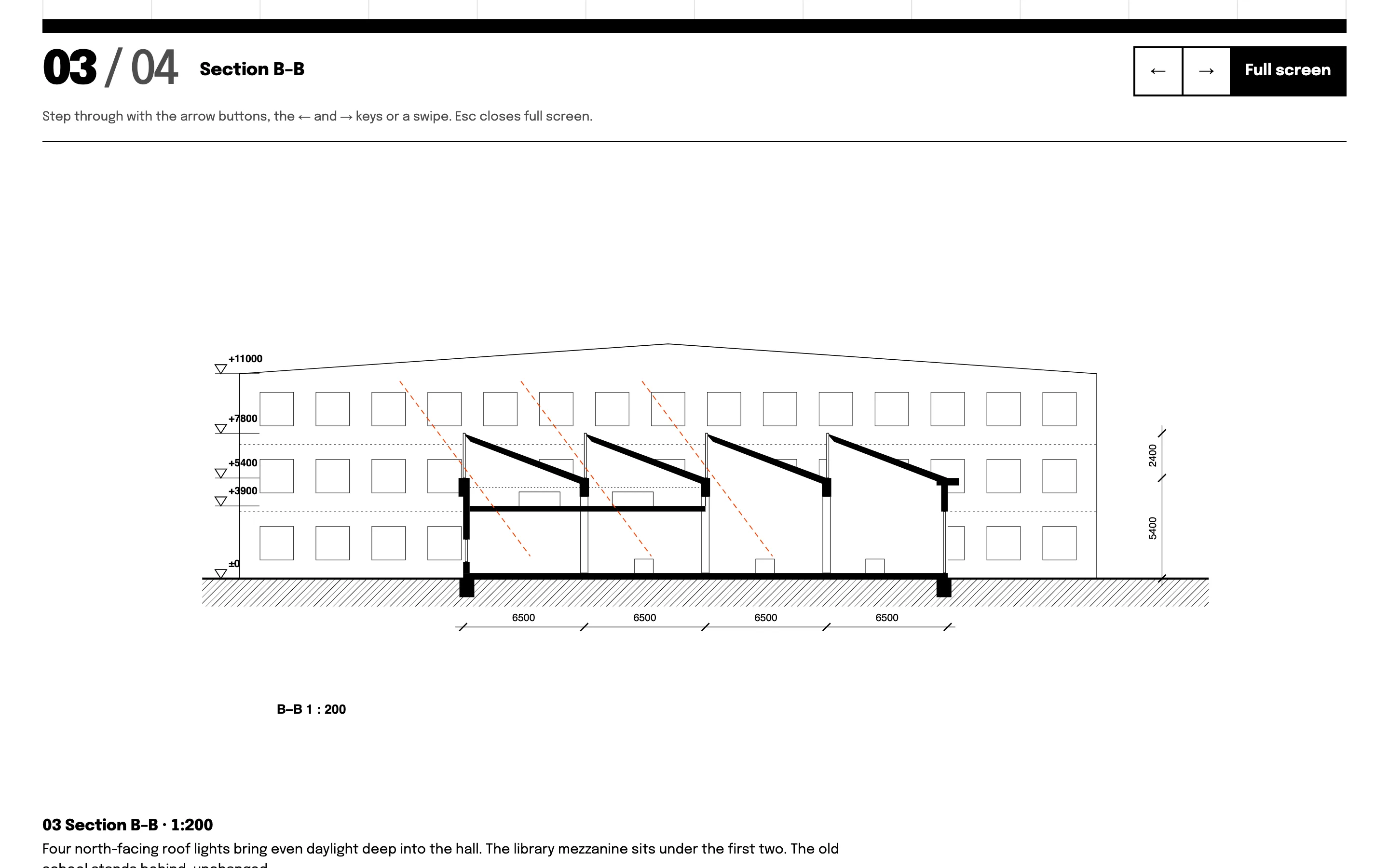
Next, they want to see how you think. Architects are judged on drawings, not on adjectives. A plan that shows how a family moves from the front door to the kitchen, or a section that explains where the daylight comes from, persuades more than a paragraph about "timeless design". Prospective clients also want to understand the process: what happens first, when the building permit comes in, how long each stage takes and what they need to decide along the way.
Finally, they want to know what it takes to start. Is the first meeting free? What should they bring? Will you take on a small project? A site that answers this calmly turns a nervous first email into a booked meeting with a plot map on the table.
How the demo handles it
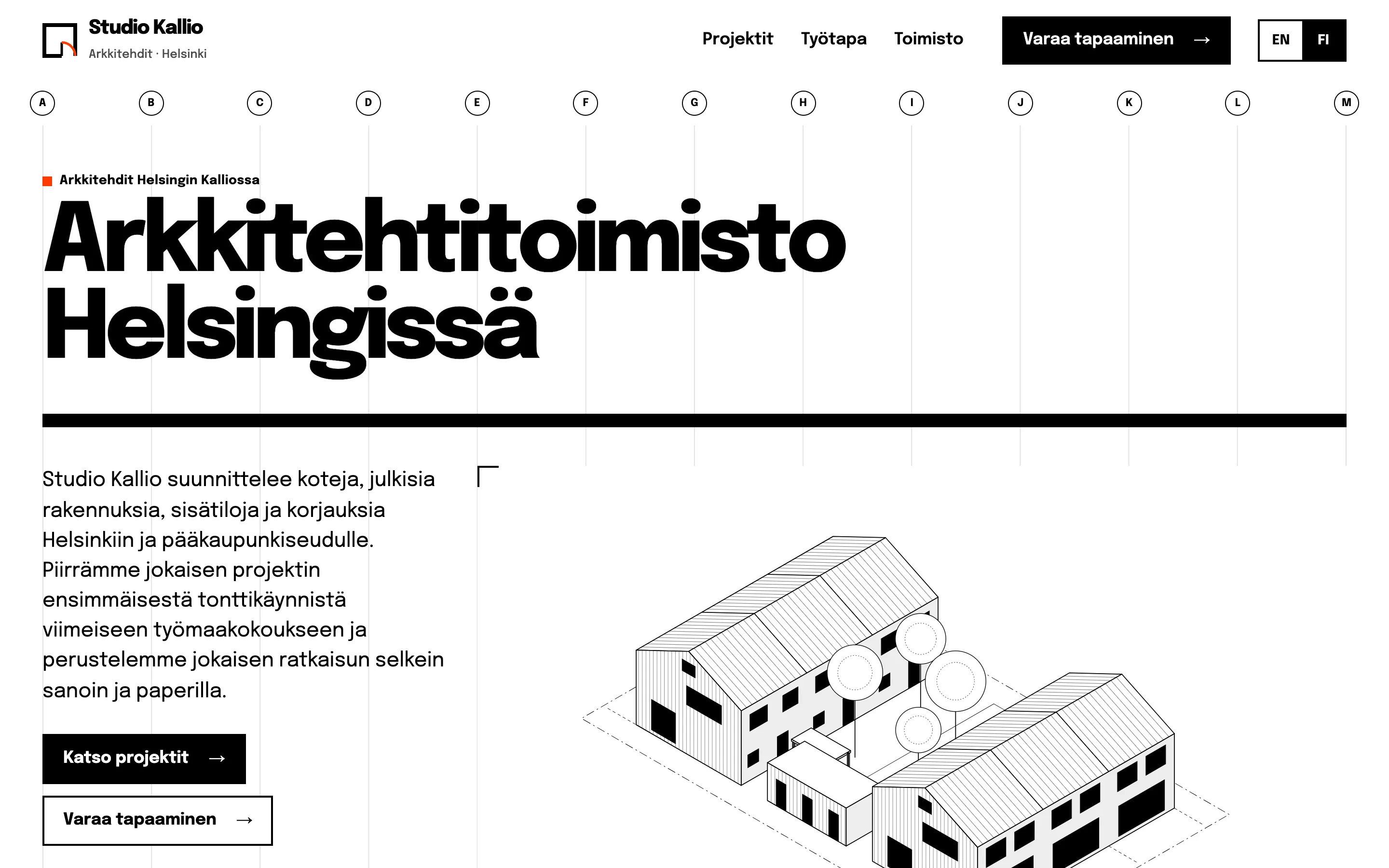
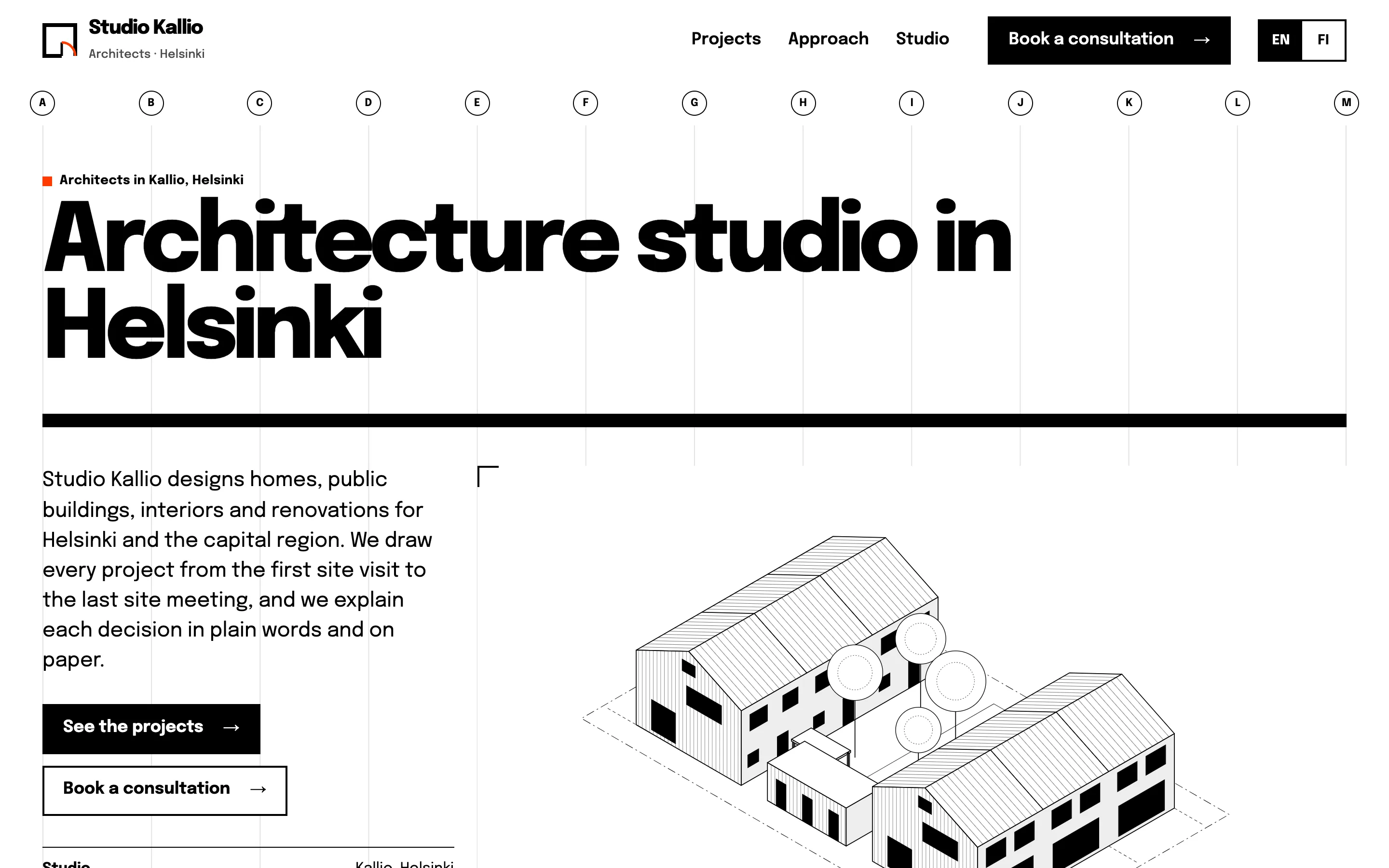
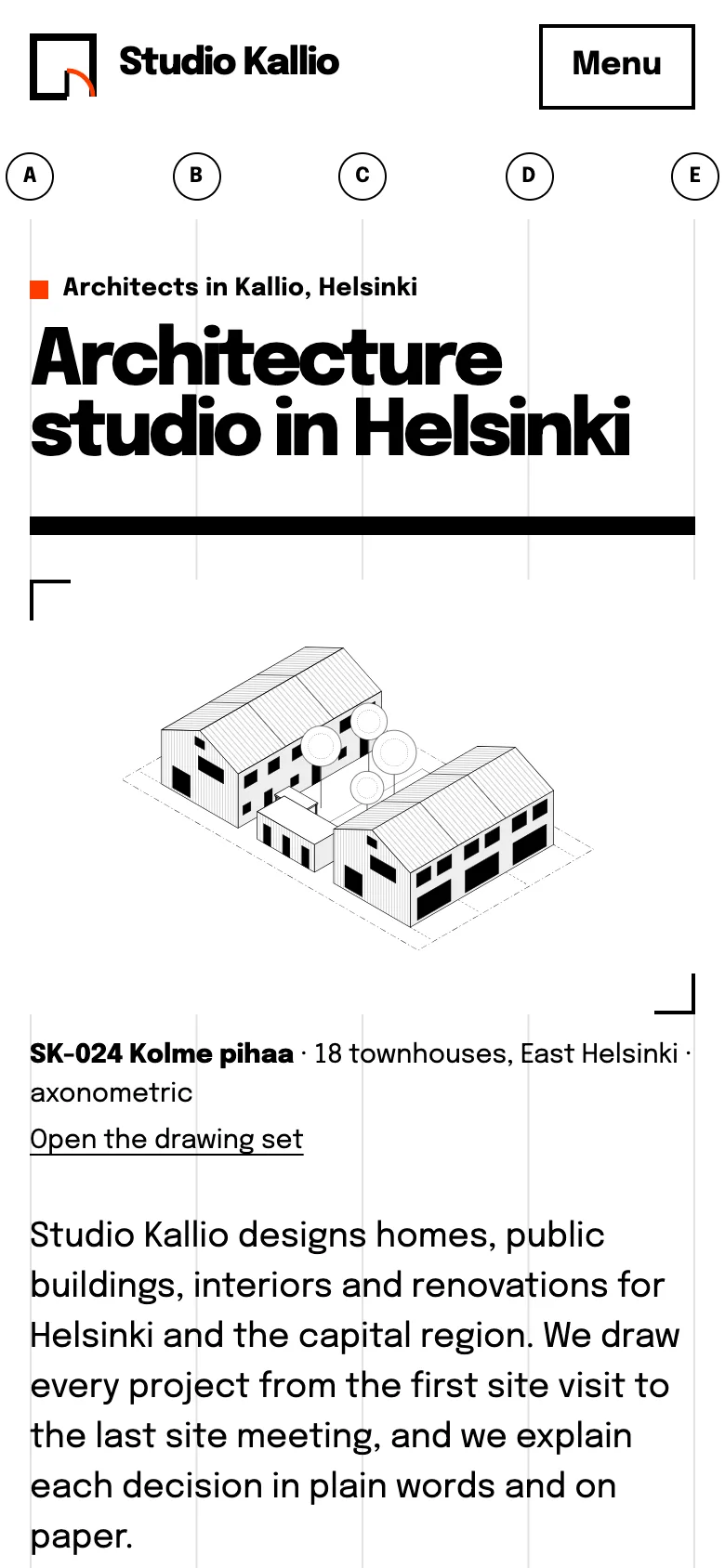
The demo site for the fictional Studio Kallio in Helsinki is built like a set of drawings. A raw twelve-column grid runs behind every page, labelled with the circled axis letters you find on a structural plan, and project codes such as SK-024 are set at poster size. The imagery is technical drawing only: site plans, floor plans, sections and axonometrics, drawn as original SVG files in black line with orange-red used for section arrows and site boundaries.
Each project page has a drawing sequence. Visitors step from the site plan to the floor plan, the section and the axonometric with arrow buttons, the left and right keys or a swipe on a phone, and a numbered tab row lets them jump straight to the sheet they want. A full-screen button turns the sequence into a clean presentation view, so an architect can open the site in a client meeting and talk through a project sheet by sheet. Without JavaScript, all the drawings simply appear one after another with their captions.
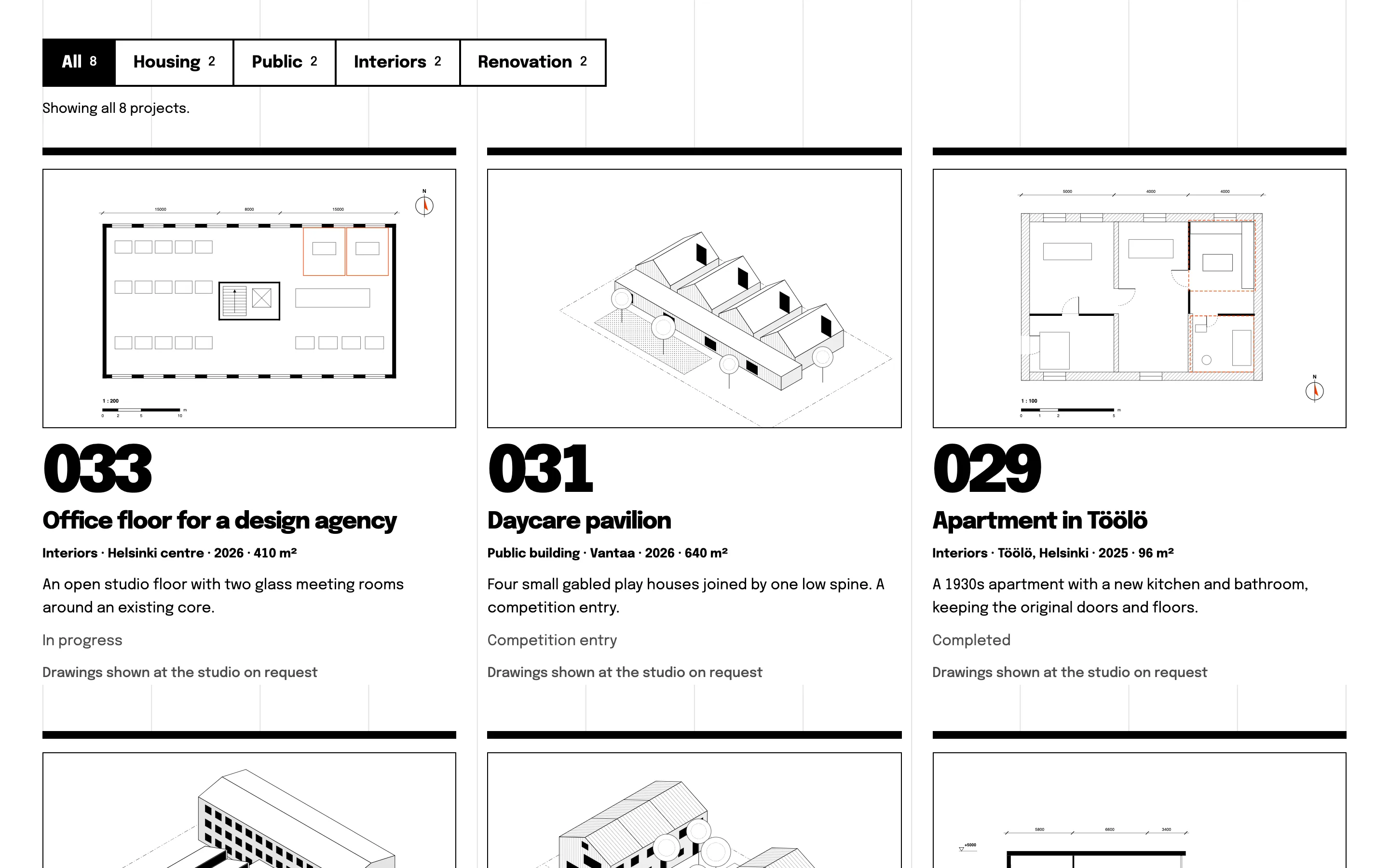
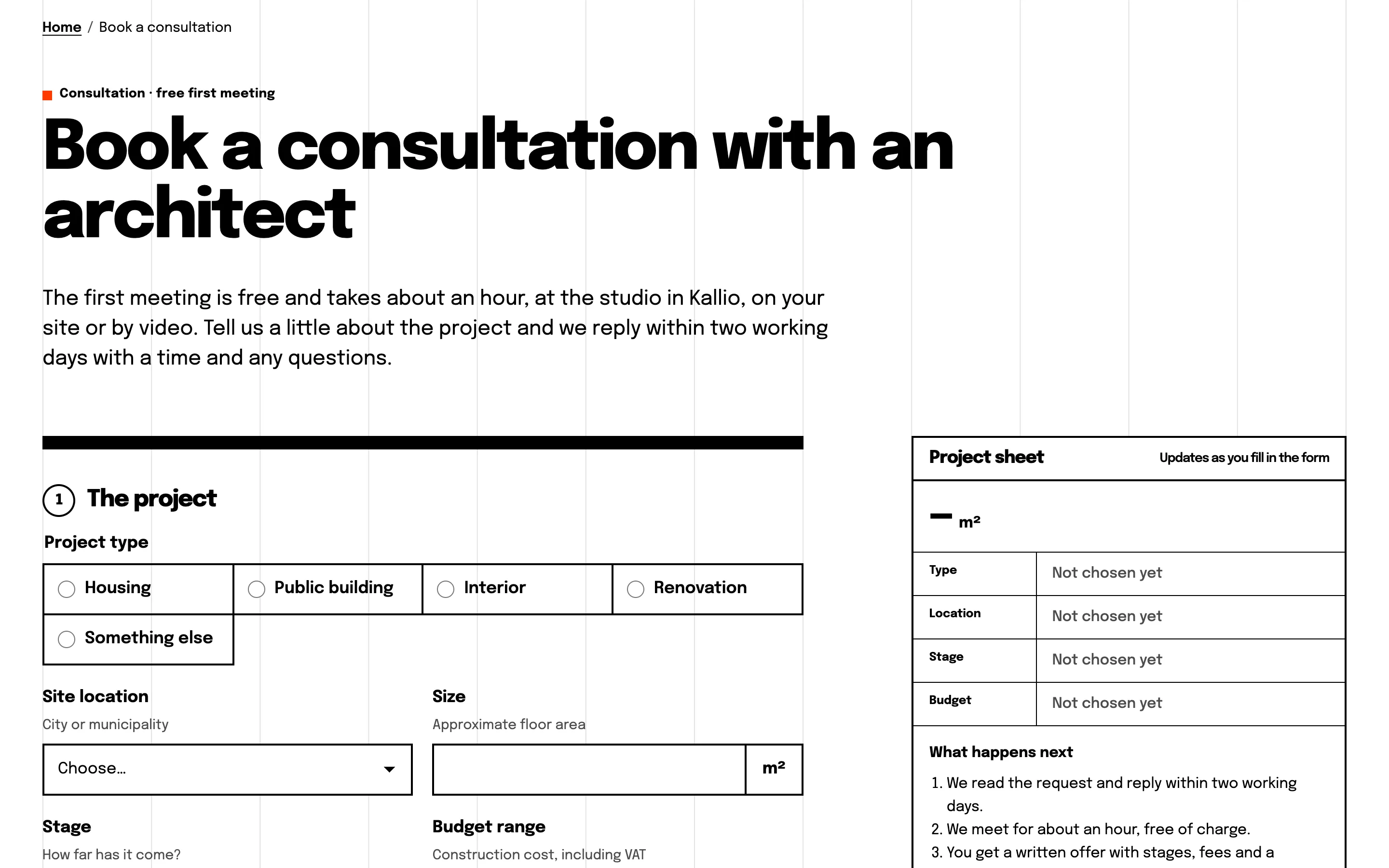
The projects page lists eight projects with filters for housing, public buildings, interiors and renovation. The chosen filter is written into the address, so a link from the home page can open the archive on renovation work only. The approach page explains the five design stages in the client's terms: what happens, what the client receives and what the client decides. The consultation form asks for project type, site location by city, size in square metres, stage and a budget range, and a "project sheet" beside the form fills in as the visitor types. In the demo, the form ends on a notice that nothing was sent.
Pages included
- Home: four kinds of work, three selected projects with giant codes, the process drawn as a dimension chain, three working principles, the team as initials and the first questions people ask.
- Projects: the filterable archive with a drawing, a code, the type, place, year and size for each project.
- Project pages: three projects with a facts table, the full-screen drawing sequence, the brief, the main ideas and what the studio delivered.
- Approach: the design stages from feasibility to site, permits and the principal designer role, and sample fees.
- Studio: who works there, how the studio works with engineers and contractors, the model workshop and languages.
- Consultation: the request form with the live project sheet, what happens next and what to bring.
Local SEO set-up
Every page carries one JSON-LD graph. The studio is a ProfessionalService with its city-level service area, languages, opening hours, logo and share image, and the WebSite node credits the developer. Project pages add a CreativeWork for the project, with its place, year and drawings. The approach page describes design stages as Services with sample "from" offers, the consultation page adds the first meeting as a Service, and every inner page has a BreadcrumbList. Review and rating markup is never added to a demo.
Titles pair the work with the place ("Architecture studio in Helsinki", "School extension, North Helsinki"), and project pages are written around the building type, which is how most clients search. For a real studio, the next steps are a Google Business Profile in the architect category with the same service area, a project page for each finished building, and links from the clients, engineers and contractors you have worked with.
Architect websites by country
Finland
Finnish clients expect the site in Finnish first, with English for international clients and Swedish where the municipality is bilingual. The demo shows euro prices in the Finnish format and explains the building permit, the principal designer (pääsuunnittelija) and design competitions, which matter for public work. The business ID (Y-tunnus) belongs in the footer, and EU accessibility rules make WCAG 2.2 AA the right standard.
India
In India, architects must be registered with the Council of Architecture, so the registration number appears as a labelled placeholder until the real one is added. Floor areas are usually quoted in square feet (carpet or built-up area), budgets in lakh and crore, and WhatsApp is the contact most clients prefer. Residential clients often ask about Vastu, which a project page can address directly, and GST details go in the footer.
USA
American architects are licensed by state boards, so the site shows the states where the studio is licensed. Areas are in square feet, process pages talk about zoning, HOA approval and permit timelines, and service areas are written as cities and counties. Accessibility at WCAG 2.2 AA also lowers the risk of ADA complaints, and project pages work well for design-build and renovation clients who compare several firms.
Canada
Canadian architects are licensed by provincial associations, so the licence and the provinces covered appear as placeholders. The site uses Canadian English and Canadian dollars, metric drawings with square feet where residential clients expect them, and notes on winter construction. A studio working in Quebec needs a French version, which the same bilingual set-up supports.
Australia
In Australia "architect" is a protected title, and the state registration number is shown as a labelled placeholder. The site uses Australian English, square metres and Australian dollars, and the process page explains development applications with the local council and sustainability requirements such as BASIX in New South Wales. An ABN placeholder sits in the footer.