What guests look for on an Ayurveda centre's website
People who look for an Ayurveda retreat are usually planning something bigger than a massage. They are thinking about taking one, two or three weeks away from work, often travelling from another state or another country, and they want to picture it before they commit. What time does the day start? What is a therapy actually like? Who decides which ones I have? What will I eat? And, quietly, what will all of this cost?
Most centre websites answer those questions badly. They list therapy names in Sanskrit or Malayalam with no explanation, show a gallery of oil bowls, and end with "contact us for packages". A guest comparing five retreats from Mumbai, Dubai or London will write to the one that answered them first. There is a second problem too: many sites slide into health promises that the centre cannot keep and that regulators and payment platforms do not like. A good Ayurveda website is honest about what a programme is, and honest about what it is not.
How the demo handles it
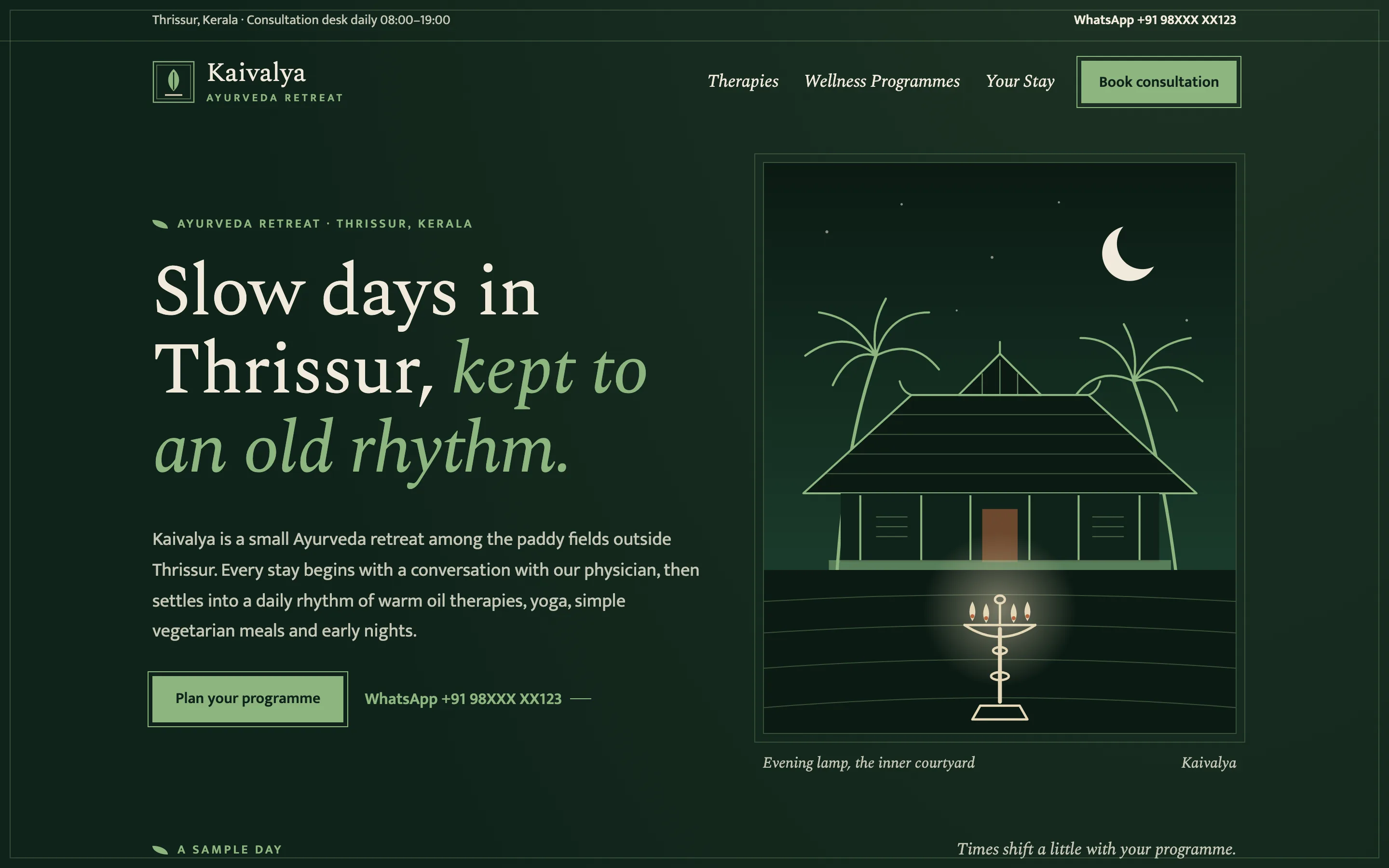
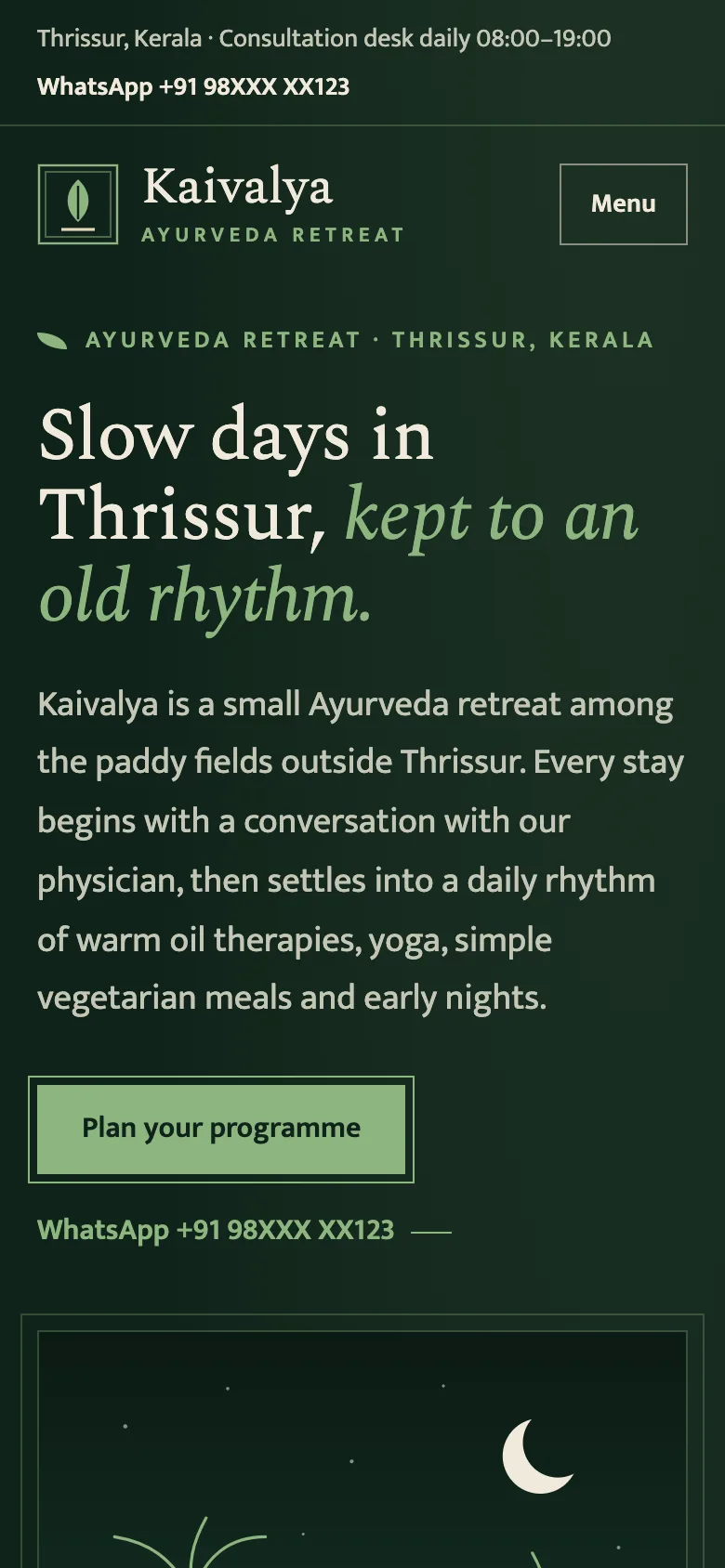
Kaivalya Ayurveda Retreat is a demo retreat among the paddy fields outside Thrissur. Its home page opens with a line drawing of a courtyard house at dusk and a sample day laid out on a palm-leaf strip: waking tea, yoga, the day's therapy, lunch, rest and the evening lamp. Before reading a word of sales copy, a visitor already knows the rhythm of a stay.
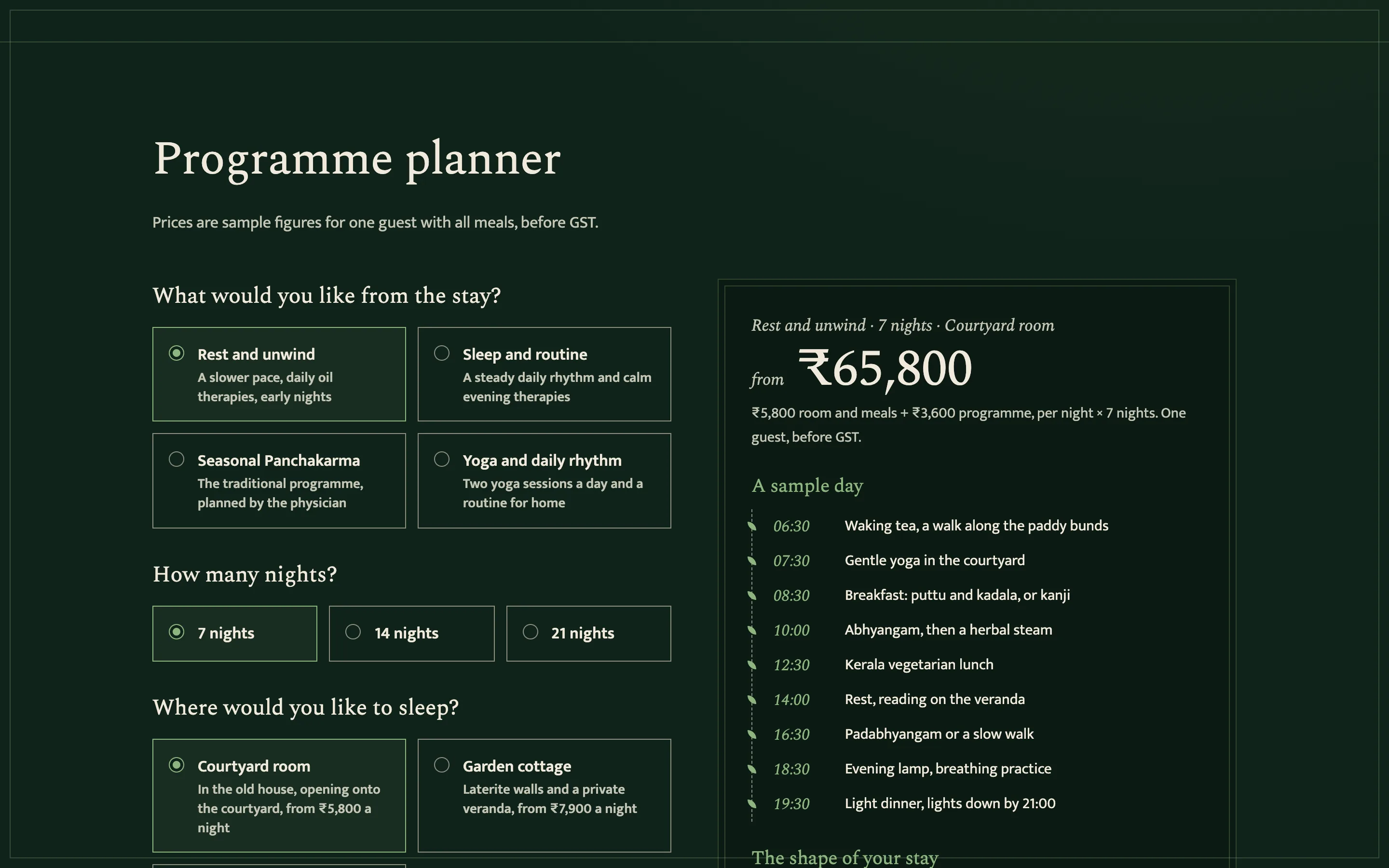
The signature feature is the programme planner. The guest picks what they want from the stay (rest, sleep and routine, a seasonal Panchakarma programme, or yoga), how many nights they can manage, and where they would like to sleep. The planner answers with a sample day for that goal, the shape of the stay from arrival to the closing consultation, and a "from" estimate in rupees with Indian digit grouping, broken down into room and programme per night. If someone picks Panchakarma for seven nights, a gentle note explains that the physician usually plans it for longer. The button underneath carries every choice into the consultation form, so the enquiry that reaches the retreat already says what the guest wants.
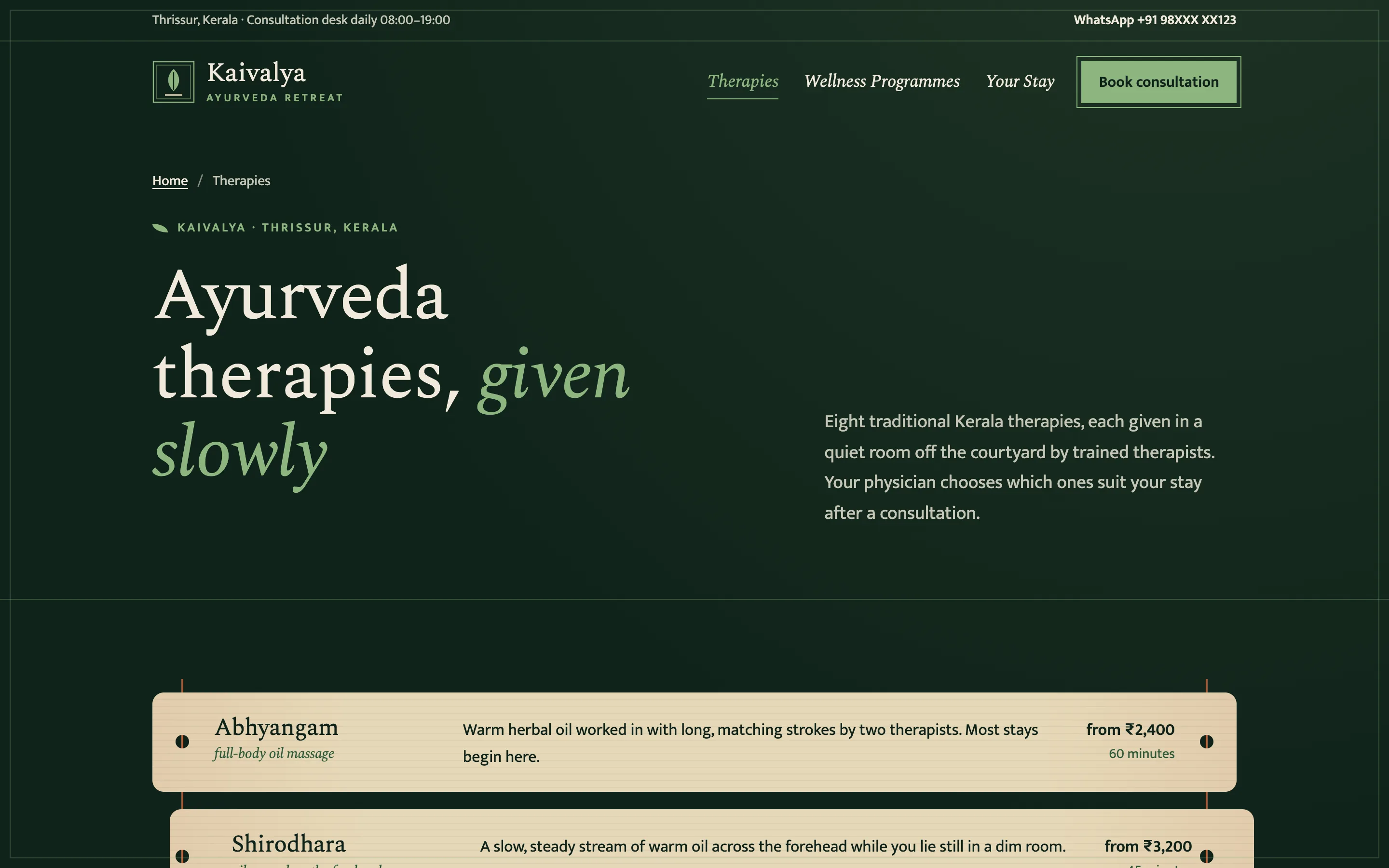
Therapies sit on cream strips shaped like palm-leaf manuscripts, bound by a cord, each with what happens, how long it lasts and a starting price. The copy describes warmth, pace and stillness rather than results. Every page ends with the same plain note: programmes are for wellness and rest, they are not a replacement for medical care, and guests should keep taking anything their own doctor prescribed.
The pages
Home sets out the day, the three steps that come before any booking, a few therapies, the programmes with starting prices and clearly labelled sample reviews. Therapies covers eight treatments, from full-body oil massage to herbal leaf bundles, with practical advice for a first session. Wellness Programmes holds the planner and a list of what every programme includes. Your Stay explains the rooms, the vegetarian kitchen, quiet hours, how to reach Thrissur and which seasons fill up first. Book Consultation offers a video call or an in-person consultation, asks for anything the physician should know, and explains what happens next. The physicians appear by initials, with places for registration numbers that a real centre fills in.
Local SEO set-up for an Ayurveda centre
Each page targets one search a guest would type: Ayurveda retreat in the city, Ayurveda therapies, wellness programmes in Kerala, retreat rooms and consultation. Titles and descriptions are written for those phrases and stay within the lengths Google shows. Every page carries HealthAndBeautyBusiness structured data with the city, opening hours and contact details, plus Service markup for therapies and programmes and breadcrumbs for inner pages. The fonts are self-hosted and the illustrations are drawn in SVG, so pages stay light on a patchy mobile connection or a hotel Wi-Fi abroad. For a real centre I match the Google Business Profile to the website, add the exact location and map, and connect the consultation form to the inbox or WhatsApp number the front desk already uses.
India
The demo is written in Indian English, with rupee figures in lakh-style grouping and metric distances. WhatsApp is the main contact on every page, because that is where Indian and Gulf guests start a conversation, and the payment line mentions UPI alongside cards and bank transfer. GSTIN and AYUSH registration appear as labelled placeholders rather than invented numbers, and prices are shown as sample starting figures before GST. Seasons matter in Kerala: the monsoon month of Karkidakam is a traditional time for Ayurveda stays, and festival weeks fill local hotels, so the stay page says when to book early. Guests from abroad want airport distance, pickup and video consultations across time zones, and the demo covers all three. A real centre might add a Malayalam or Hindi version later, or a page for international guests about visas and travel insurance, using the same structure.