What a wholesale fabric buyer is really looking for
Someone searching for a textile manufacturer is rarely browsing for pleasure. They run a saree shop that needs fresh prints before the festival season, a boutique that wants its own colourway, or a kurti unit that needs the same GSM and width every month so its patterns and lays do not change. They want to know three things quickly: do you make the kind of fabric I need, what is the minimum I have to buy, and how do I get a rate without a long back-and-forth.
Most mill websites answer none of these. They show a photo of the factory gate, a list of fabric names and a phone number. The buyer then sends a WhatsApp photo of a fabric from somebody else's shop, the sales team asks for the GSM, the buyer asks for the rate, and a day goes by. A good website shortens that conversation by putting the catalogue, the order terms and a structured enquiry in one place.
How the demo handles it
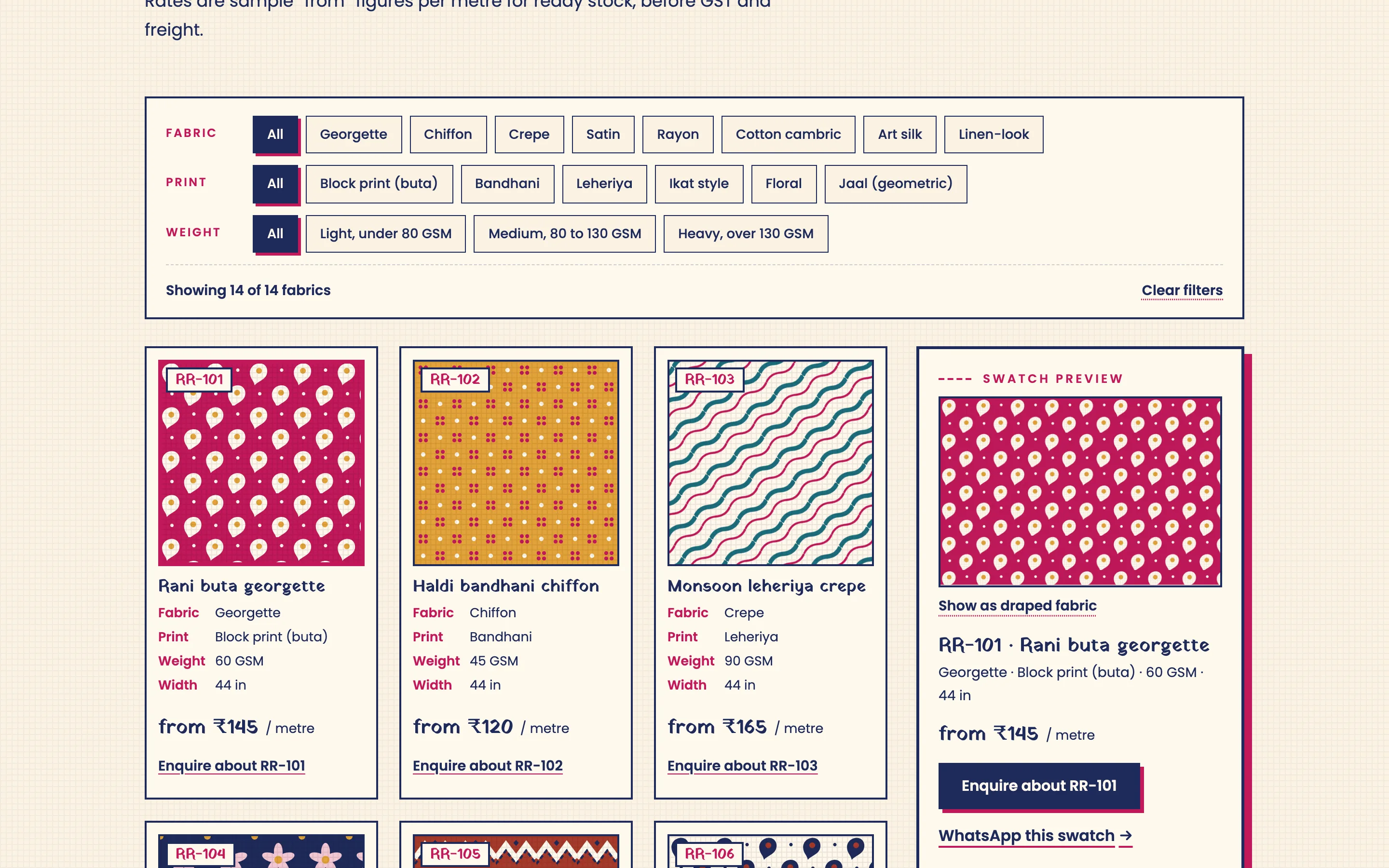
Resham Rekha Textiles is a fictional printed-fabric mill in Surat, built to show this approach. Its catalogue page lists fourteen running designs across georgette, chiffon, crepe, satin, rayon, cotton cambric, art silk and a linen-look blend. Each design has a code, a print type, a GSM figure, a width in inches and a sample from rate per metre. Three sets of filters, for fabric, print and weight band, combine so a buyer can narrow the list in two taps, and a live count tells them how many designs still match.
Every design is drawn as an original SVG swatch rather than a photo. Tapping a swatch opens a larger preview with the same details, and a toggle shows the print as draped fabric so the buyer can judge how busy it looks in folds. From the preview, one button opens the bulk enquiry form with that code already selected, and another opens WhatsApp with a message naming the design.
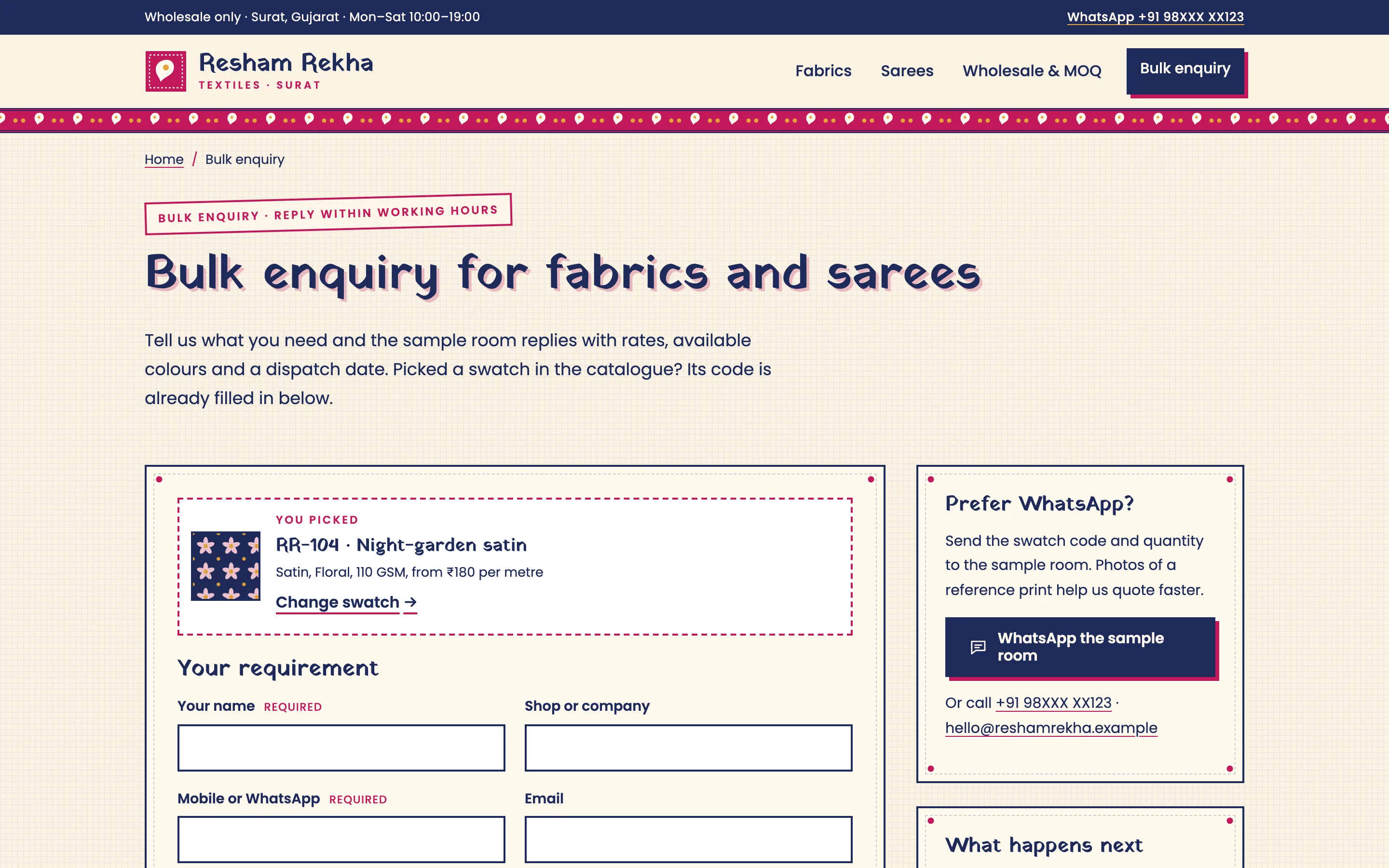
On the enquiry page the chosen swatch appears above the form with its GSM and rate, the unit switches to metres for fabric or sets for sarees, and the message field suggests a first line. The form asks for the details a sample room needs to quote: buyer type, city, quantity, colours and the month stock is needed. It validates in the browser and, because this is a demo, ends with a notice that nothing was sent.
Pages that follow the buying conversation
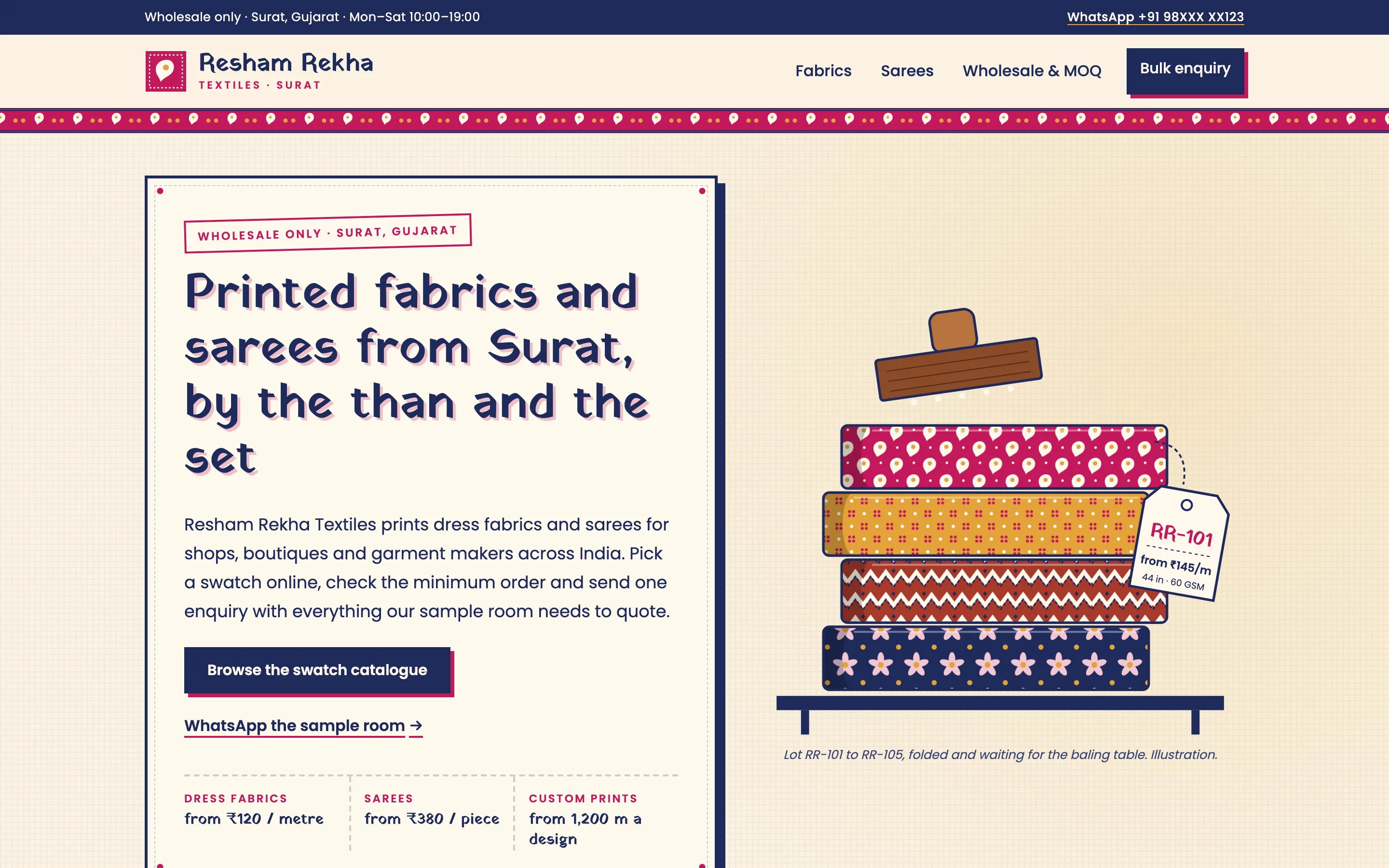
Home introduces the three ways to buy, by the metre, by the saree set and as a custom print, and walks through the order from swatch to bale. Fabrics is the catalogue described above, with a short guide to reading GSM, width and the than as a selling unit. Sarees shows five ranges packed in catalogue sets of eight designs, each with length, blouse piece and a from price per piece, plus a note on booking early for Navratri, Diwali and the wedding months. Wholesale and MOQ puts the minimum order and lead time for every order type in one table and explains samples, strike-offs, payment, GST invoices, e-way bills and dispatch through the buyer's own transporter. Bulk Enquiry collects the requirement.
The order terms are labelled as sample figures. A real mill replaces them with its own numbers each season, and the honest note about shade variation between dye lots stays, because it prevents the most common complaint in this trade.
Local search and structured data
Each page has its own title and description written around what a buyer types, such as printed fabric wholesale, saree sets from Surat or fabric minimum order. The site marks up the mill as an Organization with a sales contact point, opening hours and the languages the team speaks. The catalogue and saree pages carry Product markup with Offer and unit price per metre or per piece, so search engines can read the range and the rate basis. Inner pages have breadcrumbs, and every page has a sharing image so a link forwarded in a buyers' WhatsApp group shows the mill rather than a blank card.
Pages load fast on mobile data because the fonts are self-hosted, the swatches are vector drawings and there are no trackers or chat widgets. That matters for buyers who check a catalogue from a market lane on a phone.
Countries
India
The demo is written in Indian English for buyers across India, with rates in rupees per metre or per piece and a note that prices exclude GST and freight. Phone numbers are masked, and the GSTIN and the IEC number for exporters appear only as labelled placeholders until a real mill adds its verified details. WhatsApp is the main contact route, because that is where most fabric enquiries already happen, with email and a call link alongside. Hindi and Gujarati pages can be added later with the same structure, so a buyer can switch language without losing the swatch they picked.