What renters look for on a car rental website
Someone renting a self-drive car or scooter is usually planning a trip, often from another city or country, and often on a phone. They want three answers fast: which vehicles you have, roughly what the trip will cost, and where they can collect it. If any of those means a phone call, many will book with the aggregator app they already have open.
The second worry is the small print. Renters want to know the deposit, the fuel rule, whether kilometres are limited, what happens if they return late and which licence they need. A rental website that answers these plainly builds trust before the first message, and it saves the owner the same five questions on WhatsApp every day.
For a business near an airport or a railway station, handover is the real product. A car waiting at arrivals beats a taxi queue, and the website should make that the headline, not a line in the footer.
How the demo handles it
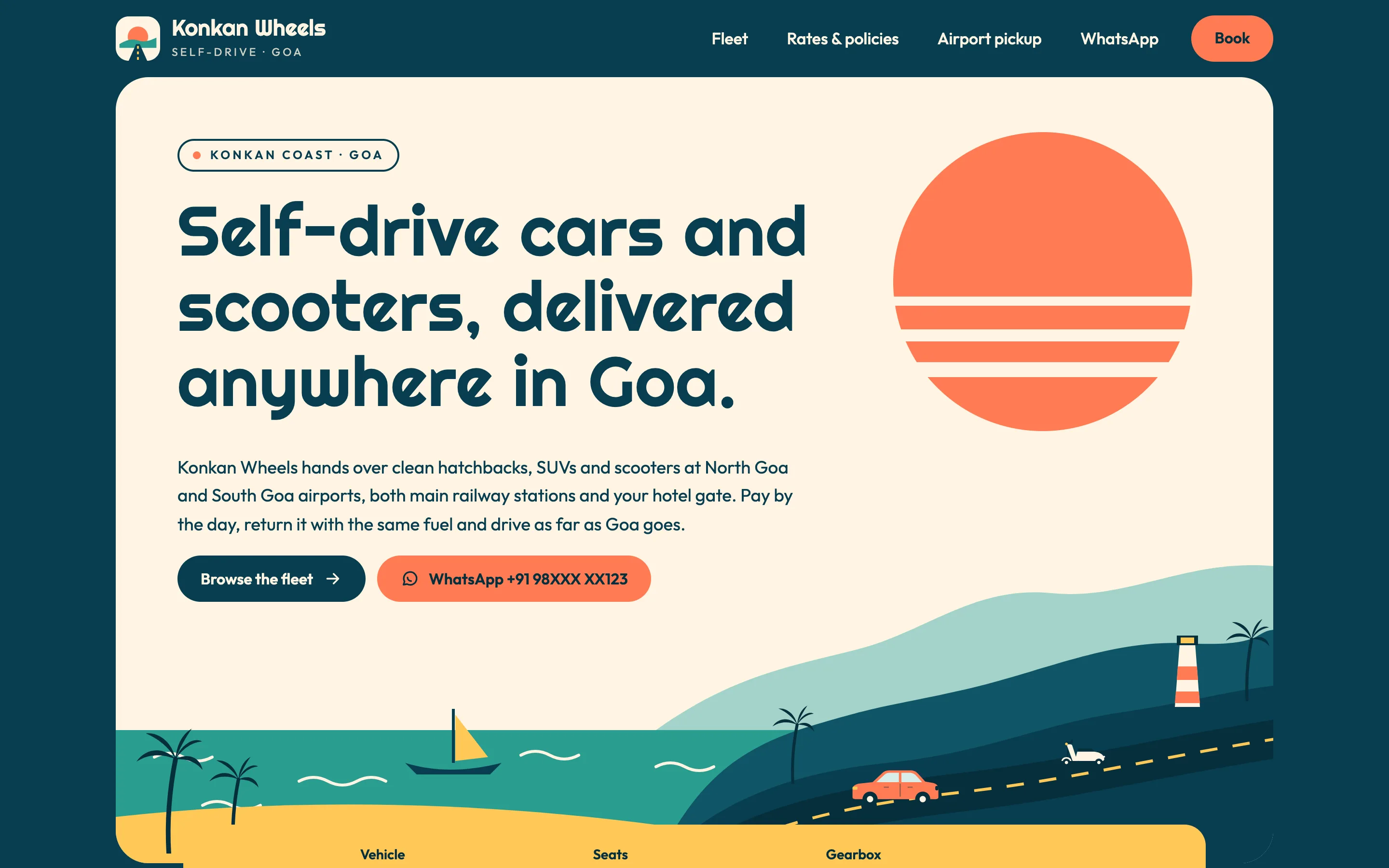
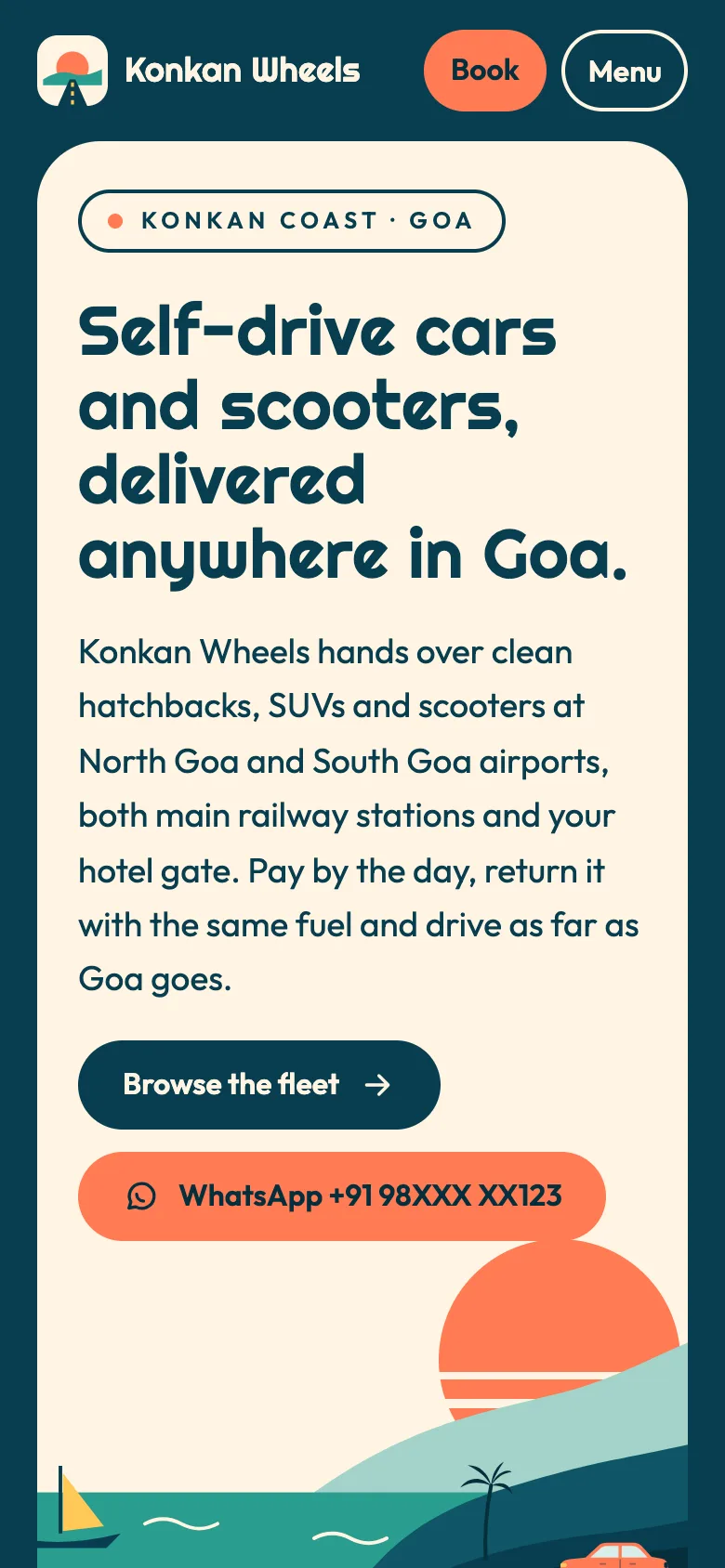
Konkan Wheels Self-Drive is a fictional rental in Goa with ten kinds of vehicle, from a compact hatchback to a 7-seat SUV and three scooters. The home page opens with a travel-poster scene of the coast road and a "Find a ride" form for vehicle type, seats and gearbox. That form sends the visitor to the fleet page with the filters already set.
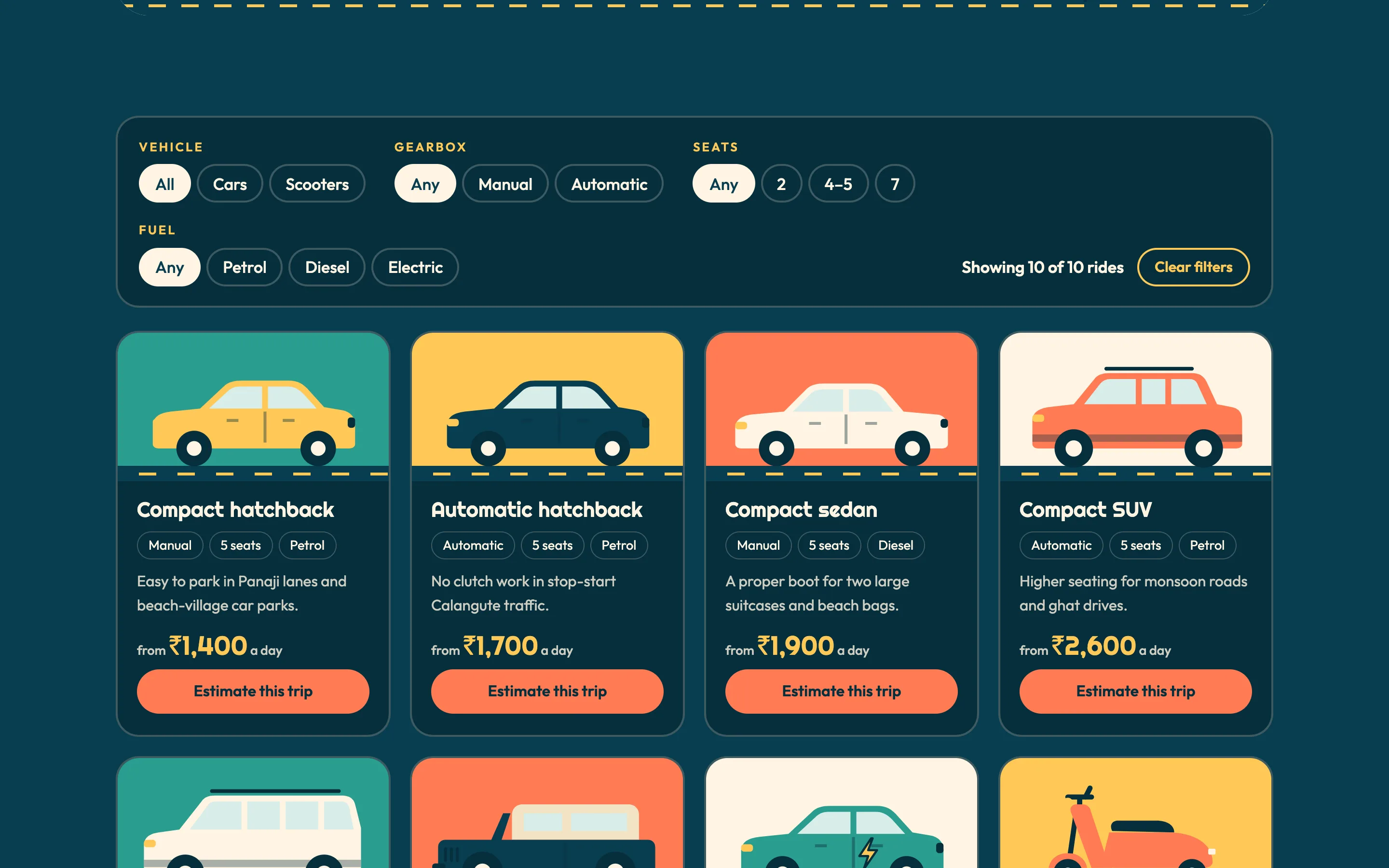
The fleet page is the signature feature. Visitors filter by car or scooter, gearbox, seats and fuel, and a live count says how many rides match. Each vehicle is an original flat illustration of the type, such as a compact hatchback, a soft-top 4x4 or a 110cc scooter, so the site never shows a brand logo or promises a model the business may not have that week. Every card shows a from rate per day and an "Estimate this trip" button.
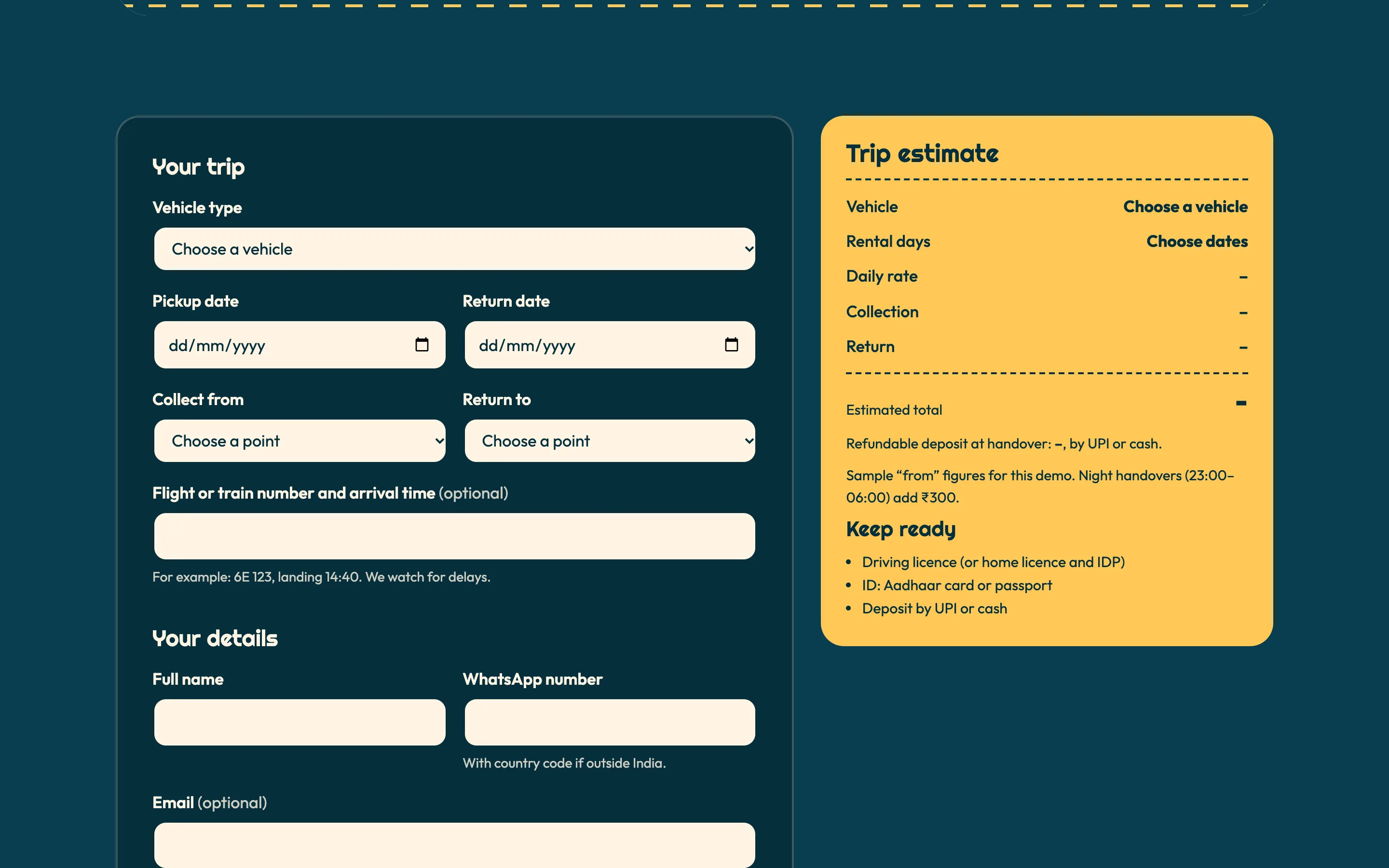
That button opens the booking page with the vehicle already chosen. As the visitor picks dates and collection and return points, the estimate panel shows the number of days and the daily rate, which drops to a long-stay rate from seven days. It also shows each handover charge, a from total and the refundable deposit, kept separate from the total. The enquiry form asks for a flight or train number, a WhatsApp number and the licence the driver will bring. There are no card or payment fields: the business confirms on WhatsApp and takes the deposit at handover.
The airport pickup page explains both airports, the four handover steps, late flights, night handovers and returns at departures. A poster-style map shows every handover point from the north to the south of the state.
The pages
- Home: the poster hero, the ride finder, three trip ideas (land and drive, beach-hopping, inland day trips), four fleet cards, the handover steps, sample policies and sample reviews.
- Fleet: the filter and all ten vehicles, plus advice on which vehicle suits which group.
- Rates & Policies: a rates table with long-stay rates and deposits, a table of handover charges, and nine short policy cards.
- Airport Pickup: both airports, the handover steps, returns and a map of handover points.
- Book: the trip estimate and the booking enquiry.
Local SEO set-up for a car rental business
Each page targets one kind of search. The home page covers "self-drive car rental in Goa", the fleet page covers scooter and SUV searches, and the airport page targets "car rental at Goa airport". Every title and description fits search results without being cut off. The structured data marks the business as an AutoRental with its area, hours and contact details. The fleet page lists each vehicle type as an offer with its daily rate, and the airport and rates pages describe the services. The pages are plain HTML with self-hosted fonts and drawn illustrations, so they load quickly on patchy holiday mobile data. Ranking in the map pack also needs a matching Google Business Profile with the same name, phone number and hours.
Country notes
India
The demo uses Indian English, prices in rupees with Indian digit grouping and masked phone numbers such as +91 98XXX XX123. WhatsApp is the main contact button, because that is how most Indian renters confirm a booking. Deposits are taken by UPI or cash at handover, and the site never collects card details. Self-drive vehicles in India carry black-and-yellow commercial number plates, and the demo says so to reassure renters that the fleet is legal. The policy cards cover what Indian and foreign renters ask most: an Indian licence for the vehicle class, or a home licence with an International Driving Permit for visitors from abroad. They also cover the helmet rule for rider and pillion and the ban on driving on Goa's beaches. The footer has labelled placeholders for the GST number and the rent-a-cab permit, so a real business can fill them in on launch.