A driving school website should welcome the uncertain learner
Not every visitor knows which lesson package to choose. Some have never sat in the driver's seat, some are returning after a long break and others want a structured review before an assessment. A useful driving school website recognises those different starting points without judging them. It should explain what a lesson enquiry means, how an instructor is chosen and why a package cannot promise a particular result.
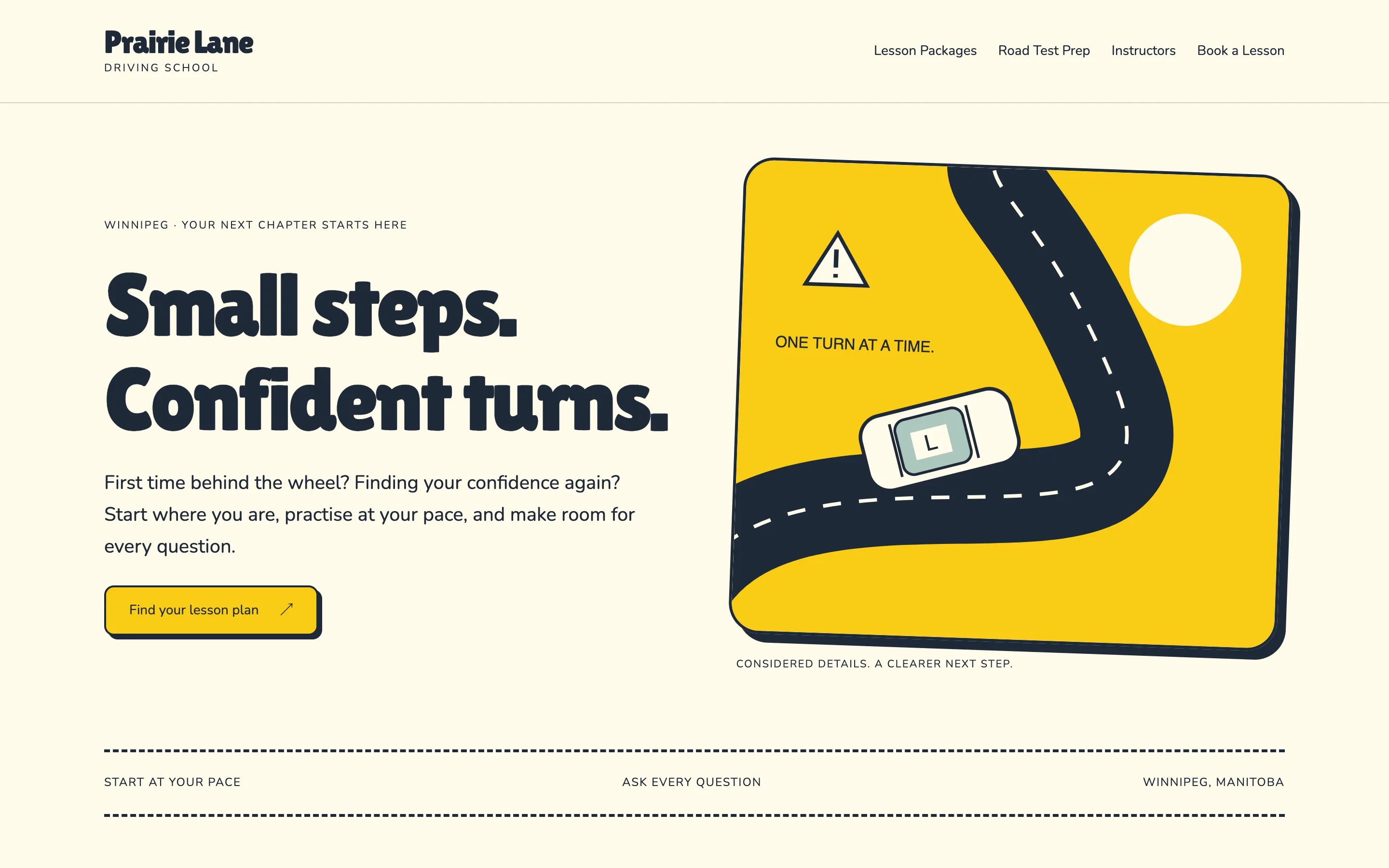
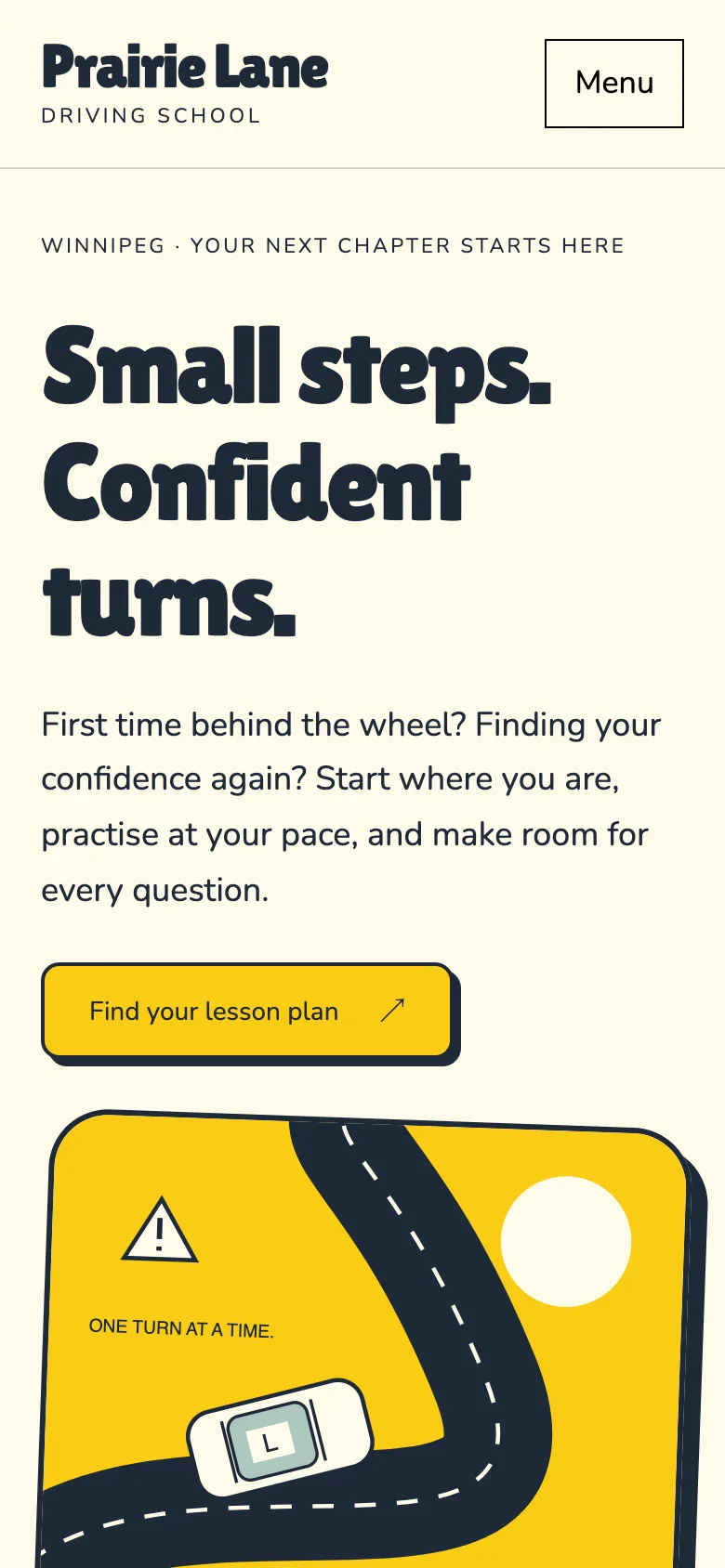
Prairie Lane Driving School is a fictional Winnipeg example built around that conversation. Its yellow and cream palette, rounded panels and original winding-road illustration give it an approachable identity. Lilita One headings carry the friendly tone, while Nunito keeps the longer explanations readable. The design avoids invented pass rates and official-looking badges. The sample instructor profiles use fictional names and text descriptions, without presenting photographs of real people as members of the school.
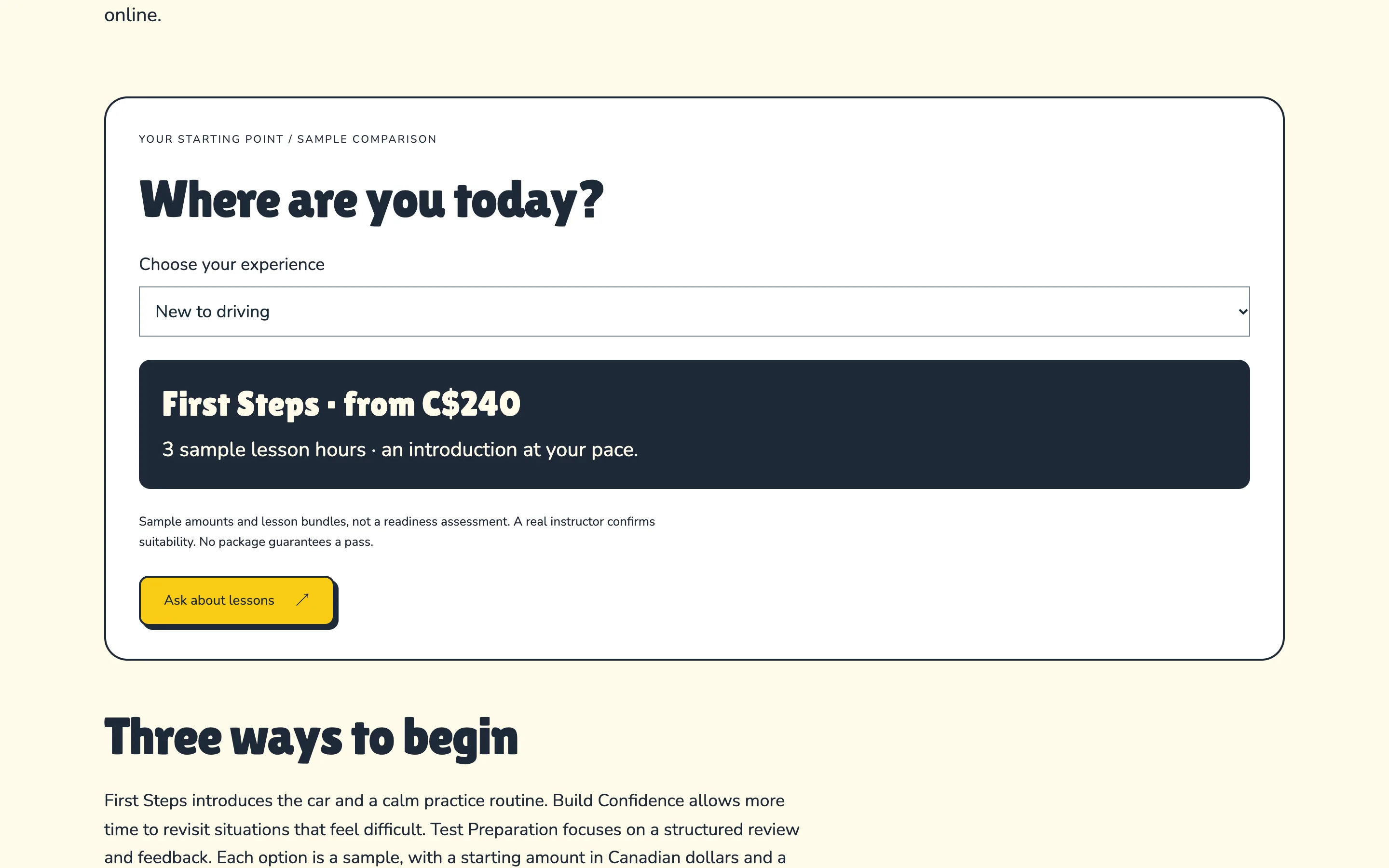
A lesson comparison based on the visitor's starting point
The signature feature asks whether the visitor is new to driving, returning after a break or preparing for a road test. Each selection reveals a sample bundle with its lesson hours and illustrative starting amount in Canadian dollars. The result updates immediately and is announced for assistive technology. A standard select control makes the interaction familiar on phones and usable with a keyboard.
The recommendation is explicitly a conversation starter. It does not assess readiness, check legal eligibility or reserve an instructor. The accompanying text explains that a real school would agree the scope and pace with the learner. This allows an owner to demonstrate a useful package comparison without suggesting that every student needs the same number of hours. A commissioned version can use the school's actual lesson structure and wording after review by the people who deliver the service.
Five pages with distinct learner questions
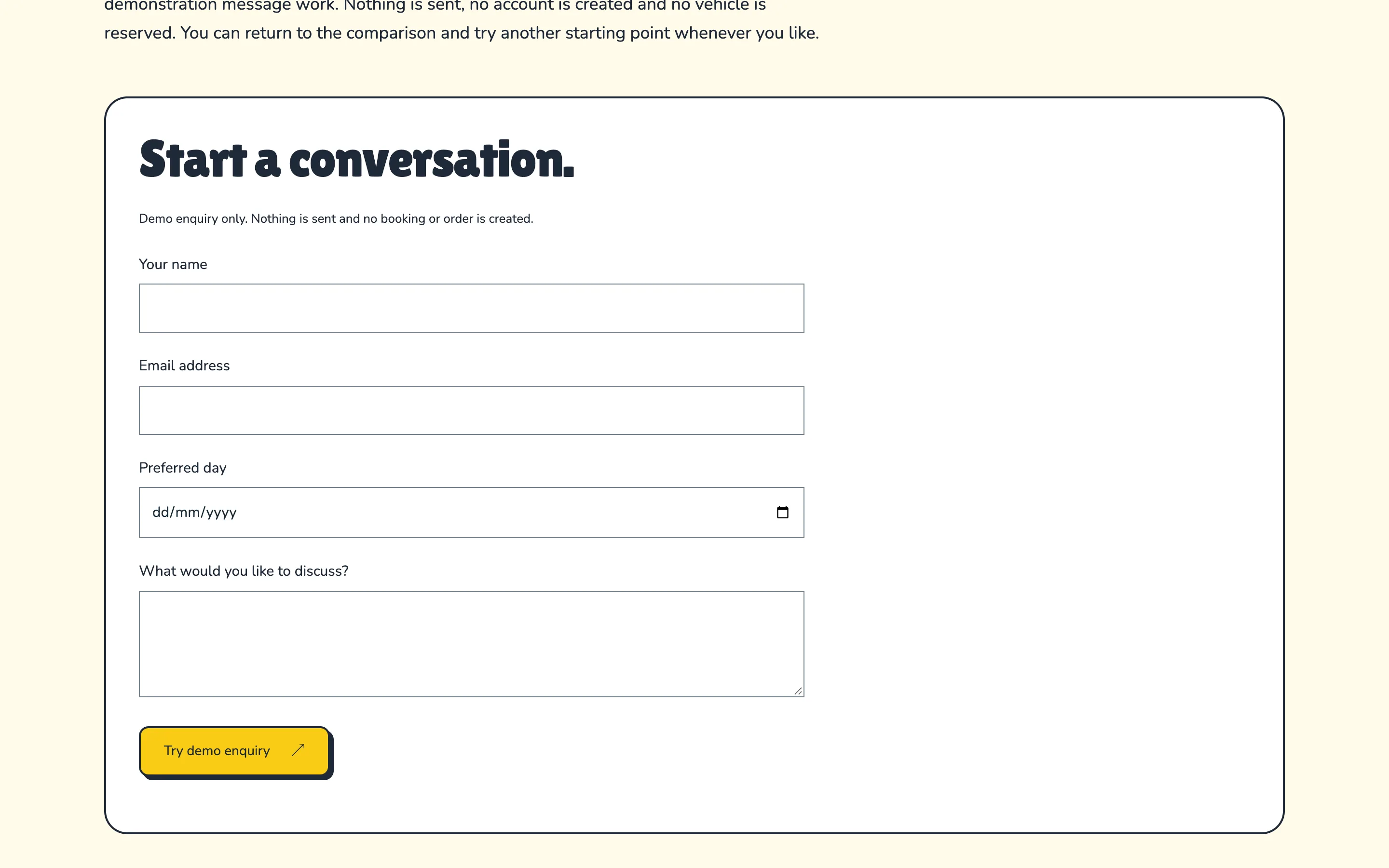
Home introduces the school and gives routes into the package comparison, preparation information and instructor profiles. Lesson Packages explains the sample bundles and exclusions. Road Test Prep describes a review-and-feedback process without offering personalised driving instruction or claiming an official affiliation. Instructors focuses on communication styles. Book a Lesson collects a preferred day and a short message, while making it clear that the request does not reserve a car or an official test.
The contact form avoids licence numbers, identity documents and payment fields. Required fields are validated in the browser, the first invalid control receives focus and a valid submission produces a clear notice that nothing was sent. Native controls, visible focus states and a responsive reading order support phone and keyboard use. A custom not-found page directs a lost visitor back to the home page without dropping the visual identity.
Search and trust foundations
Every service page has its own title, description and canonical URL, with a local sharing image and consistent social metadata. EducationalOrganization identifies the fictional school, and inner pages include service and breadcrumb context. The server keeps the demonstration out of search indexes and adds the existing demo notice. The public industry page explains the driving school website design service. A real launch would require the school's verified identity, actual contact information and approved descriptions of instructor credentials.
Driving school websites in different markets
Canada
The Winnipeg example uses Canadian English and Canadian-dollar sample amounts. A real school would confirm its lesson structure, pickup arrangements and the local authority information it wants to reference. The website should make the difference between a lesson enquiry and an official test booking obvious. No package should imply a guaranteed licence or pass.
USA
A US version can use US English and clearly labelled dollar amounts. Local eligibility and testing information should be supplied or verified for the actual location before publication. The comparison can still begin with experience and goals, while the real school decides which lesson arrangements are suitable. Claims about accreditation or instructor registration should use verified details only.
India
An Indian driving school can use rupees and an approved WhatsApp contact route for initial questions. The website should describe vehicle and lesson options in the school's own terms. A public enquiry need not request identity documents. The operator can explain the proper enrolment process after responding, keeping an informal first message separate from formal registration.
Australia
An Australian version can use Australian English and Australian-dollar figures, with the exact lesson duration and vehicle arrangements stated clearly. The operator should review any descriptions of local learner requirements before publication. The package selector remains an aid to discussion rather than a promise about logbook recognition, eligibility or an official assessment result.
Finland
A Finnish school can offer Finnish and English pages with matching lesson information and euro figures. Translating the comparison result and form feedback matters as much as translating the main headings. The real school should provide its current course structure and any authority references. The sample's supportive tone can remain while the programme details are adapted to the actual service.