What buyers look for on a furniture maker's website
Furniture is bought slowly. People save pictures for weeks, measure the room twice and compare two or three makers before they ever get in touch. What they want from a website is a clear look at each piece: the shape, the size, the woods and fabrics it comes in, and roughly what it costs. If the only image is one photo in one finish, they cannot picture the oak version next to their floor, and many simply move on to a maker whose site shows it.
After the piece itself, the questions get practical. How long does it take to make? Is it solid wood or veneer? How do I look after an oiled top? Where can I sit on the chair before I buy it? A good furniture website answers those on the page, so the enquiry that arrives comes from someone who already knows which table they want and in which length.
There is also a second audience that many makers forget online: the trade. Interior designers, architects, hotel and restaurant projects and furniture shops buy in larger quantities and need drawings, samples, custom sizes and trade prices. They want a quick way to say who they are and what they need, without filling in a consumer contact form.
How the demo handles it
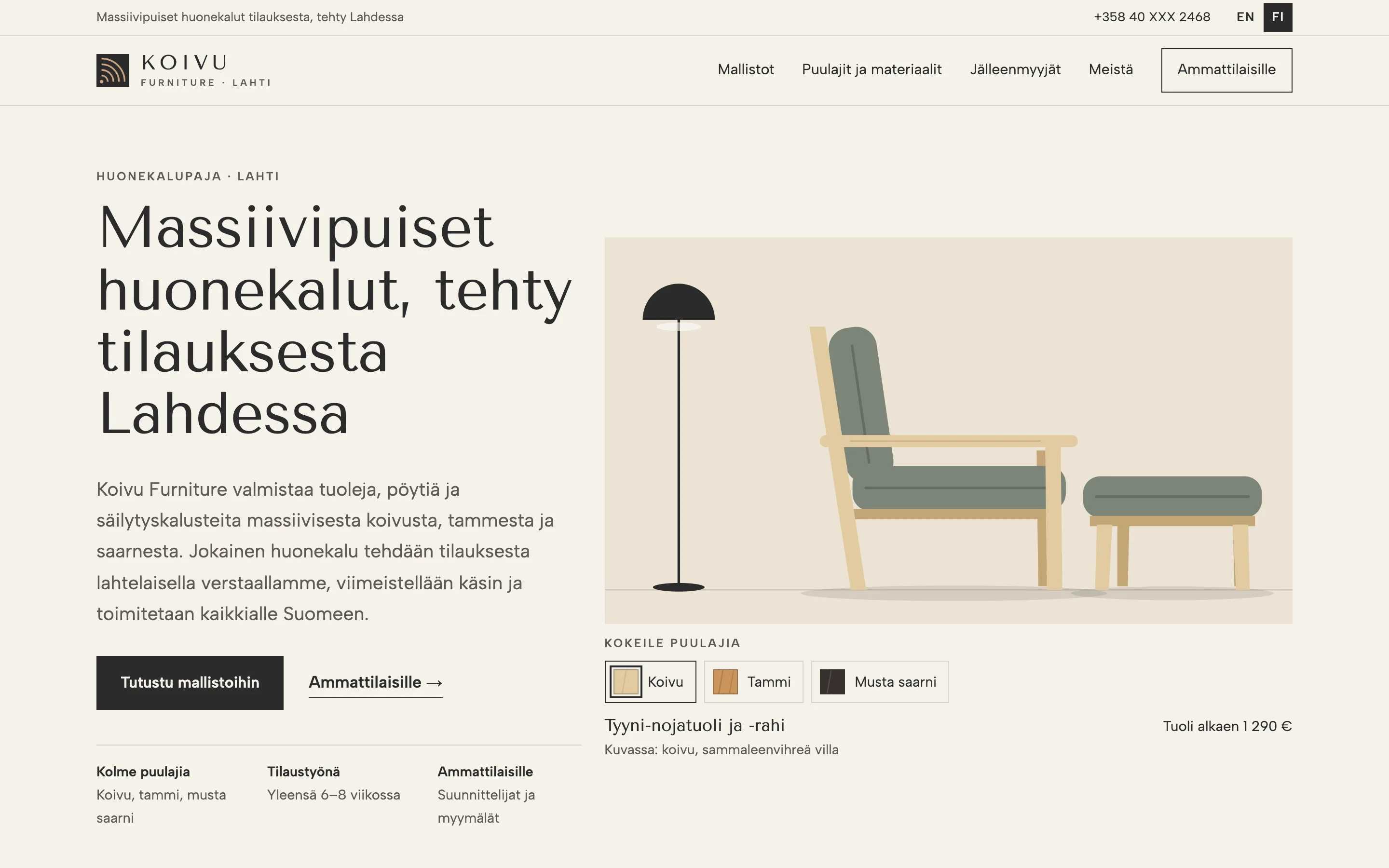
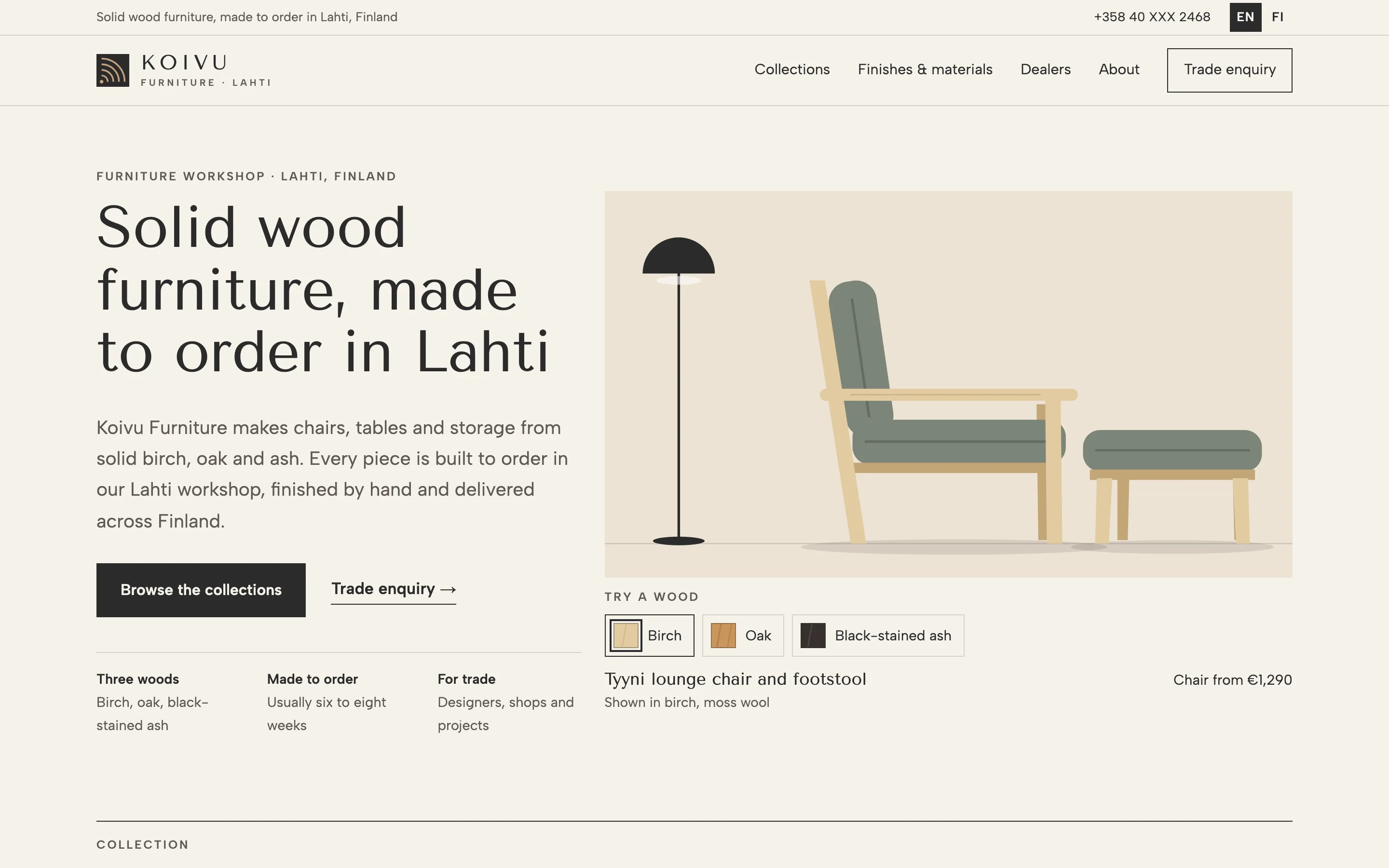
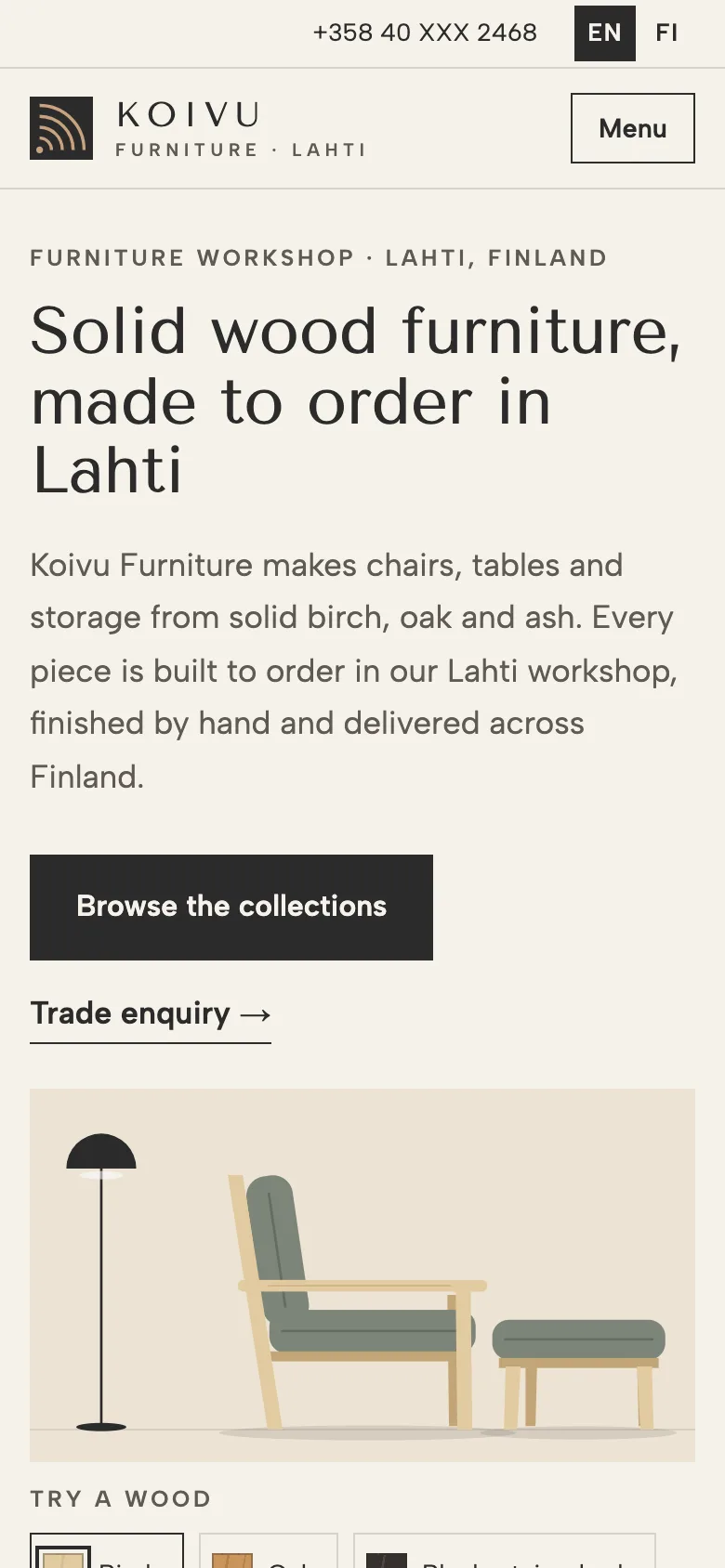
The demo site for the fictional Koivu Furniture in Lahti, Finland, is laid out like a Nordic product catalogue: large product drawings on warm birch panels, generous white space and a thin top bar with the phone number and the language switch. The home page leads with a lounge chair you can recolour on the spot, then shows the full collection, the three woods side by side, how a piece is made, a section for the trade and the dealer cities.
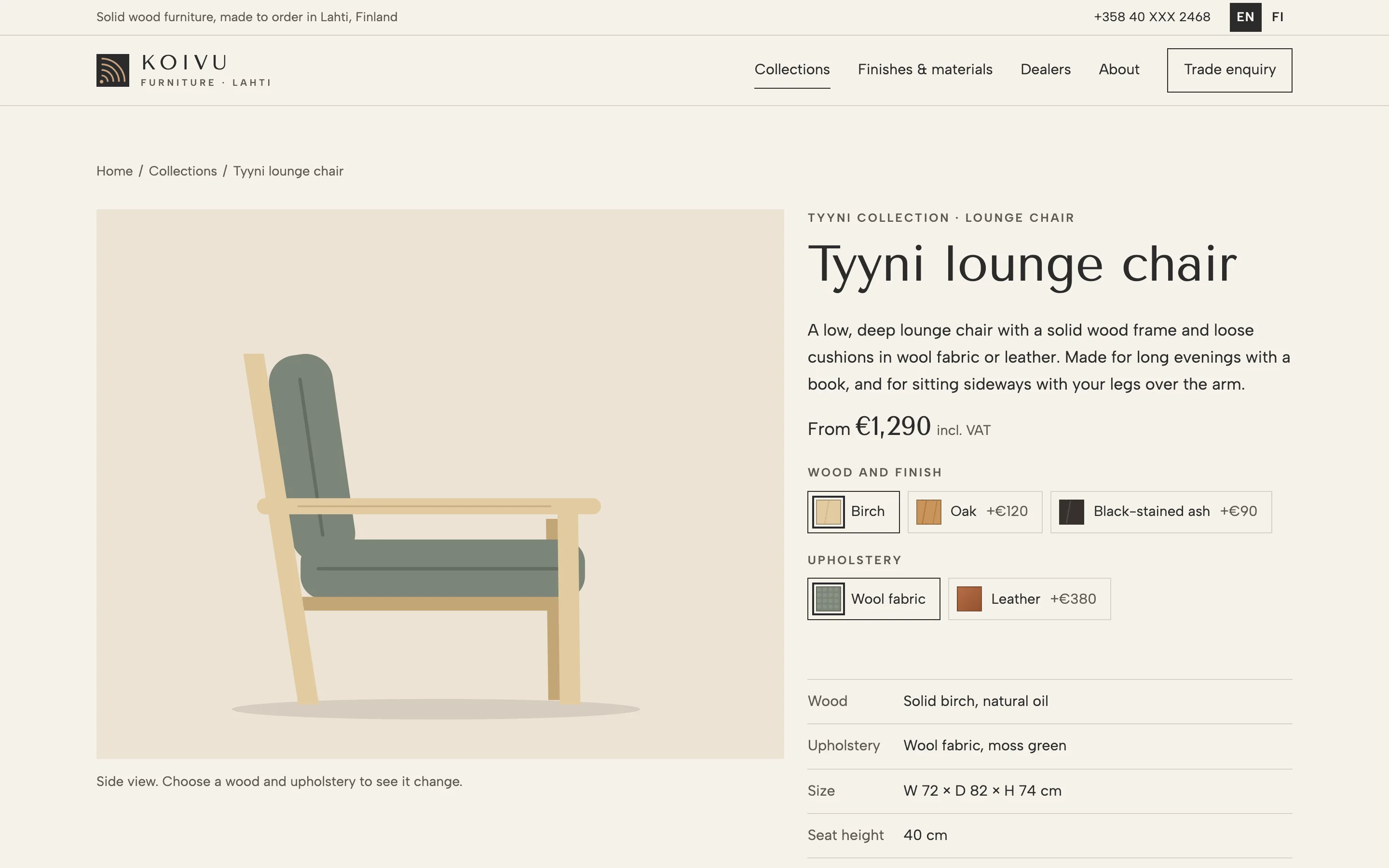
Each product page has a finish and material switcher. Choose birch, oak or black-stained ash, and wool fabric or leather for the chair, or a length for the dining table, and the drawing changes colour while the specification, the from price and the enquiry link update with it. Below that sit design notes, a measured working drawing with dimension lines, materials and care, and related pieces that complete the room.
The trade enquiry page asks what kind of business the visitor runs, which pieces they are interested in, the quantity and the timeline. If they arrive from a product page, the product and the chosen finish are already filled in. Validation happens in the browser, the first problem gets the focus, and the confirmation explains that the demo sends nothing.
Pages included
- Home: hero with the wood switcher, collection grid with from prices, woods, process, trade and dealer teasers, FAQ.
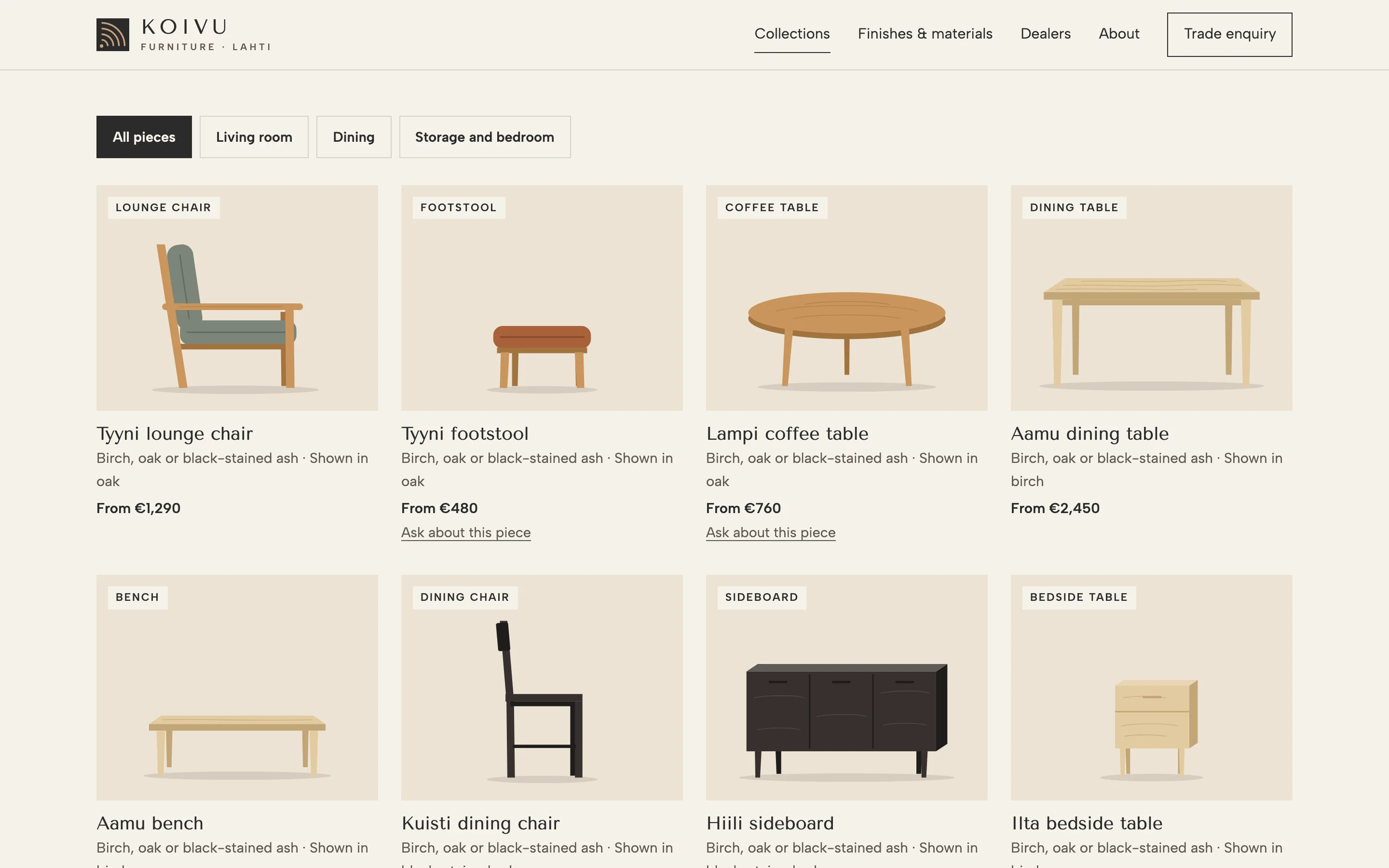
- Collections: every piece with a room filter, the product families and a note on made-to-order lead times.
- Product pages: the Tyyni lounge chair and the Aamu dining table, each with switcher, specification, working drawing and related pieces.
- Finishes & Materials: three woods with origin, character and finish, four surface finishes, fabrics and leathers, and care advice.
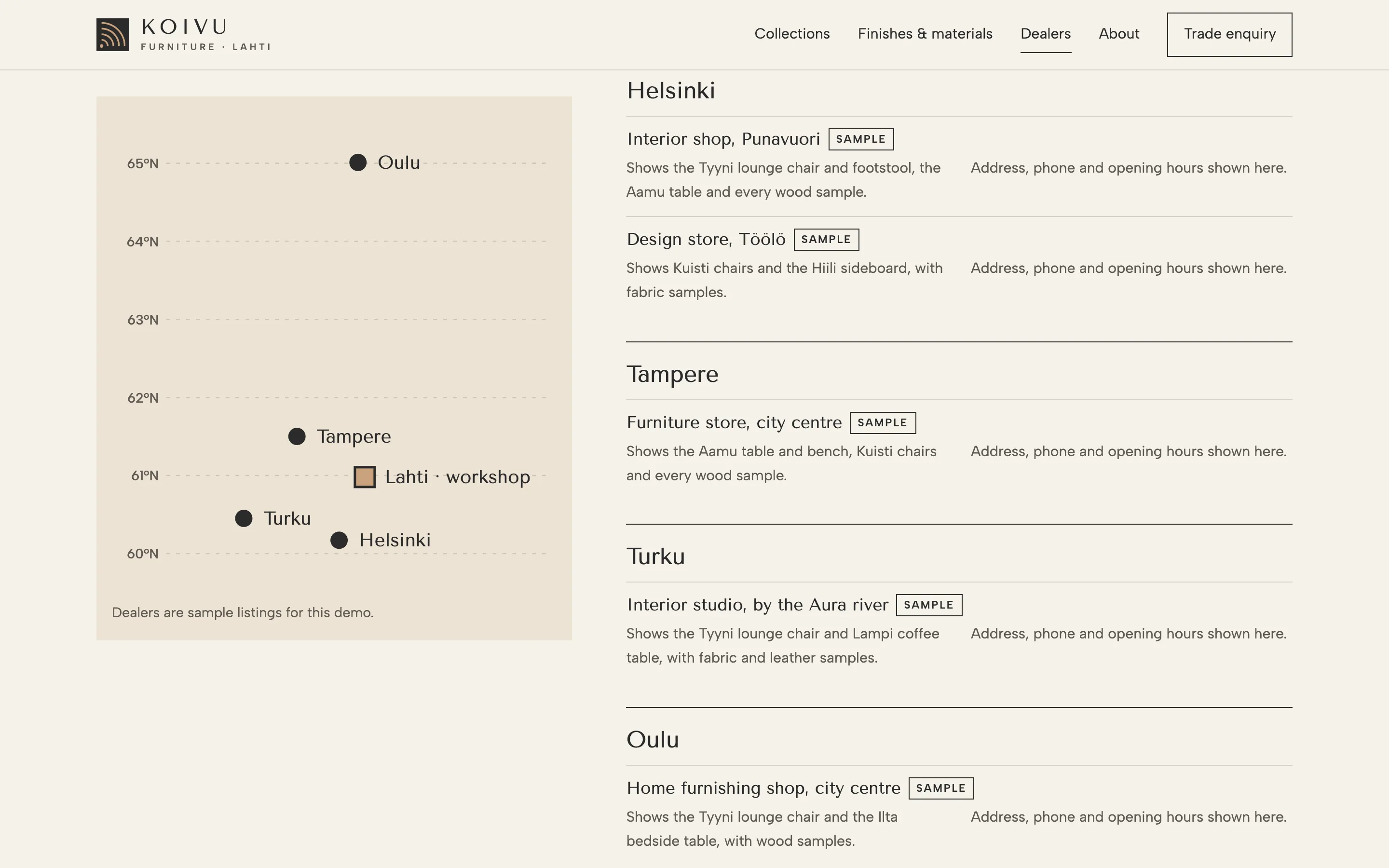
- Dealers: sample dealers in Helsinki, Tampere, Turku and Oulu on a simple latitude map, the Lahti showroom and a place for dealers abroad.
- Trade Enquiry: the form for designers, architects, shops and projects, plus what trade customers get.
- About: the workshop, the rules it builds by, and how to visit.
Local SEO for furniture makers
Every page carries FurnitureStore structured data with the city, opening hours and logo, and each product page adds a Product with an Offer that states the starting price and that the piece is made to order. The collection page lists all products in an ItemList, so search engines understand the catalogue as a whole. Titles name the product, the material and the place ("Aamu Solid Wood Dining Table, Made in Lahti"), which is how people search when they have a wood and a room in mind. For a real client, the next steps are a Google Business Profile for the showroom, real photography of each finish, and a dealer page that each partner shop can link to.
Furniture maker websites by country
India
Furniture buyers in India often compare solid wood against engineered wood and ask about termite treatment and seasoning, so the materials page carries that weight. Prices are shown in rupees with the lakh format where it is natural, WhatsApp becomes the main enquiry button, and the trade form suits architects and interior firms working on apartments and offices. A GST number placeholder sits in the footer until the real one goes in.
USA
American buyers expect imperial measurements next to metric, clear shipping and white-glove delivery information, and a dealer or showroom locator by state or metro area. Accessibility matters here as well as everywhere else: the site meets WCAG 2.2 AA, with keyboard-friendly switchers and forms that describe their errors.
Canada
Canadian spelling, metric sizes with inches where buyers expect them, and prices in Canadian dollars. A maker selling in Quebec needs French pages as well as English, and the bilingual set-up in the demo (separate URLs, hreflang and a language switcher) is exactly what that requires.
Australia
Australian English, prices in Australian dollars and an ABN placeholder in the footer. Many Australian makers sell to architects and fit-out companies, so the trade enquiry form and downloadable drawings matter as much as the retail pages, and timber species can be described alongside local hardwoods.
Finland
The demo itself: Finnish at /fi and English at /, Finnish price formats such as 1 290 €, a Y-tunnus placeholder, and wording that a native speaker checks before launch. Finland's long furniture tradition, Lahti's included, means buyers know their woods, so the finishes page speaks plainly about birch, oak and ash and how each one ages.