What jewellery buyers look for on a website
Buying fine jewellery is slow and careful. Most people look online for days or weeks before they visit a shop or pay. A bride's family compares bridal sets across three or four jewellers. A couple buying an engagement ring wants to understand diamond size, metal and price before they walk in. Someone buying a first everyday piece wants to know it is real gold and what it will cost. They all ask the same questions: what is it made of, how much does it weigh, what karat is the gold, how is the price worked out, can I see it properly, and can I trust this shop.
Many jeweller websites answer none of these. They show a gallery of photos with "price on request", or an online shop with one price and no explanation. That works against a jeweller, because in this trade trust comes from openness: a hallmark, a certificate, a weight and a clear breakup of making charges. A good jewellery website puts those facts on every product page and makes it easy to book a proper look.
How the demo handles it
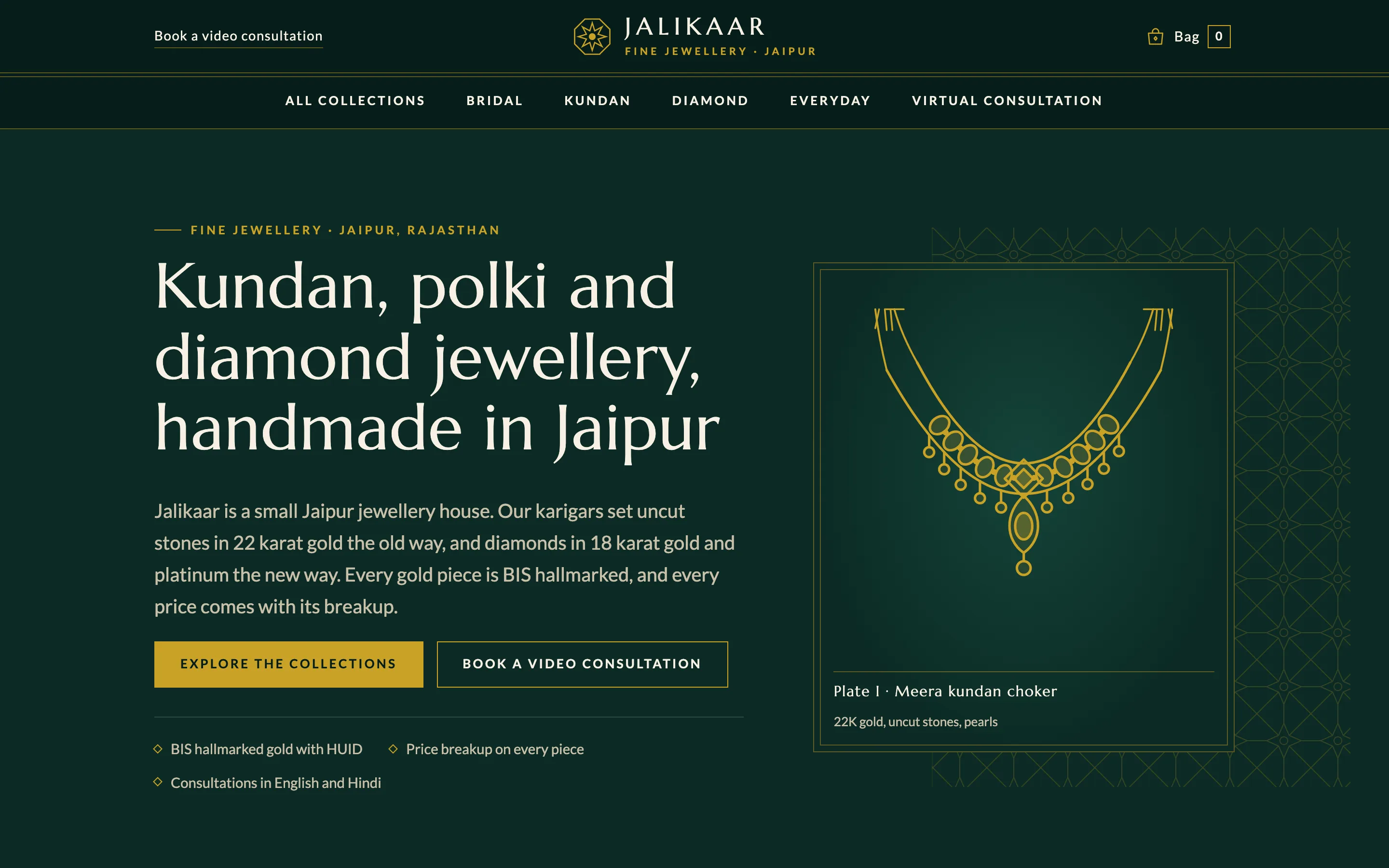
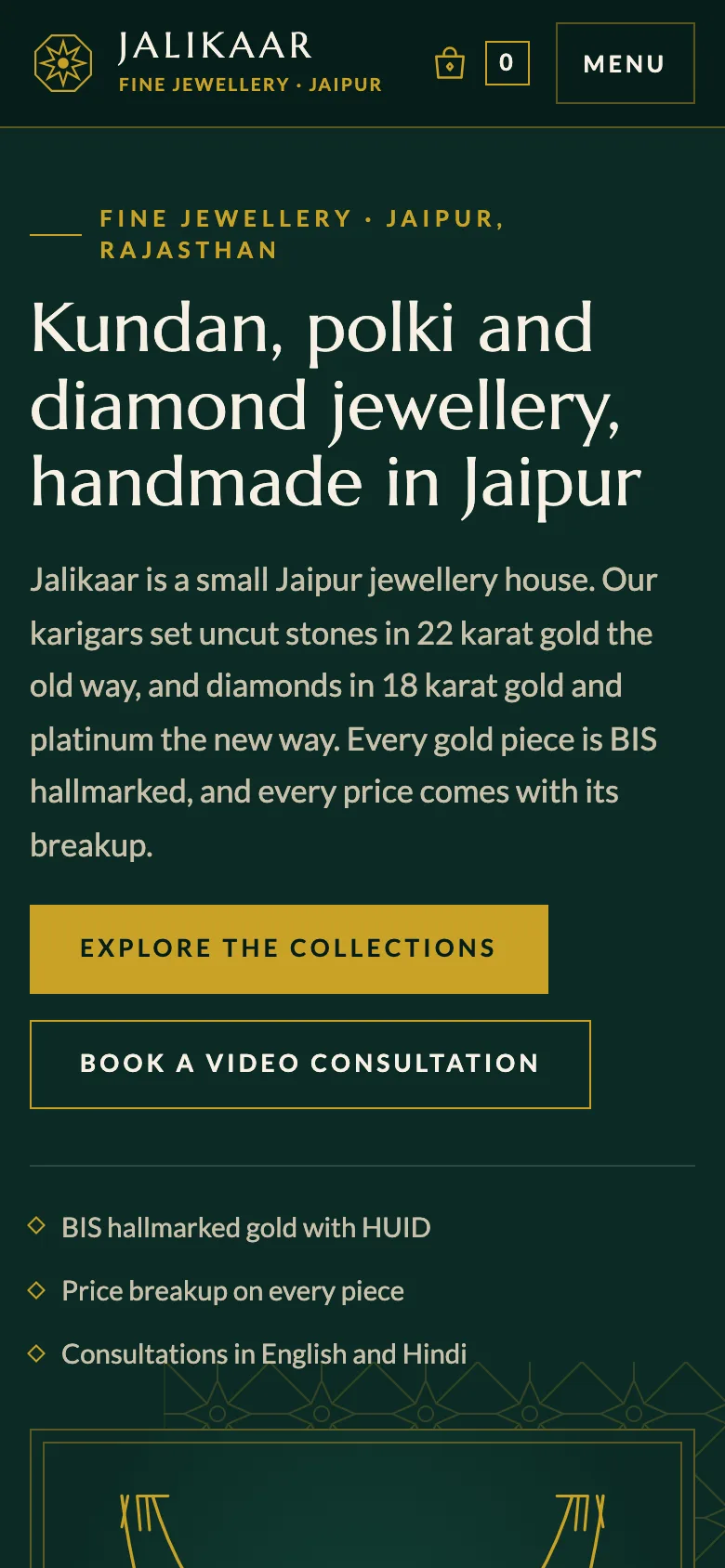
The demo is Jalikaar Fine Jewellery, a fictional jeweller in Jaipur making kundan, polki and diamond pieces. The design is editorial and quiet: deep emerald pages, antique gold lines, Marcellus headings that feel engraved, and the lattice pattern of a Jaipur jali screen. Every piece is drawn in fine gold lines and framed like a plate in a catalogue.
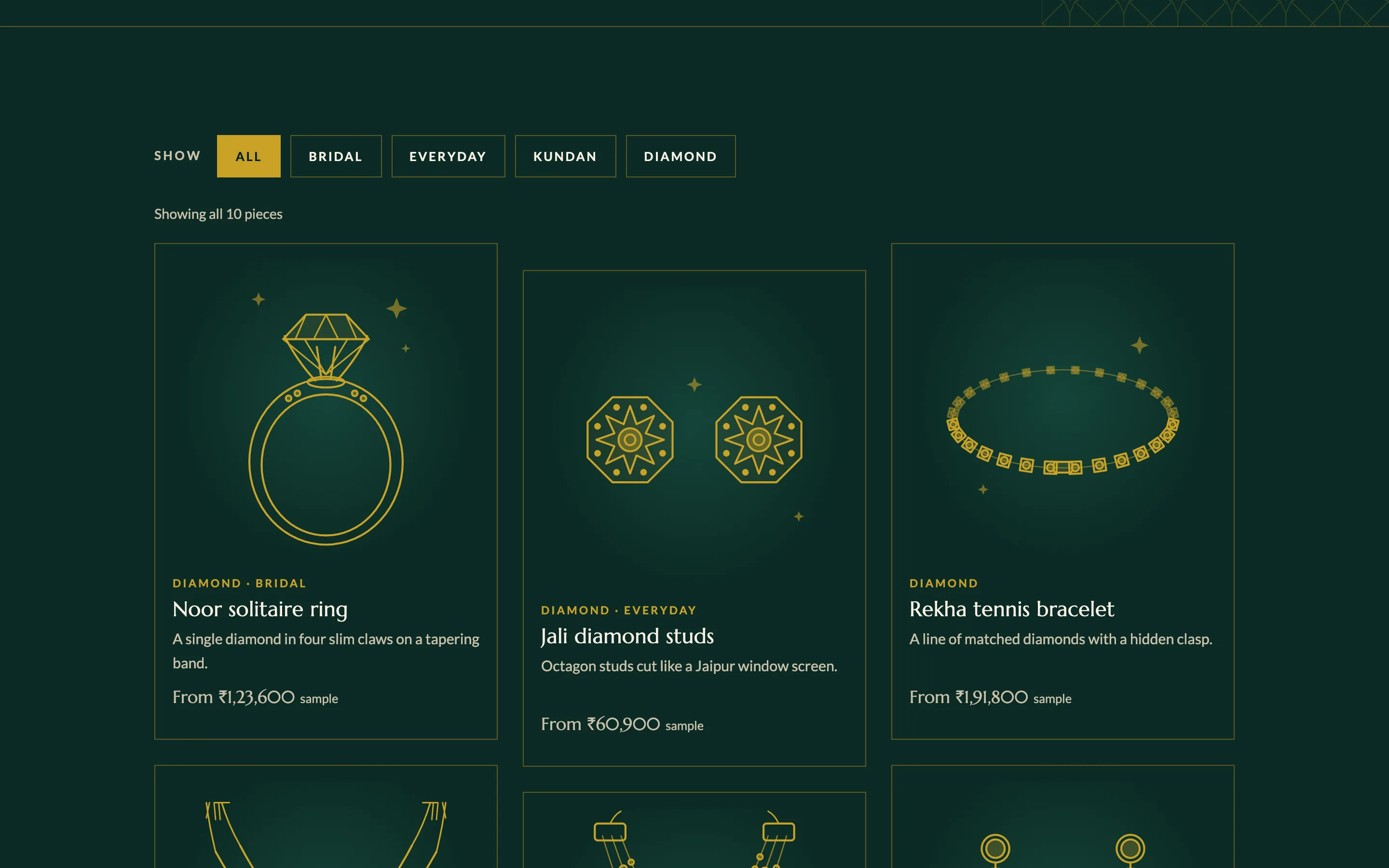
The collections page shows ten pieces, filtered by bridal, everyday, kundan or diamond, with a live count and the filter kept in the address, so a link to the bridal pieces can be shared on WhatsApp. Each card has a sample starting price.
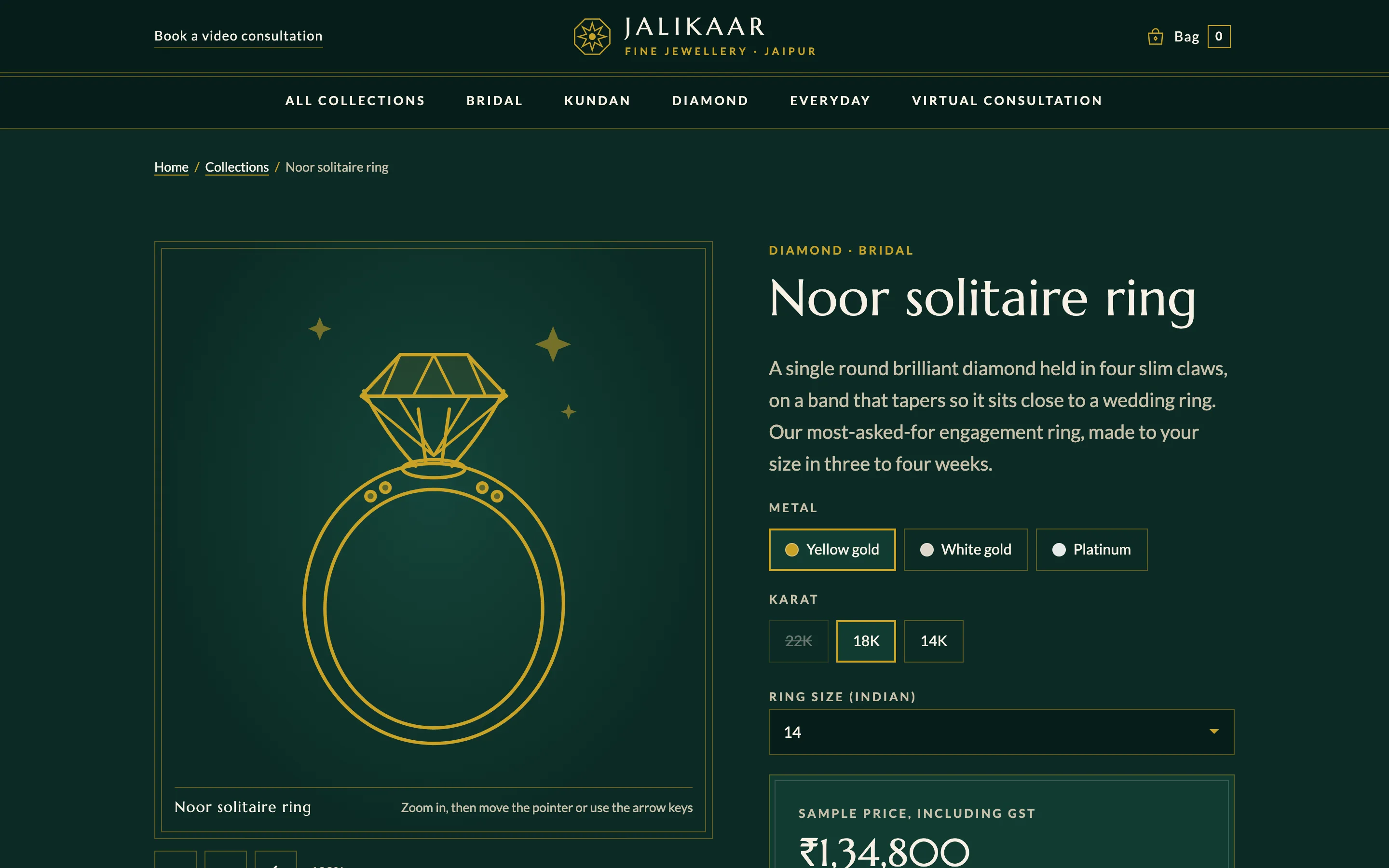
The product page is the signature feature. Buyers choose yellow gold, white gold or platinum, then the karat. Options that do not suit the piece are switched off with a reason: kundan is set in 22K or 18K gold foil, and platinum has no karat. The price updates at once, with a breakup of metal weight times rate, making charges, stones and GST. The metal choice also recolours the drawing, which buyers can zoom with a pointer, the buttons or the keyboard.
Pieces go into a bag kept in the browser. The checkout asks for delivery details, offers insured delivery or showroom pickup, and stops at a clearly marked space where the payment provider's secure page would open. There are no card fields. The virtual consultation page books a video call with a time slot, language, budget and an optional reference photo.
The pages
- Home: the promise, the four collections, a pull quote, the four steps from sketch to hallmark, why buying online here is safe, a sample price breakup and sample reviews.
- Collections: all pieces with filters, starting prices and notes on metals and made-to-order times.
- Product page: the drawing with zoom, metal and karat, size, the live price breakup, add to bag, details and care.
- Bag and checkout: the bag, an order summary, delivery details and the payment placeholder.
- Virtual consultation: what happens on the call, notes for buyers abroad and the booking form.
Local SEO set-up for a jeweller
Every page carries JewelryStore structured data with the name, logo, city, opening hours and accepted payments. The product page adds Product with an Offer in rupees and made-to-order availability, the collections page lists the pieces as an ItemList, and the consultation is a Service. Titles pair the piece or service with the city, such as "kundan jewellery Jaipur" or "solitaire ring Jaipur", which is how buyers search.
Your Google Business Profile should use the jewellery store category, show the same hours as the site and link to the consultation page. Photos of the showroom, the counter and your craftspeople at work help more than product shots there. If you have more than one showroom, each gets its own page with hours and directions.
Country notes
India
Indian English, rupees with lakh grouping, and WhatsApp as the main contact button. Show the BIS hallmark and HUID on all gold, the GSTIN in the footer, and GST as its own line in the price. Buyers expect UPI, EMI and an exchange or buy-back policy for old gold written plainly. Families abroad often order bridal sets by video, so the booking form confirms times in both time zones.
USA
US English, dollars and 14K or 18K gold as standard. Engagement rings lead, so diamond details, grading reports and lab-grown options need clear wording that follows the FTC jewellery guides. Sales tax depends on the state. The site's contrast, focus states and labelled forms follow WCAG 2.2 AA, which matters because retailers receive ADA website claims.
Canada
Canadian English, Canadian dollars and GST or HST shown at checkout. Shops that serve Quebec need a French version. Gold and silver marking rules are national, so quality marks belong on product pages, and insured shipping across long distances is a selling point.
Australia
Australian English, Australian dollars with GST included, and an ABN placeholder in the footer. Buyers compare 9K, 14K and 18K gold, so the karat selector suits that market. Australian Consumer Law shapes refund and repair wording, which the site states in plain words.