Packaging buyers need a specification, not just a gallery
A buyer searching for a packaging manufacturer often has a product in front of them and an incomplete set of measurements. They may know the outer dimensions of an old carton but not the internal space needed for protective material. Others are comparing a shipping box with a presentation mailer and need help naming the difference. A useful manufacturer website turns that uncertainty into a structured enquiry without pretending that a picture establishes strength or production suitability.
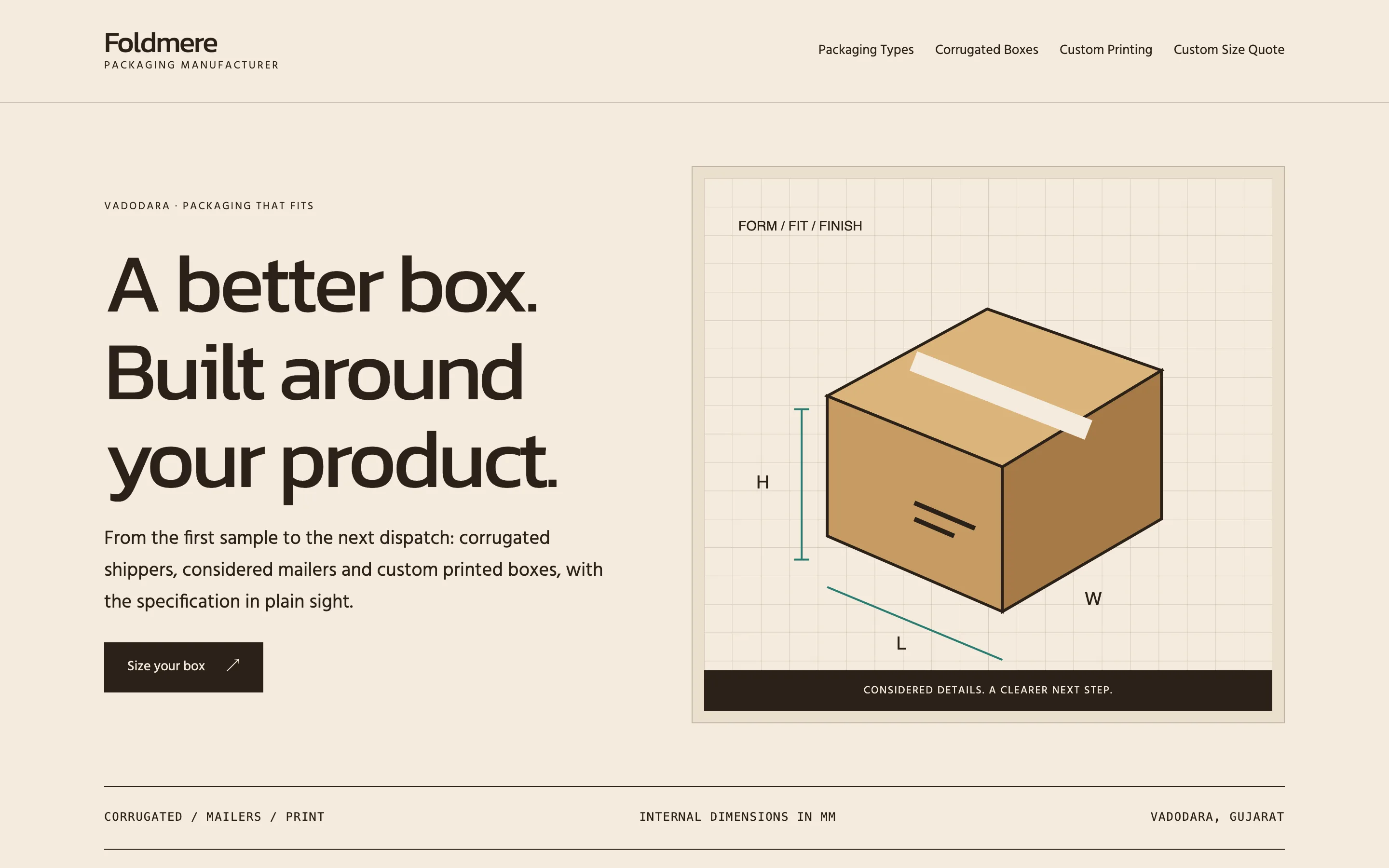
Foldmere Packaging is a fictional Vadodara manufacturer created to demonstrate that approach. The proposed name in the original plan, Boxkraft Packaging, matched a real business in the same city, so this example uses a different fictional name. The visual design combines kraft colours, a measured grid and an original folded-box illustration. Kanit headings and Hind body text support a compact specification interface. There are no real client logos, invented certifications or claims about tested load capacity.
A box configurator that makes dimensions visible
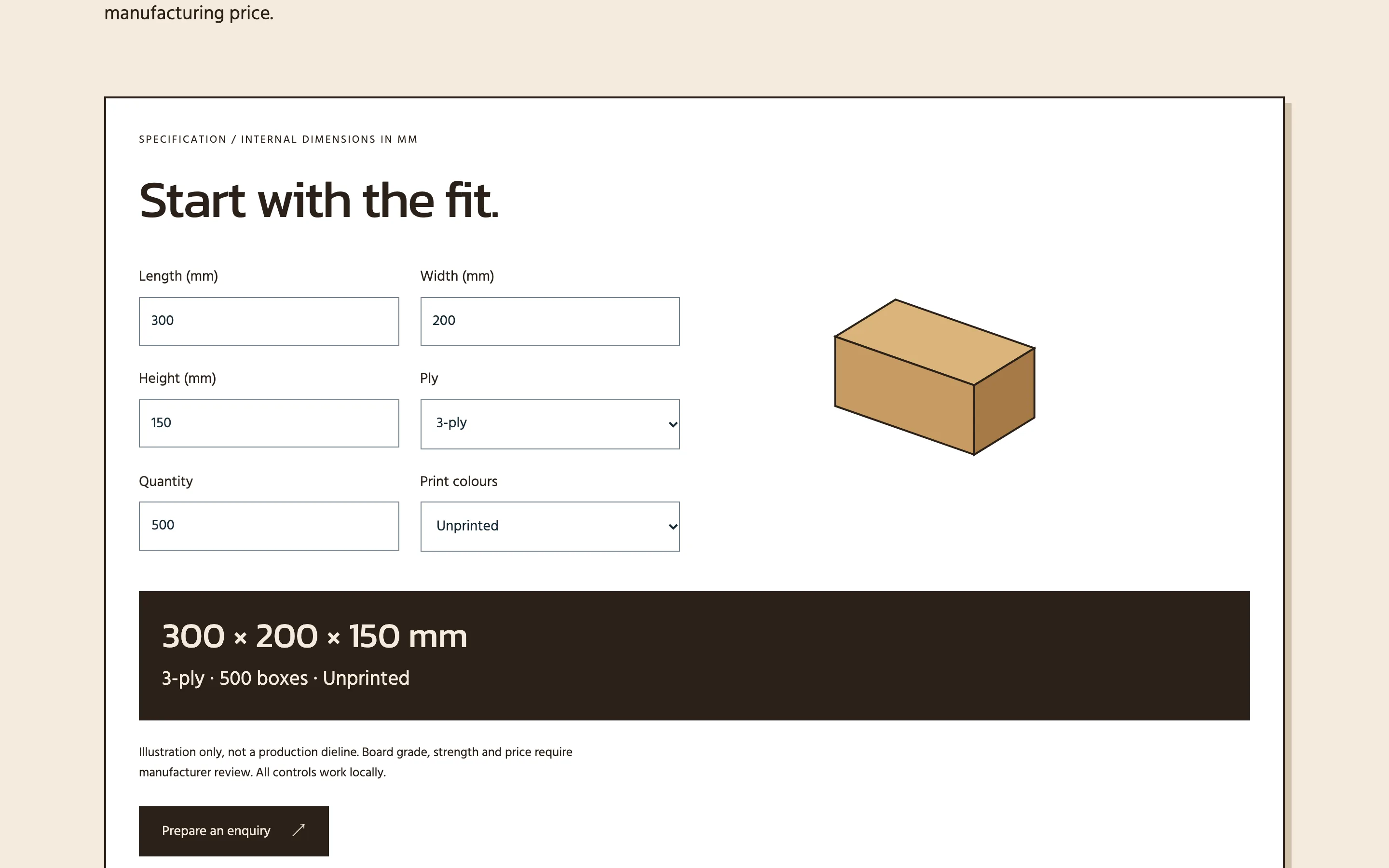
The signature feature takes internal length, width and height in millimetres. As the values change, an SVG box changes proportion and the text summary updates beside it. The visitor can also choose ply, quantity and print colours. Numeric bounds prevent empty or out-of-range values from becoming a plausible-looking specification. The result is an illustration, clearly labelled as such, rather than a production dieline or engineering approval.
This interaction helps the buyer separate three measurements before contacting the supplier. It also creates a natural place to explain what dimensions cannot tell you: board grade, handling conditions, stacking, inserts and the packing method still need discussion. The tool does not produce an instant manufacturing price. A dependable quotation needs the actual material and production scope, so the final step is a demonstration enquiry. All changes happen locally in the browser without an external configurator service.
Five pages that follow the buying conversation
Home introduces the product families and the specification tool. Packaging Types distinguishes corrugated shippers, mailers and presentation boxes. Corrugated Boxes explains internal measurements and why ply alone is not a strength rating. Custom Printing covers artwork placement, folds and proof approval. Custom Size Quote brings the dimension controls and enquiry together. A matching not-found page keeps visitors within the same visual system if a link is mistyped.
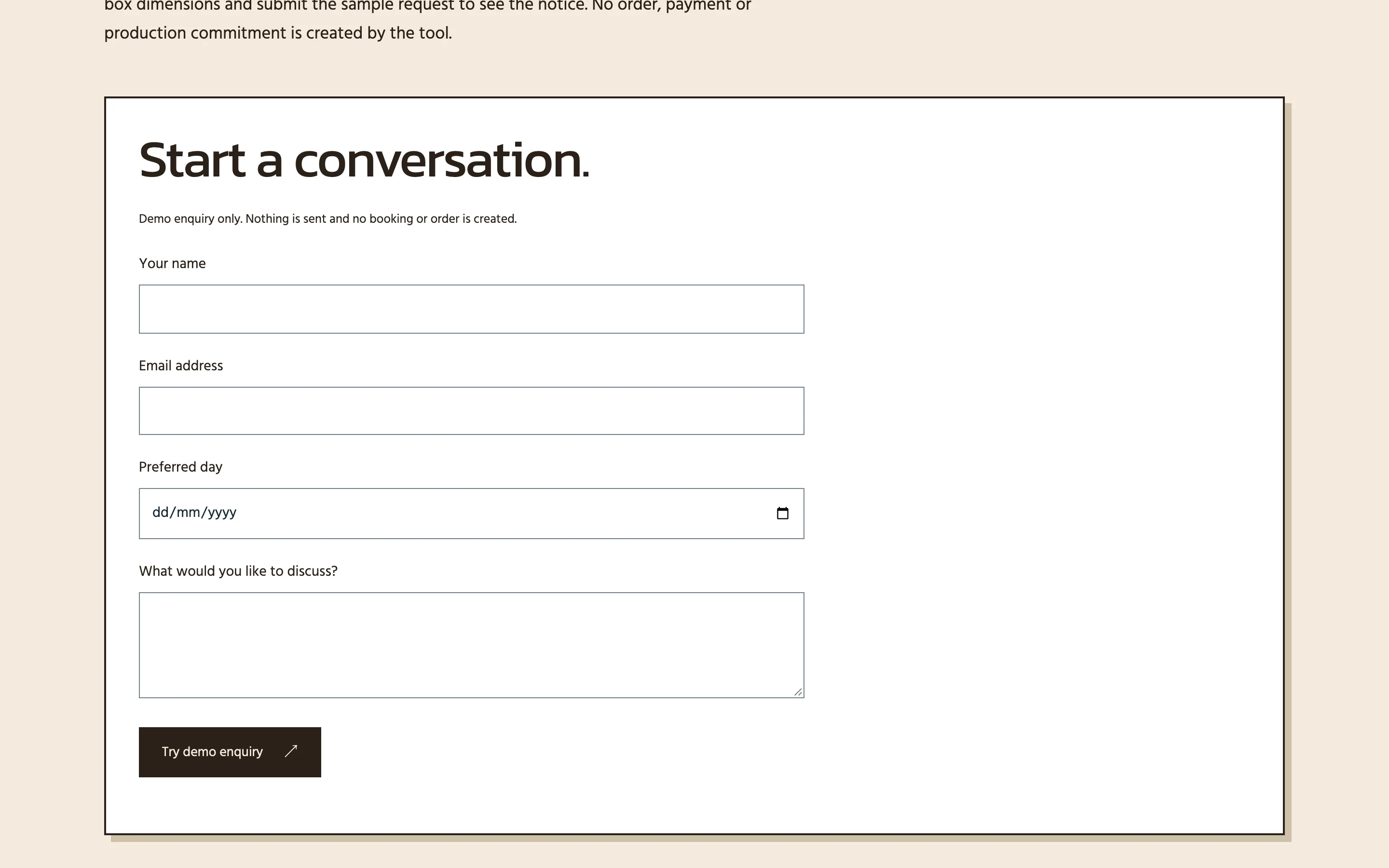
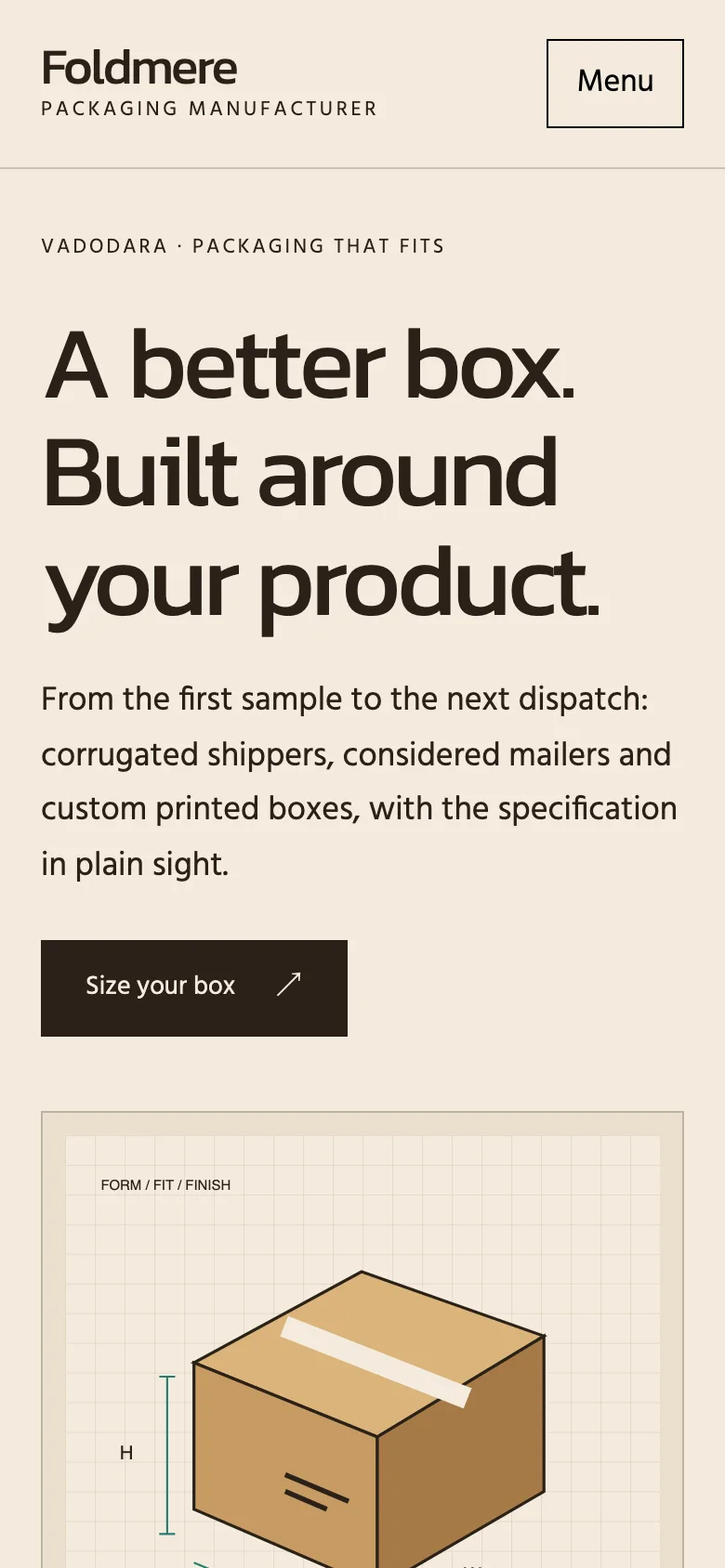
The form asks for ordinary contact information, a preferred discussion day and a message. It does not upload confidential artwork or submit an order. Local validation focuses the first invalid field, and a valid submission displays the demonstration notice. The controls remain usable on a phone, with the diagram placed below the specification fields. Text descriptions remain available without JavaScript so the page does not become an empty configurator shell when scripting is unavailable.
Search foundations for a manufacturer
Page-specific metadata describes the actual subject rather than repeating one generic title. Canonicals, local sharing images and a structured data graph provide consistent identity. The manufacturer is represented as an Organization, with service and breadcrumb context on inner pages. The server keeps the fictional demo out of search indexes. The public industry page carries the description of the website design service. A real manufacturer's launch would replace the identity, confirm its product range and use verified capability information.
Packaging websites across the five markets
India
The Vadodara example uses Indian English and millimetres. A real supplier can add its verified business information and an approved WhatsApp or email enquiry route. Quotes should distinguish material, printing, quantity and dispatch scope. The website should not publish compliance or recycling claims unless the manufacturer has evidence for the particular product being described.
Canada
A Canadian packaging website can keep metric dimensions while explaining any commonly used imperial measurements for its buyers. Canadian-dollar quotations and local delivery information belong in the real enquiry process. If customers require French, product descriptions, dimension labels and validation messages should be translated consistently rather than leaving the tool in another language.
USA
For a US manufacturer, inch inputs may be more appropriate, with any conversion explicitly labelled. The box drawing can retain the same proportional behaviour while the underlying specification uses the supplier's agreed units. Material performance claims should come from the actual product documentation. Buyers should be able to identify whether an amount refers to internal or external dimensions.
Australia
An Australian version can use metric measurements and Australian English, with dispatch questions tailored to the supplier's actual delivery area. Remote or regional delivery may require a different quotation discussion from collection. The manufacturer should supply its real minimum quantities and artwork process before those are displayed as commitments on the website.
Finland
A Finnish supplier can present Finnish and English specifications with matching field labels and euro quotation context. The diagram is useful for export buyers because it supports the written dimensions visually. The real manufacturer should review technical terminology in both languages. An initial enquiry remains separate from sample approval, artwork sign-off and acceptance of a production order.