What home buyers look for on a developer's website
People buying a flat from a developer are making the largest purchase of their lives, usually with a home loan, and often after being burned by vague brochures. Before they visit a sales office, they want four things answered: how big the home really is, what it costs, when they will get the keys, and whether the project is registered. Most developer websites bury those answers under drone videos and amenity lists, then ask visitors to "enquire now" for a price.
The buyer who cannot find a carpet area or a starting price simply moves to the next project in the search results. A developer's website wins by being the most straightforward one in the city: numbers first, honest labels, and an easy way to see the site in person.
Buyers also arrive at different stages. Some want a ready-to-move flat because they are paying rent and EMI at the same time. Others are happy to book early in a new launch for a better price. Families living away from the city, or abroad, want proof that construction is moving. The website has to serve all three without making any of them dig.
How the demo handles it
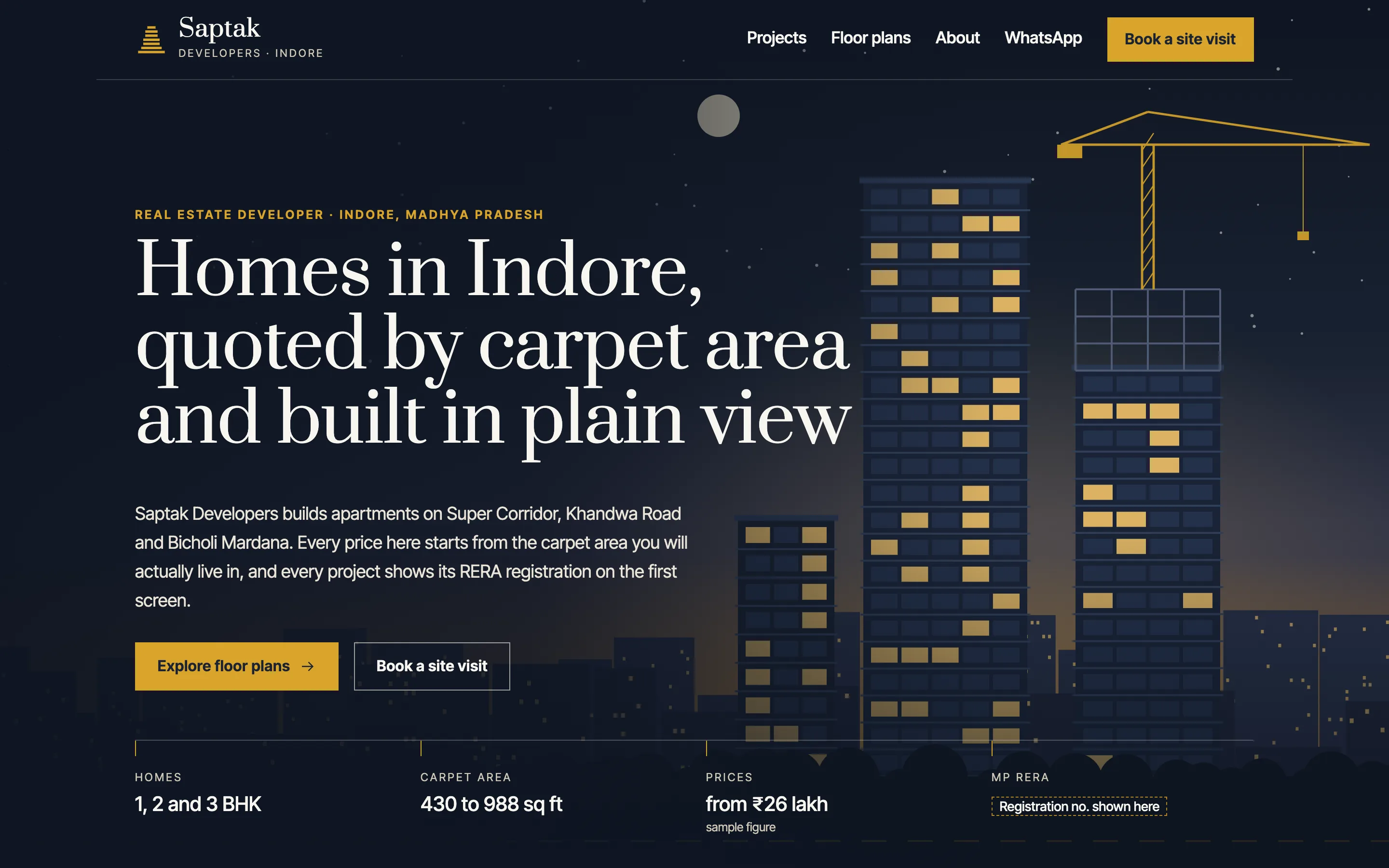
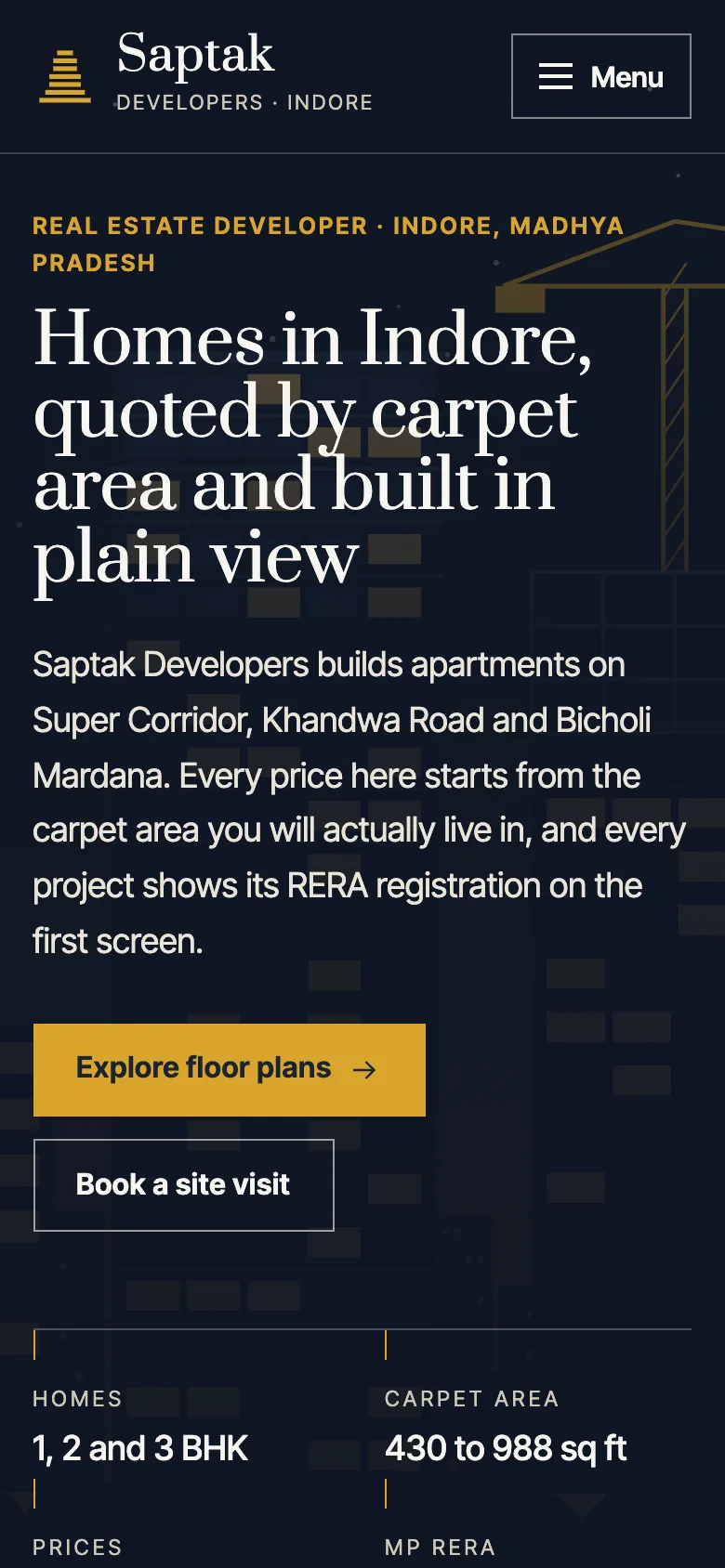
Saptak Developers is a fictional developer in Indore with three projects at three stages. The home page opens on a full-width illustration of two towers at dusk, one still with a crane on top, and the first screen already lists the home types, the carpet-area range, a from price and the place where the RERA registration number goes.
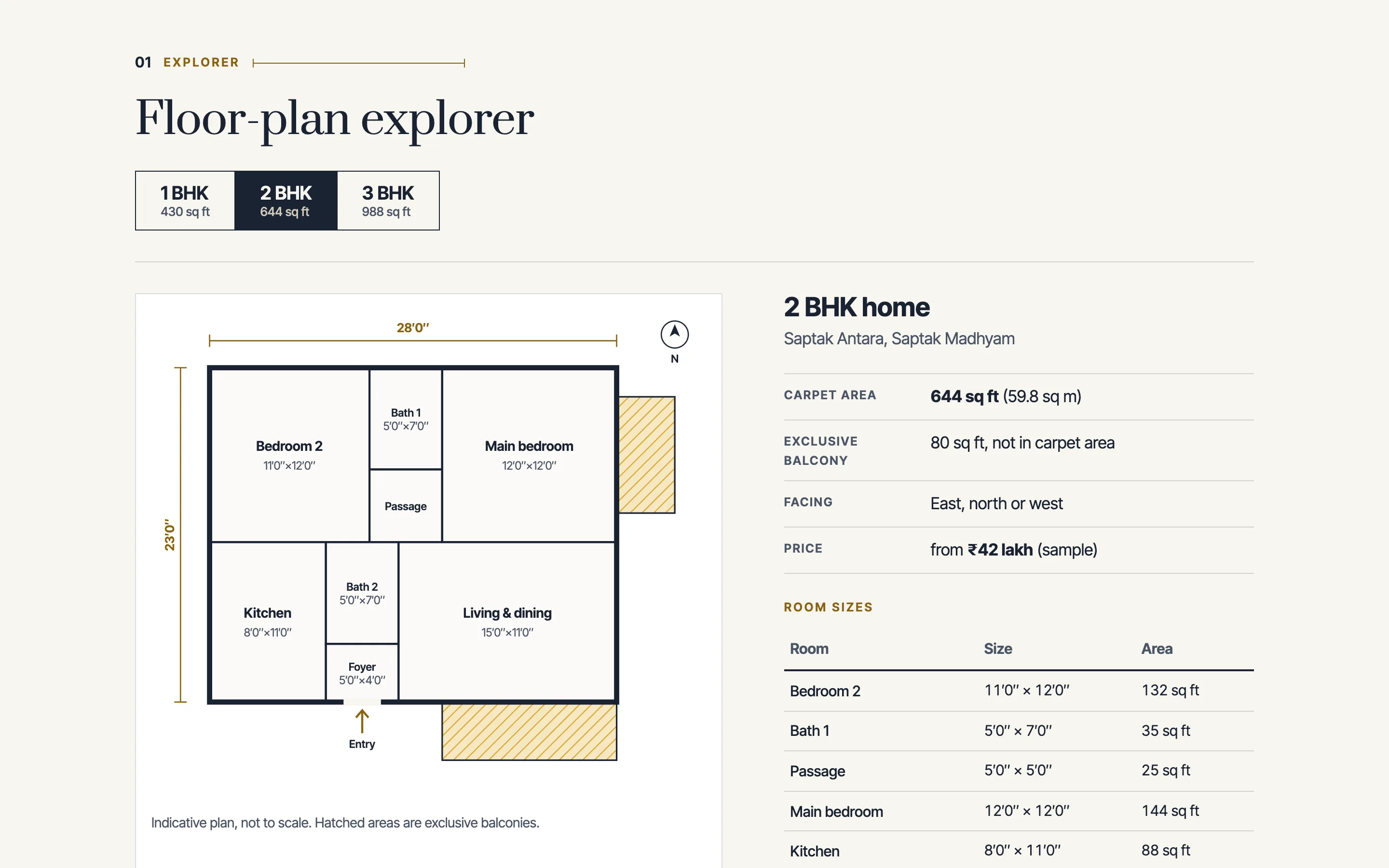
The signature feature is the floor-plan explorer. Visitors switch between 1, 2 and 3 BHK homes and see a drawn plan with every room labelled, the room sizes in feet and inches, the carpet area in square feet and square metres, and the exclusive balcony area listed separately. A table under each plan adds up the rooms, so the carpet area is something a buyer can check rather than take on trust. Each plan has a button that carries its price into the EMI estimate.
The EMI estimate takes the home price in lakh, a down-payment slider, an interest rate and a tenure, and shows the monthly instalment, the loan amount and the total interest. It is labelled clearly as an estimate and not a loan offer, and it reminds buyers that stamp duty, registration and GST are paid separately.
The site-visit page asks for a name, mobile number, project, date and time slot, with an option for buyers abroad to ask for a video walk-through instead. It checks the details, points to the first mistake and, on this demo, explains that nothing was sent.
The pages
- Home: the four key facts on the first screen, a full-width triptych of the three projects, a home-type table, the six buying steps and sample reviews.
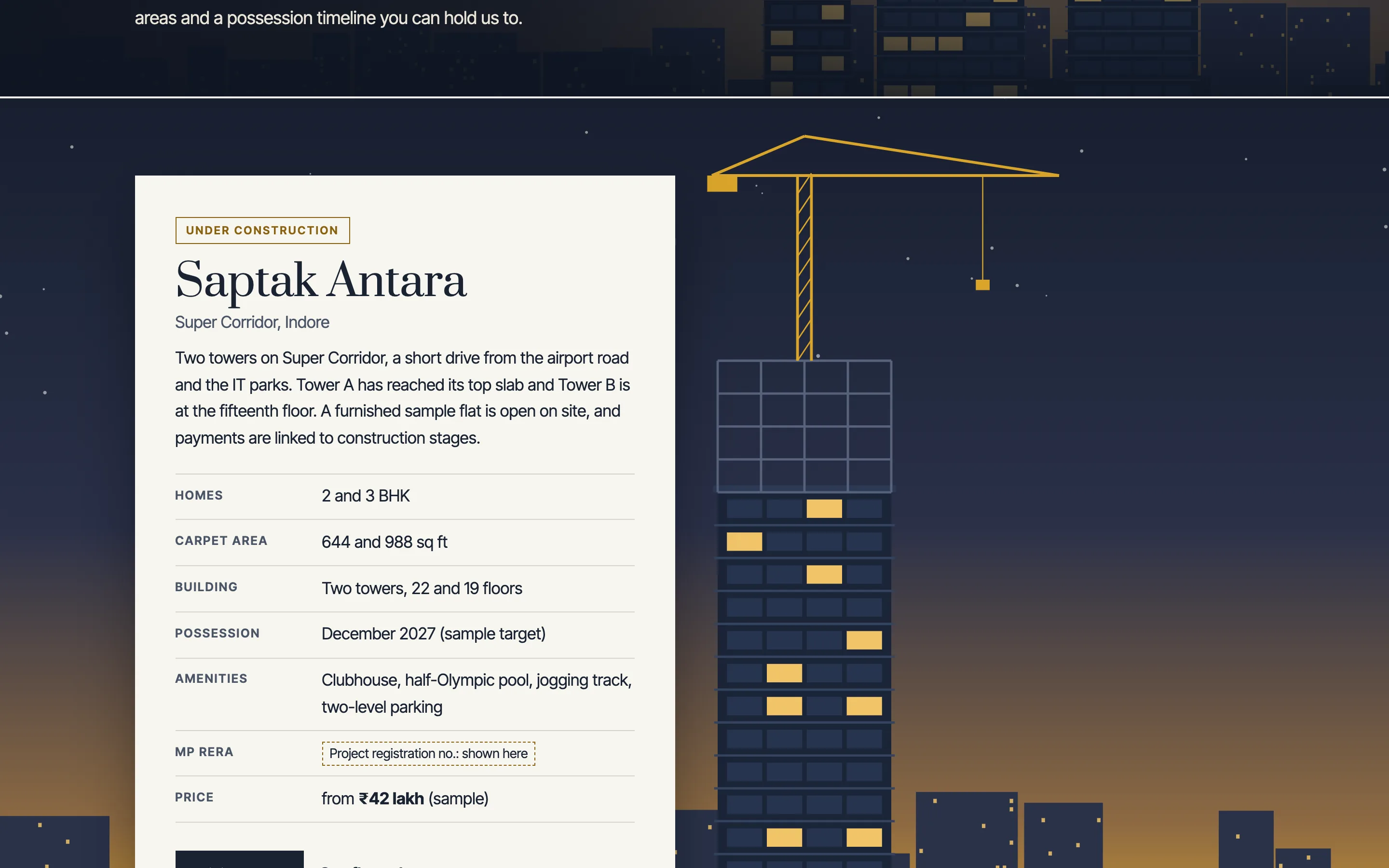
- Projects: each project as a full-width scene with its stage, home types, carpet areas, floors, possession timeline, amenities, RERA placeholder and a direct link to book a visit to that project.
- Floor Plans: the explorer, the EMI estimate and a short explanation of carpet, built-up and super built-up area.
- Site Visit: the visit request form, what happens on a visit, and WhatsApp and phone options.
- About: the developer's seven written commitments, the people buyers will meet and the registration details.
The illustrations are drawn in code, so they load quickly on mobile data. When a real developer has architectural renders and site photos, they drop into the same full-bleed frames.
Local SEO set-up for a developer
Buyers search by locality and home type, such as "2 BHK flats on Super Corridor" or "ready to move flats Khandwa Road", so each project page carries its locality in the heading and the description, and the floor-plan page names the home types and carpet areas in plain text that search engines can read. Structured data describes the business as a HomeAndConstructionBusiness, each project as an ApartmentComplex and each home type as an Apartment with its floor size. Opening hours, including Sunday site-visit hours, are in the page and in the structured data. The Google Business Profile for the sales office is set up to match the website's name, phone number and hours.
Country notes
India
The demo is written in Indian English for Indian buyers, with prices in rupees shown in lakh and only as "from" figures. Under RERA, developers have to quote carpet area and show the project's registration number in their advertising, so the site uses carpet area throughout and gives the RERA number a labelled place on every project and in the footer. WhatsApp is the main contact channel, with a phone number beside it. Buyers in India also expect a cost sheet that separates the base price from parking, club membership, GST, stamp duty and registration, and the site says that a written cost sheet comes before any booking amount. A Hindi version can be added later for buyers who prefer it.