What clients look for on a salon's website
People rarely read a salon's website from top to bottom. They arrive with one question. How much is a cut? Is there a slot on Saturday? Who is good with curly hair? Can someone do bridal make-up for five people at a hotel in Juhu? If the answer is one tap away, they book. If it is hidden in an Instagram highlight or behind "DM for prices", many of them open the next salon in the search results instead.
The best salon websites answer four things quickly: what the salon does and roughly what it costs, who will do it, what the place feels like, and how to book. They also earn trust in quieter ways: patch tests before colour, sterilised tools, a clear cancellation rule and stylists who say honestly when a look will not suit someone's hair. For a salon, those details are as persuasive as any photo.
How the demo handles it
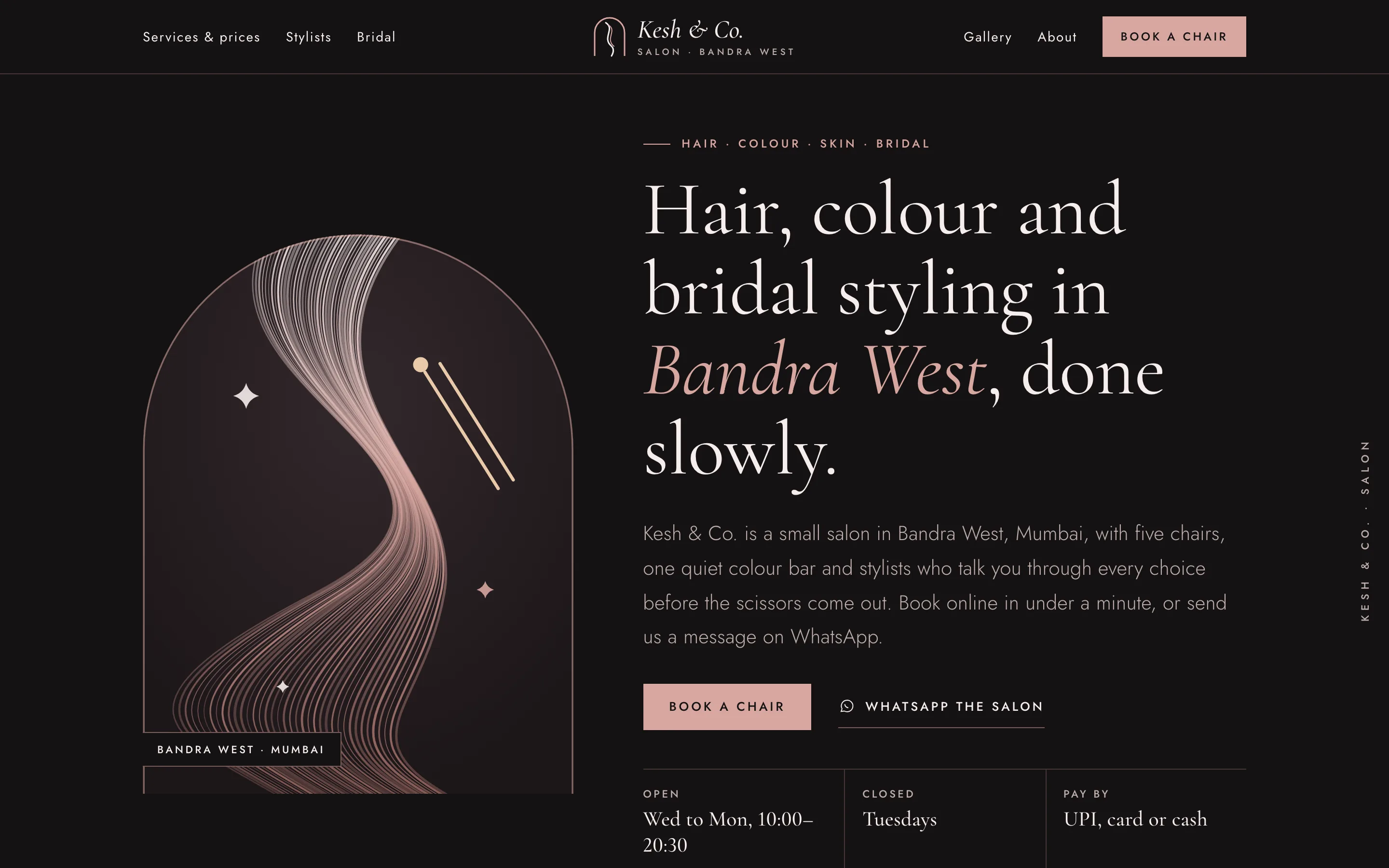
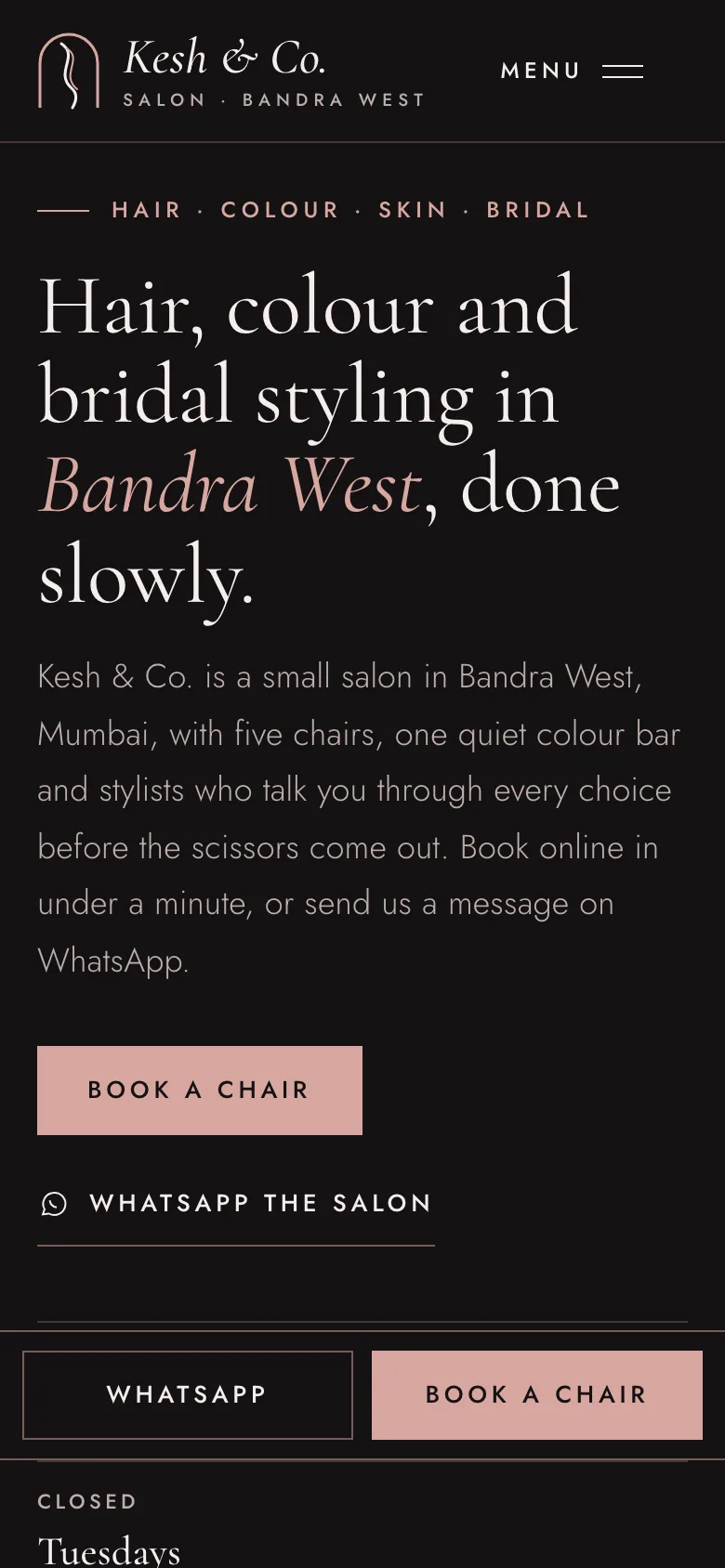
The demo is Kesh & Co., a fictional five-chair salon in Bandra West, Mumbai. Its design is a dark, premium look: near-black backgrounds, a blush-pink accent, Cormorant Garamond headings with Jost for reading, and arched frames borrowed from the shape of a salon mirror. The hero illustration is a sweep of rose-gold hair strands held by a hairpin, drawn for the site.
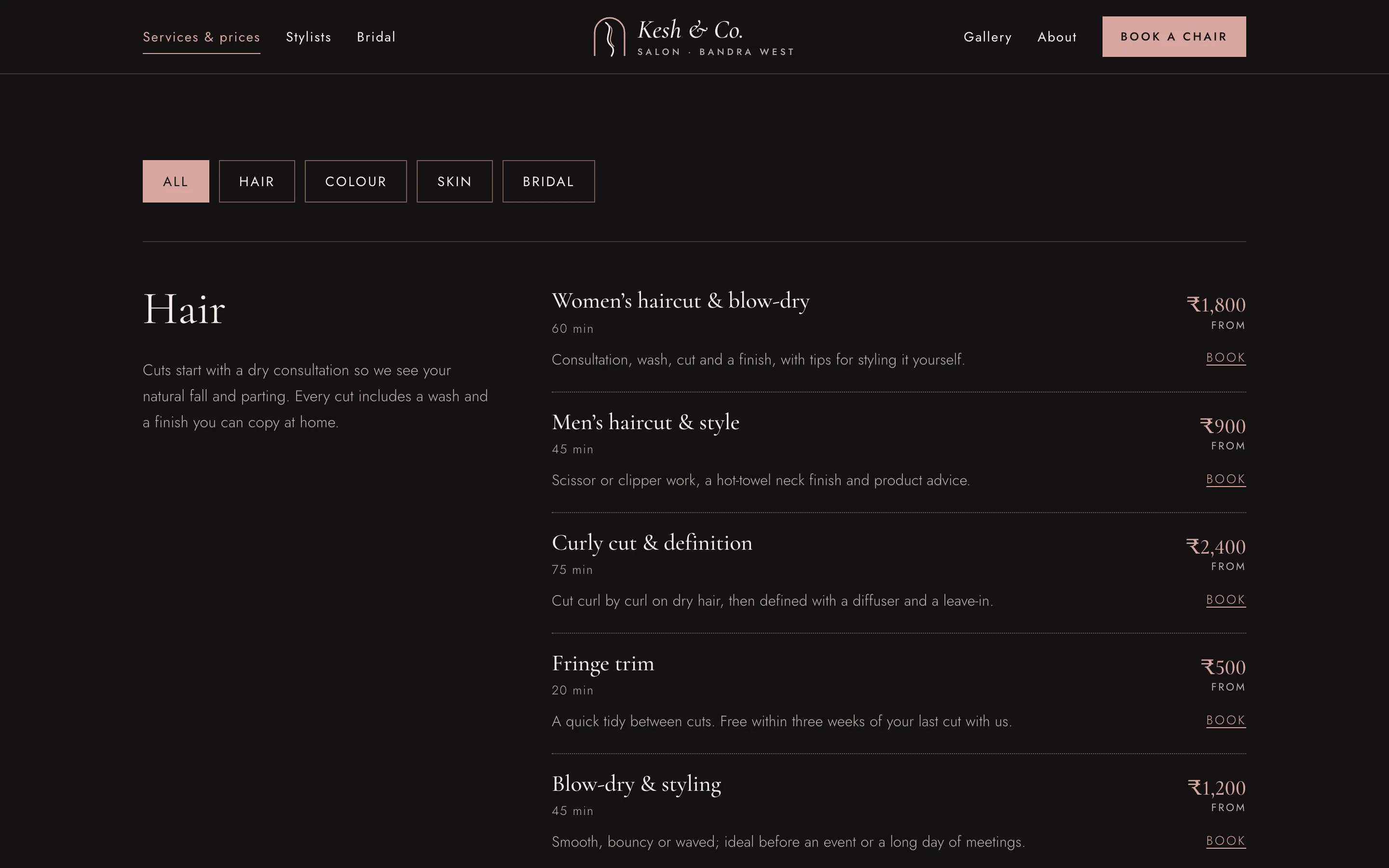
The price menu is the page most visitors want first, so it is complete: every service with a from price in rupees, its duration and one line on what is included, filtered by hair, colour, skin and bridal. Every line has its own Book link that opens the booking flow with that service already chosen.
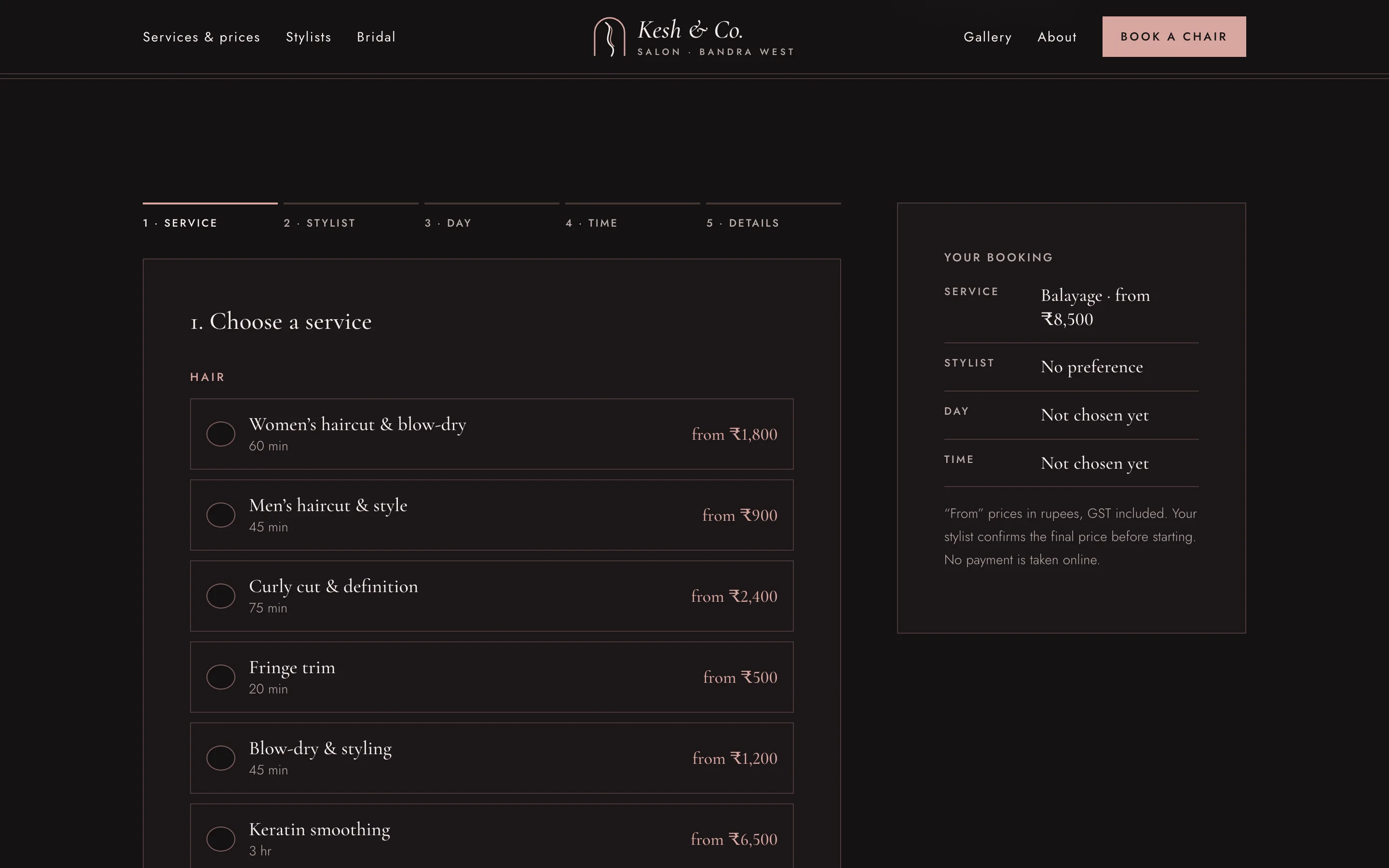
Booking is the signature feature, and it lives on the page instead of a pop-up. Clients pick a service, then a stylist (only stylists who offer that service appear, with a "No preference" option), then one of the next fourteen open days, skipping the salon's Tuesday closure, then a free time. Long colour services stop at 18:00 so nobody is booked into a three-hour balayage at closing time. A running summary shows the choices, and the last step asks only for a name and a mobile number. The demo labels it "Online booking powered by Aura", the salon booking product I am building.
The pages
- Home: the promise, the four service categories with starting prices, three stylists, the bridal process, gallery details, how booking works, sample reviews, hours and how to find the salon.
- Services & Prices: the full filterable menu and the house rules on patch tests, long hair, moving appointments and payment.
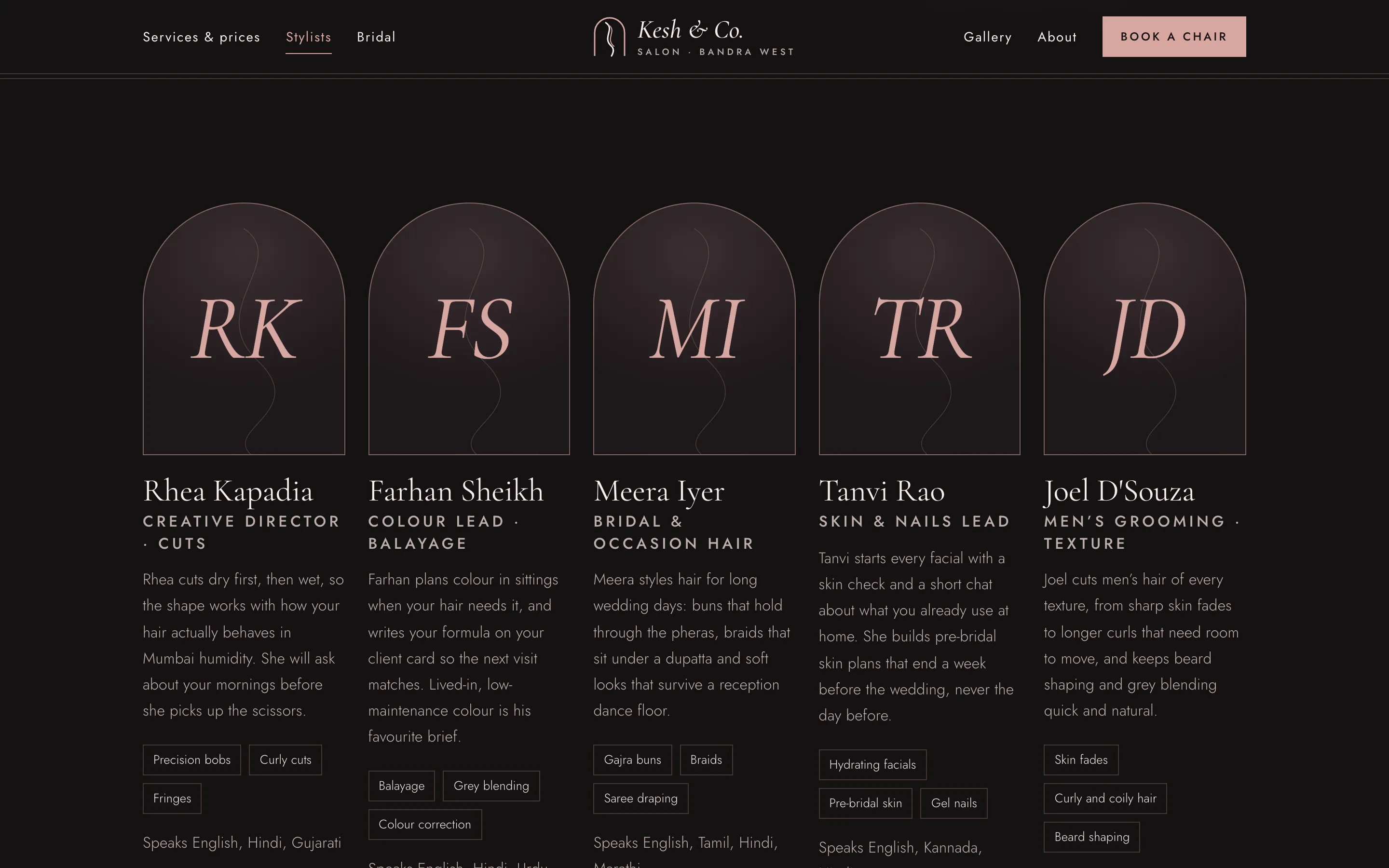
- Stylists: five profiles with specialities, languages spoken and a link to book each stylist, plus how the salon matches new clients.
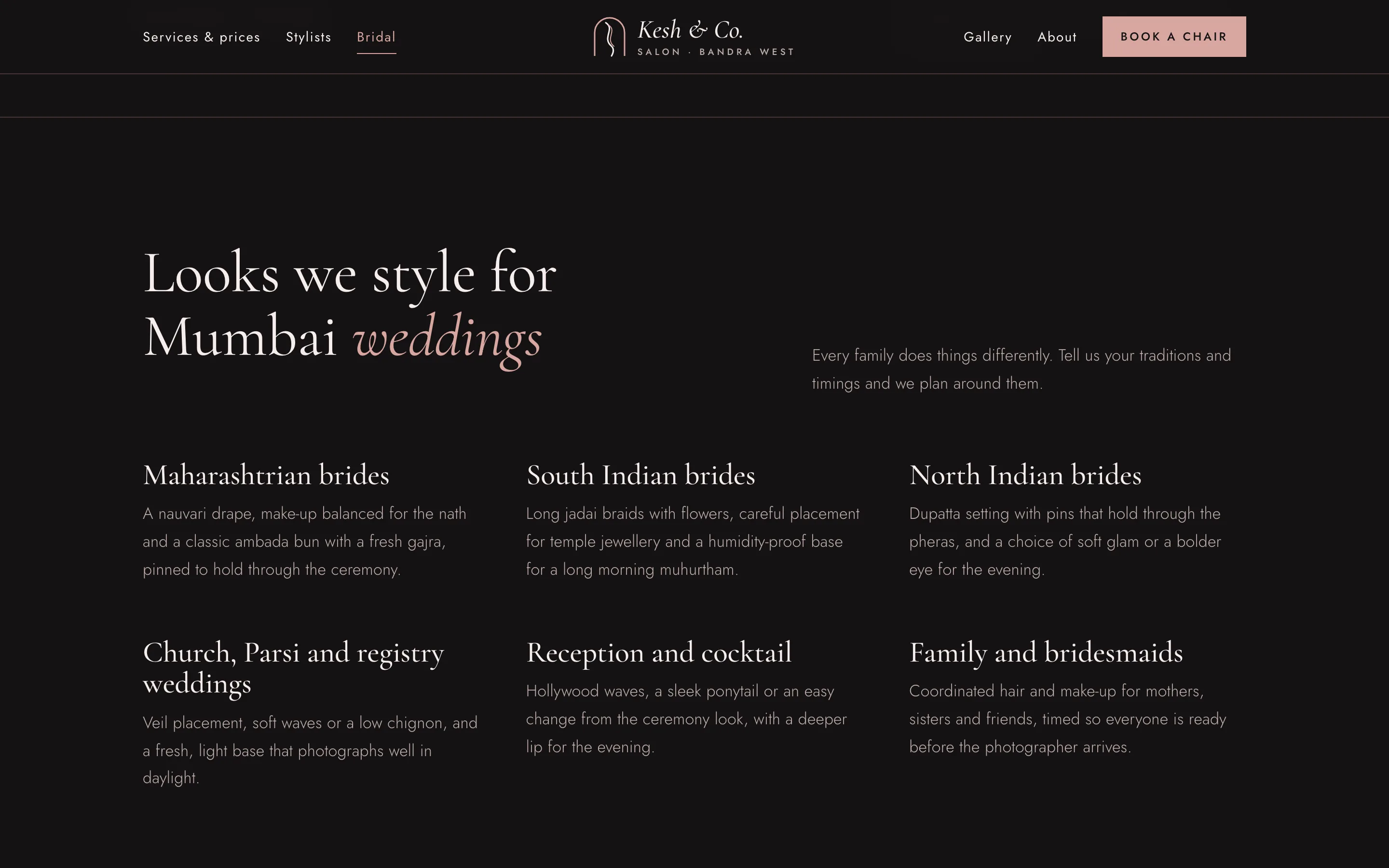
- Bridal: looks for different wedding traditions, a timeline from consultation to the wedding day, sample packages and an enquiry form with date, functions and number of people.
- Gallery: illustrated textures and techniques, filtered by category.
- Book: the five-step booking flow with a live summary and what to do before the appointment.
- About: why the salon works slowly, its standards on hygiene and colour, hours, payment and contact.
Local SEO set-up for a salon
Every page carries HairSalon structured data with the salon's name, logo, price range, payment options, opening hours and the neighbourhoods it serves. The services page adds an OfferCatalog with each service and its starting price, the stylists page adds a Person for each stylist, and the bridal page adds a Service with its packages and an FAQPage. Titles name the service and the neighbourhood, for example "Bridal Hair & Make-up Artists in Mumbai", so the page matches what people type.
A salon competes in a small radius, so the Google Business Profile matters as much as the website. I set it up with the same name, hours and categories, link each service to its place on the price menu, and make sure the booking link on the profile opens the same flow as the website. If the salon only shares its exact address after booking, as the demo does, the profile can still show the service area and the neighbourhood.
Country notes
India
Indian English, prices in rupees shown as "from" and inclusive of GST, with room for a GSTIN in the footer. WhatsApp is the main contact button because that is how most clients book, send reference photos and ask about prices; UPI sits next to cards and cash. Many salons in Maharashtra close on Tuesdays, and the booking flow respects the closed day. Bridal work peaks between November and February, so the bridal page invites enquiries months ahead and lists the languages each stylist speaks.
USA
US English ("color", not "colour"), prices in dollars, and a clear note on gratuity and cancellation fees, which clients expect to see before they book. Stylists and estheticians are licensed by state boards, so profiles have a place for license details. Text-message reminders are more common than WhatsApp. Accessibility (WCAG 2.2 AA) matters because ADA claims against small business websites are common; the demo's booking flow already works with a keyboard and a screen reader.
Canada
Canadian English with "colour" and "centre", prices in dollars with GST or HST noted, and provincial trade certification shown where it applies. A salon in Québec needs French as the main language of the site under the Charter of the French Language, with English as an option. Reminder and promotional messages fall under Canada's anti-spam law, so the booking form asks for consent to reminders separately from any marketing.
Australia
Australian English, prices in dollars including GST, and a placeholder for the ABN. If the salon adds a surcharge on Sundays or public holidays, Australian consumer law expects it to be shown clearly with the price, so the menu has a place for that note. Online booking with a card held for no-shows is common; the website links to the booking provider's own secure page for that rather than collecting card details itself.
Finland
The site is built in Finnish and English, with the Finnish version at /fi/ and a language switcher on every page. Prices are in euros with VAT included, written the Finnish way (45,00 €), and the footer has a place for the Y-tunnus. Many stylists in Finland rent a chair and run their own business, so profiles can show each stylist's own booking link and business ID. Accessibility rules under EU law mean WCAG 2.2 AA from the start, and booking data is handled under GDPR with a short privacy note next to the form.