Snow removal websites need to explain the agreement
A snow removal customer needs more than a photograph of a plough. They want to understand which areas are included, when a visit is triggered and where the cleared snow will go. A property manager may also need to discuss delivery access, shared entrances and authority for extra work. The website should make those questions easier to ask while avoiding a misleading impression that a contact form dispatches a crew immediately.
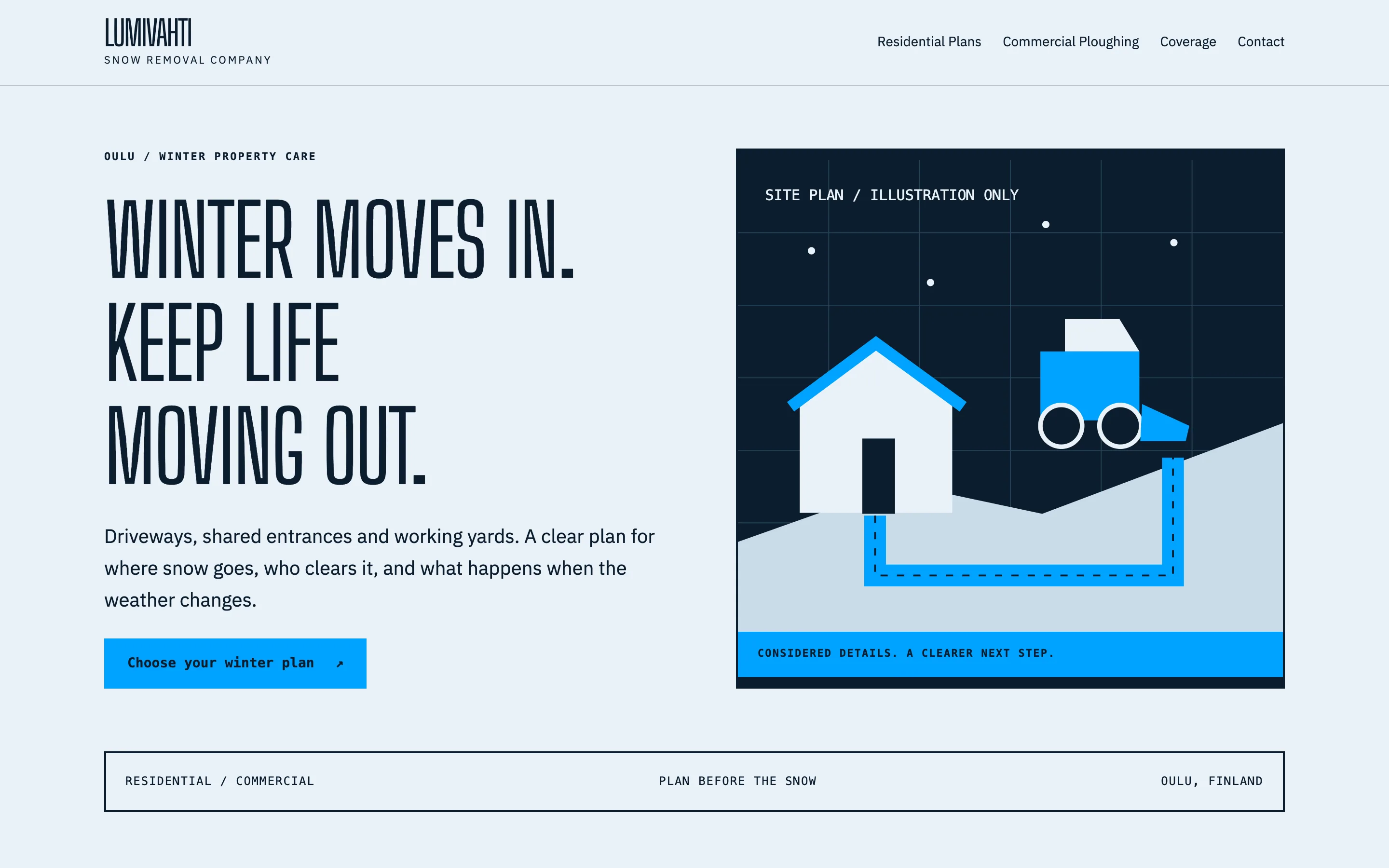
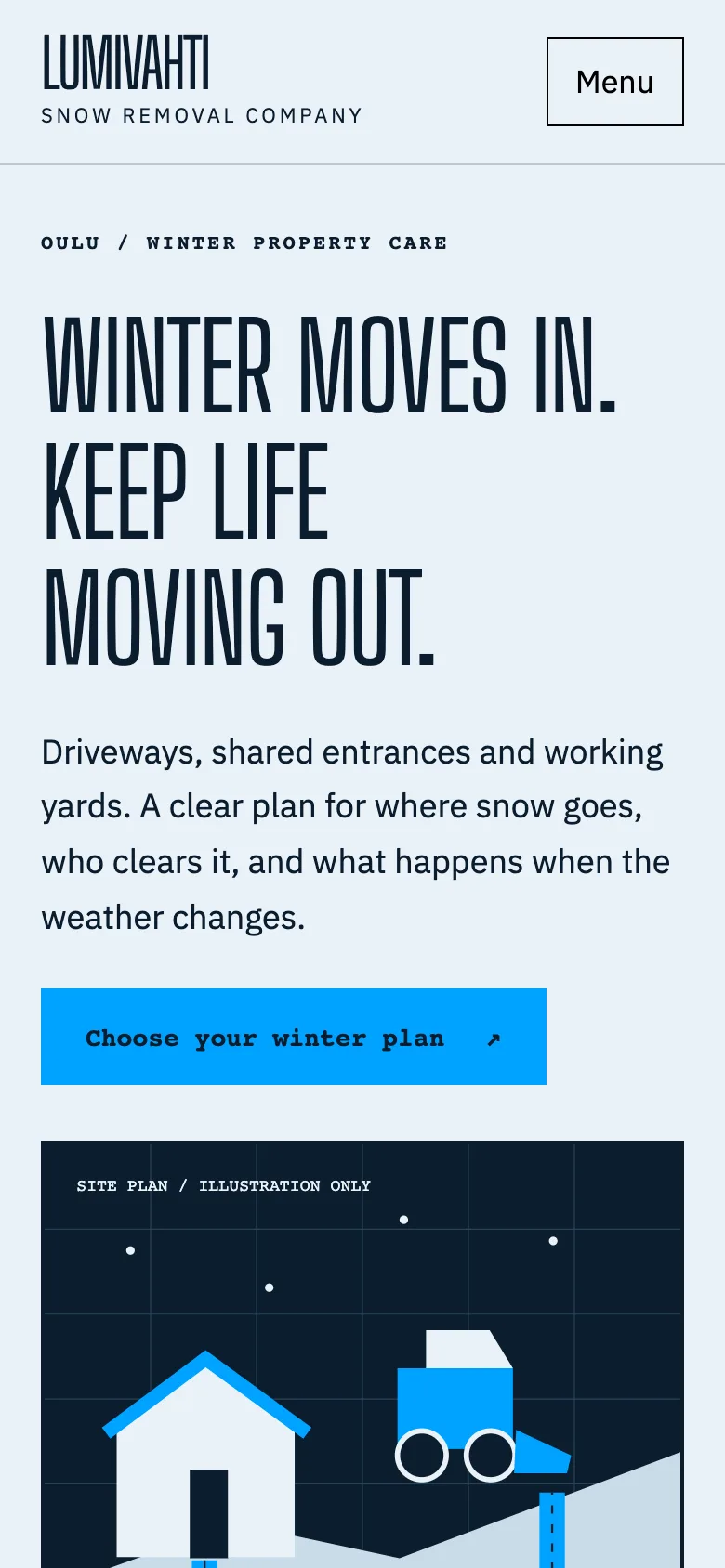
Lumivahti Oy is a fictional Oulu service created to demonstrate that approach. The industrial layout uses condensed Big Shoulders Display headings, IBM Plex Sans body text and a blue winter palette. An original property-and-plough illustration provides context without using a real address or showing live operational data. Strong rules and compact labels organise the service information. The English-only build follows the current builder brief, with a Finnish version left for a later language review.
A plan picker that distinguishes two conversations
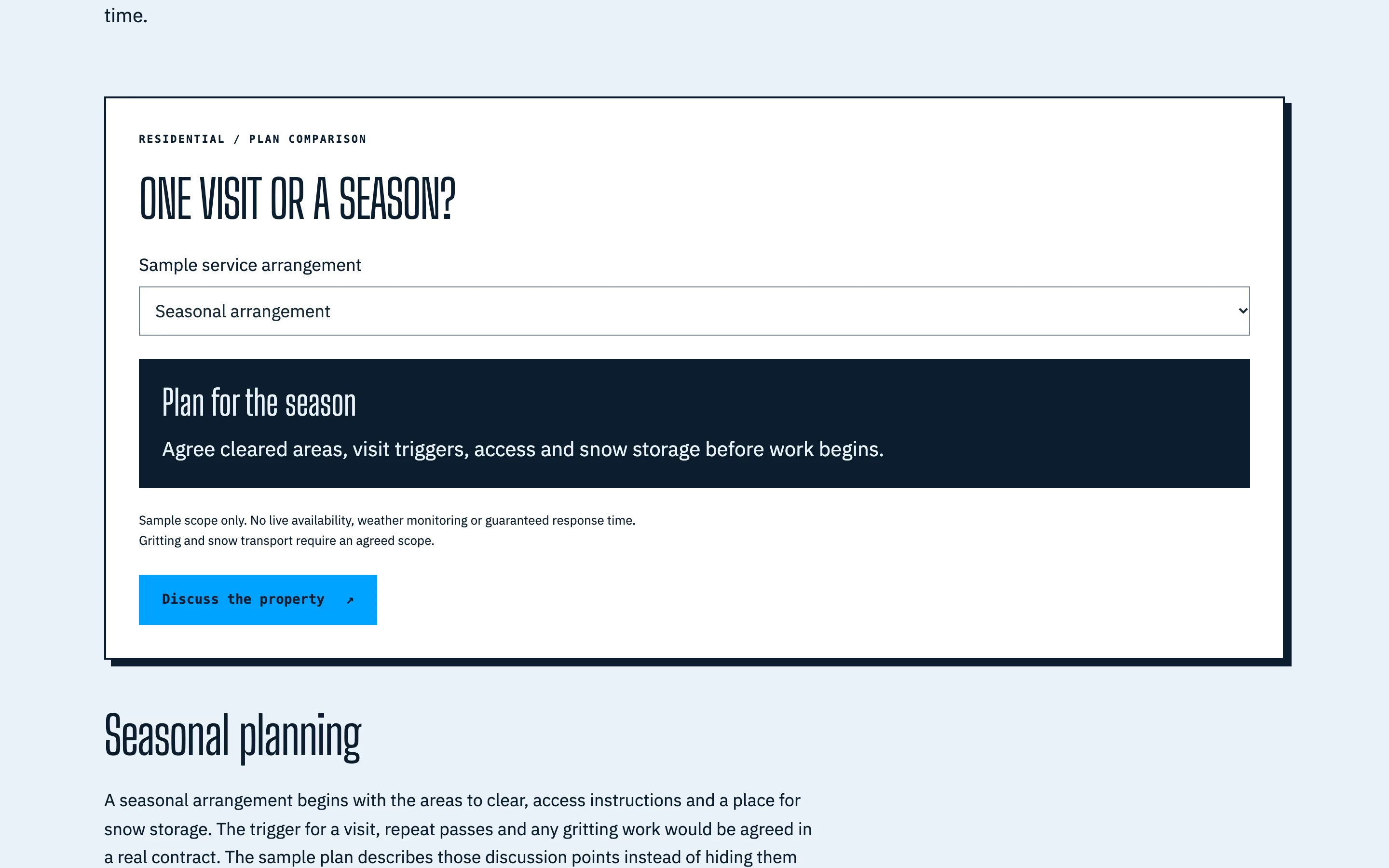
The signature feature compares a seasonal arrangement with a per-visit request. Selecting either option changes the scope summary immediately. Seasonal wording highlights cleared areas, visit triggers, access and storage planning. Per-visit wording asks for current conditions and makes confirmation of availability explicit. A native select control keeps the interaction accessible on phones and with a keyboard, while the changed result is announced in a live region.
Neither option pretends to provide a binding contract. There is no live weather feed, route tracker or guaranteed arrival time. The text identifies gritting and snow transport as separate matters to agree. For a real operator, the same interface can use the company's actual service definitions and lead to a scoped enquiry. It should only show real availability when it is connected to a dependable operational system and the business is ready to maintain that information.
Five pages that keep the scope visible
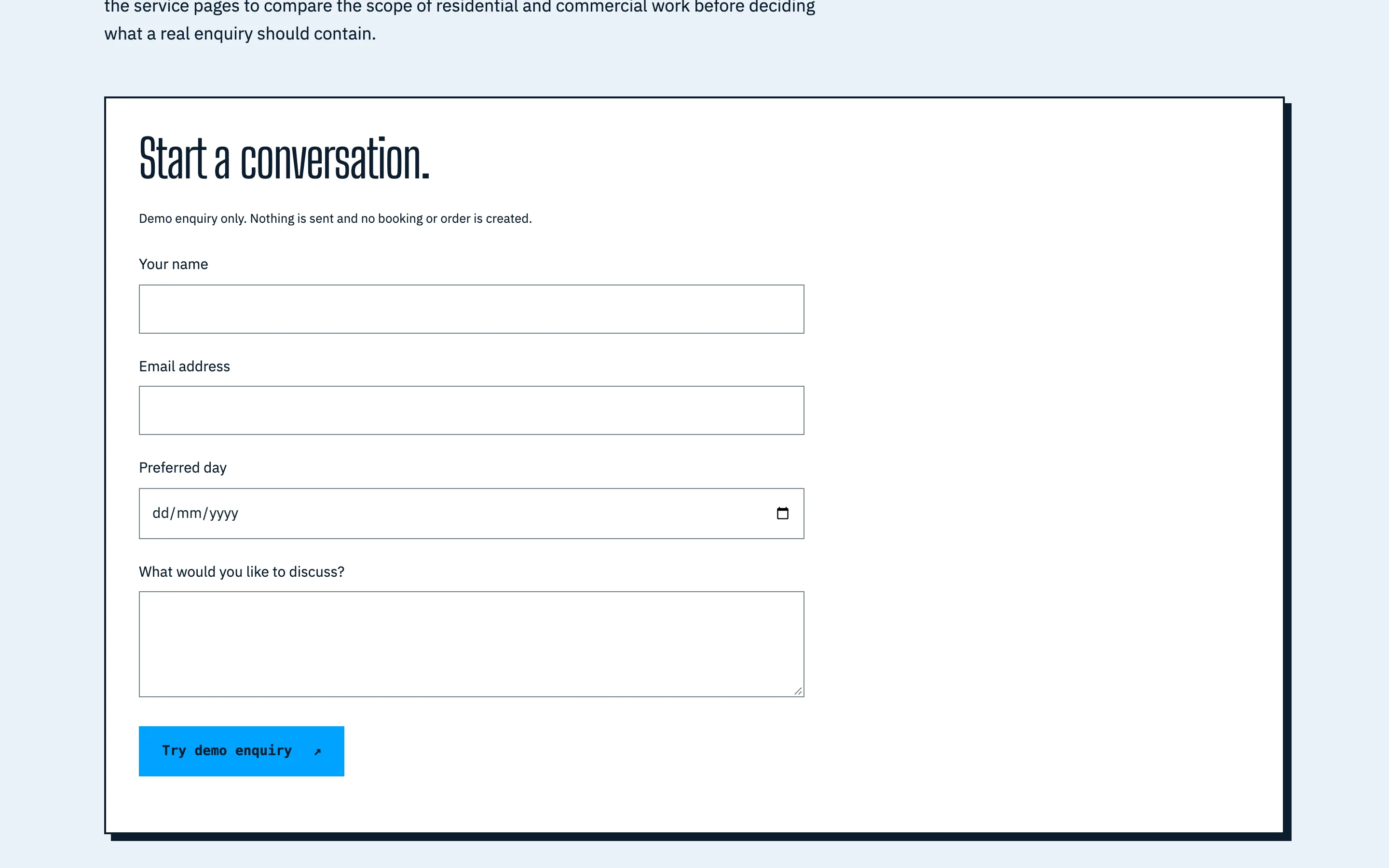
Home establishes the residential and commercial service context. Residential Plans contains the comparison and explains the information needed before work starts. Commercial Ploughing discusses priorities, shared access and authorisation for extra work. Coverage names sample Oulu neighbourhoods with a schematic illustration rather than a pin on a real property. Contact collects a short description and a preferred discussion day, explicitly stating that no crew is dispatched.
The enquiry avoids access codes and sensitive property information. It validates locally, focuses the first invalid field and displays the demonstration notice after a valid submission. There are no uploads, payments or external tracking services. The layout remains readable without JavaScript, and a matching not-found page offers a route back to the main navigation. The sample also distinguishes ground clearing from roof work rather than implying that one service automatically includes the other.
Search foundations without fictional local claims
Each page contains its own metadata, canonical address and social sharing image. HomeAndConstructionBusiness supplies the city-level business context, and inner pages add service and breadcrumb information. The server applies demo noindex behaviour and injects the established Smit Desai ribbon. The public industry page describes the snow removal website design service. A real operator would replace the fictional identity, confirm working areas and review every statement about the scope before the site is made public.
Adapting winter-service websites by country
Finland
The Oulu example is presented in English, with Finnish planned as a later version. A real operator would review the terminology and service descriptions in both languages, including the plan summaries and enquiry feedback. Euro quotation context, verified contact details and the actual service area can then replace the sample information. The site should distinguish ordinary enquiry hours from any separately agreed operational coverage.
Canada
A Canadian snow removal website can use Canadian English and Canadian-dollar quotation context, with residential driveways and shared property access described according to the operator's real scope. A plan comparison should explain visit triggers and additional work clearly. A general contact form must not suggest that an urgent clearance request has been accepted merely because it passed validation.
USA
A US version can describe the actual property types and use the units familiar to local customers. If the operator publishes response arrangements, the wording should match its real agreement rather than a generic marketing promise. Verified service boundaries and contact channels matter more than an exaggerated coverage map. The website can support the initial conversation without claiming to monitor conditions.
Australia
For an Australian operator serving an alpine or other relevant area, the site should be written around the real seasonal context rather than copying a northern-city service description. Australian English and Australian-dollar quotations can be used where appropriate. Access constraints, property types and the work actually offered should determine the page content. The sample design can be adapted without implying that snow clearance is relevant everywhere.
India
An Indian version should likewise be specific to the operator's actual region and winter-service work. Metric measurements, rupee quotation context and an approved contact route can support the enquiry. The business should supply verified operational details and avoid broad nationwide availability claims. The plan selector is useful only when its options reflect genuine services that the operator can explain and deliver.